
I still remember the October chill creeping under my jacket as I stood on the Kop that Sunday afternoon. It was the fixture that never needs a script—Liverpool versus Manchester United, the two old dinosaurs of English football butting skulls once more. The air in Anfield was a pressure cooker with a faulty valve, each chant a puff of steam threatening to blow the lid. Nobody expected the refereeing volcano to erupt after just sixty seconds.
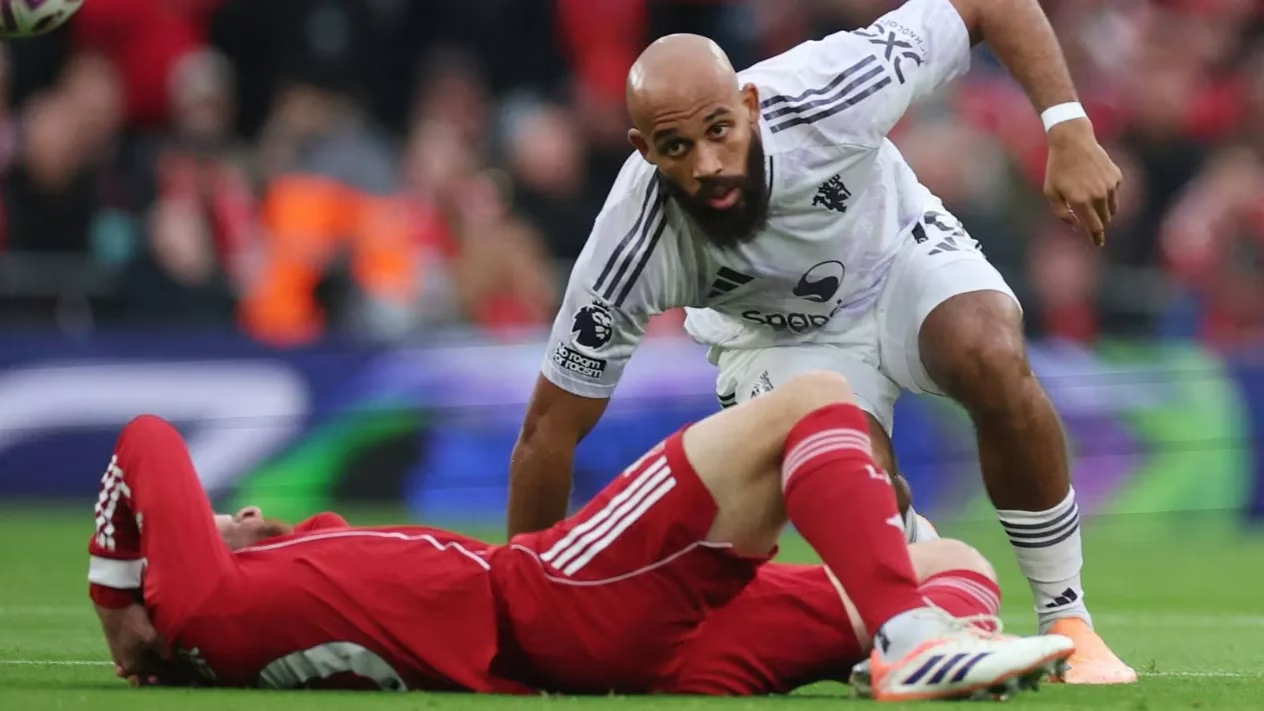
United kicked off and immediately launched a hopeful ball into midfield. Bryan Mbeumo rose for a header, sandwiched between Alexis Mac Allister and Virgil van Dijk. I saw the Argentine drop to the turf like a sack of concrete, his skull having met Van Dijk’s crown with a sickening thud. The Colombian wriggled free and sprinted away while Mac Allister lay motionless, arms spread in a pose that screamed stop the game. Referee Michael Oliver didn’t flinch. He glided past the scene, a statue carved from indecision, his whistle a silent monument in his hand. The ball travelled to Amad Diallo, then into Mbeumo’s path, and suddenly the net rippled. One-nil to United. Anfield went mute for a heartbeat, then erupted into a storm of disbelief.
Watching the replay on the giant screen, I saw Mac Allister clutching his head before the United counter even sparked. The protocol lived in every fan’s mind: head injury equals immediate stoppage. But here’s the kicker—the rules themselves are a foggy swamp. The Premier League’s official guidance doesn’t command a halt; it merely suggests that when play is stopped for a suspected head injury, a doctor should be signalled and the player must leave the pitch for assessment. The International Football Association Board (IFAB) is even vaguer, stating the referee “stops play if a player is seriously injured.” Nowhere does it guarantee an instant pause. That grey space became a weapon for United and a wound for Liverpool. I felt the injustice burn in my throat like a bad whisky.
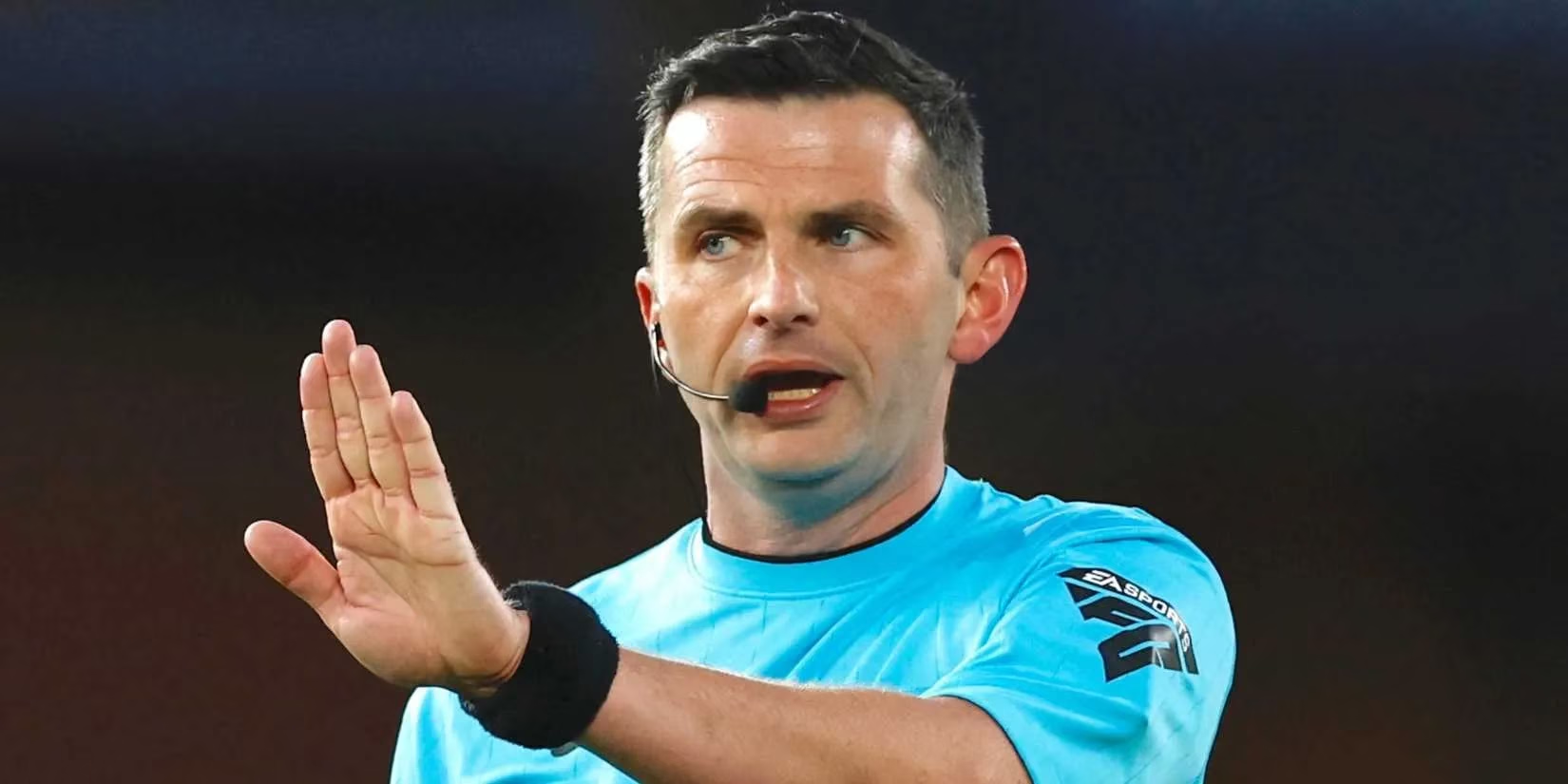
Mac Allister needed over three minutes of treatment. The physios wrapped a black skull cap around his head, transforming him into a gladiator returning to the arena. But the goal stood like a stubborn weed. VAR couldn’t intervene—no potential red card, no offside, and crucially no way to review a referee’s decision on head injuries. The system that’s supposed to correct errors was handcuffed by its own rulebook. As 45 minutes limped to a close, I couldn’t help but think: we’ve built a colosseum of technology, yet the lion still roams free when it comes to player safety.
Around me, the Kop faithful turned into a choir of righteous fury. Every touch from a United boot was booed, every Oliver whistle dissected. The atmosphere shifted from a cathedral of hope to an anvil of outrage. Even Arne Slot, usually a composed mathematician on the touchline, threw his hands up in a rare burst of theatre. The half-time whistle felt like a ceasefire nobody wanted.
That day taught me that football’s laws are often a tightrope without a net. We demand consistency, but the rulebook hands referees a flaming torch and asks them not to get burned. Mac Allister returned, dazed but defiant, and the game eventually found its rhythm. But the scar from that opening minute remained, a rogue firework that had lit up the sky before the countdown even started. When the final whistle blew, the result almost felt secondary. We’d witnessed something more primal: a sport grappling with its own contradictions, on a pitch where tradition and progress collide every week. And as I walked down the Anfield steps, I realised the real controversy wasn’t just the goal—it was the silence in the rulebook that allowed it.