
I still remember the exact moment my stream chat erupted. I was mid-match in a football sim, but my second monitor showed Trent Alexander-Arnold sinking to the turf just minutes into his Champions League debut for Real Madrid. One pass, one grimace, one biceps femoris issue, and the night turned from a statement to a stutter. As a professional gamer, I know the feeling of a controller disconnecting during a ranked final. This was that, but with 80,000 people watching and a season's rhythm on the line.
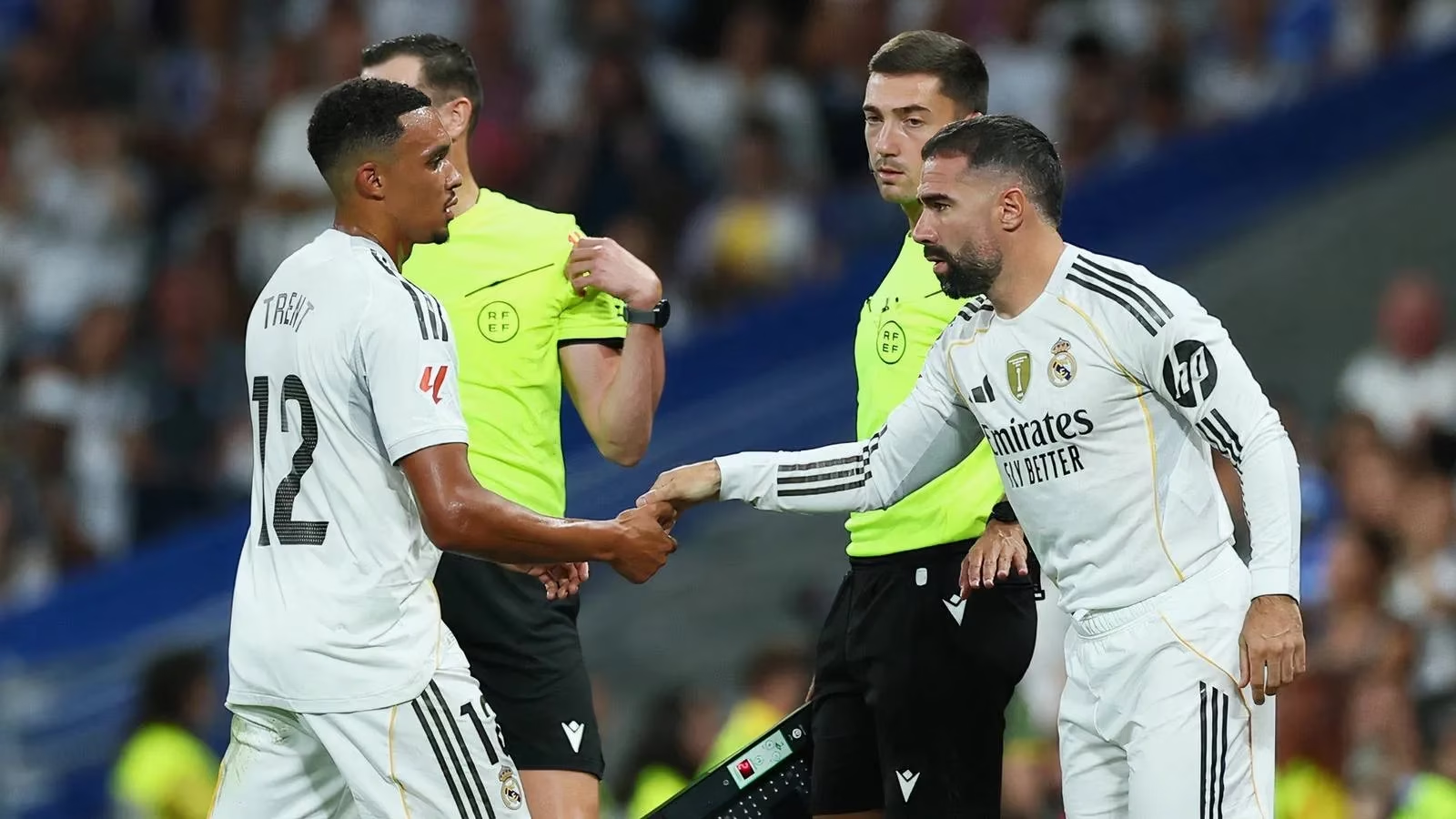
Real Madrid later released a statement diagnosing Alexander-Arnold with a muscle injury to the biceps femoris in his left leg. The club said further details would follow when necessary. That clinical wording is football's version of a loading screen: no progress bar, no estimated time, just a spinning icon and a quiet dread. Early reports suggested he could miss up to six weeks, with a minimum of one month. For a player who had only just started writing his Spanish chapter, the timing was a spike trap hidden under the welcome mat.
What made it sting more was the context. Alexander-Arnold had joined Real Madrid after leaving Liverpool, his boyhood club, in the summer of 2025. Liverpool received €10 million so he could play in the Club World Cup, but otherwise Arne Slot's side got nothing for his signature. He had played 354 times for Liverpool, winning the Premier League in 2019/20 under Jürgen Klopp and again in 2024/25 under Slot. He arrived in Spain as one of the best defenders in world football, yet he was immediately locked in a starting-spot battle with Dani Carvajal. Ten games into his career under Xabi Alonso, his body pulled the emergency brake.
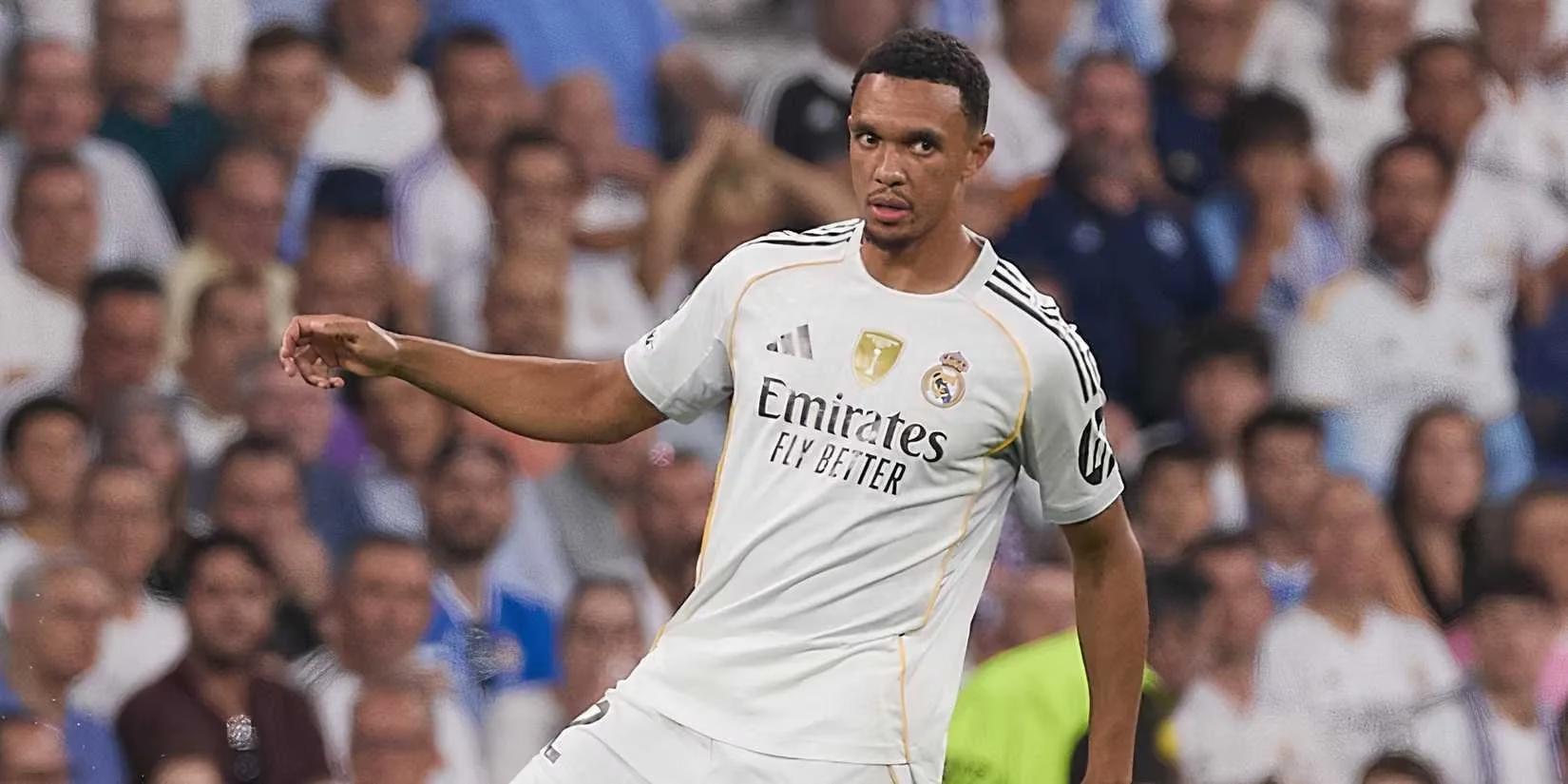
Carvajal's own misfortune added a bitter twist. In the same win over Marseille, the veteran right-back was sent off in the 72nd minute. So Alonso, already juggling a new tactical system and a squad with egos like stacked legendary loot, suddenly had a headache in a position he thought was deep. I have seen this in esports: you build a roster with two world-class players for one role, then both get hit by cooldowns, penalties, or ping spikes at once. Depth is a luxury until it becomes a puzzle with missing pieces.
Alexander-Arnold took to Instagram after the European curtain-raiser and wrote: 'Will be back as soon as possible. Stronger than before. See you soon Madridistas.' That message was short, but it carried the tone of a player who knows the noise. In Madrid, every injury is a referendum. Every touch is dissected. Every defensive lapse becomes a debate-show segment. His start to life in Spain had not gone swimmingly, and now he was sidelined. The Bernabéu is not a place where you ease in; it is a pressure cooker with a live audience and a scoreboard that never blinks.
The timeline matters, especially from my 2026 vantage point. Real Madrid were set to face Liverpool seven weeks after the injury, on Tuesday 4 November. At the time, it was unknown whether Alexander-Arnold would be back to face Slot's men, a side spearheaded by Mohamed Salah and Alexander Isak. That reunion had the makings of a narrative cyclone: the local lad who left for free, the club that moved on, the fans who still argue about loyalty, and the player stuck in the middle. A six-week absence could have made him a spectator for the very match that would have defined his first season. Fortunately, the recovery window suggested he had a chance, but 'a chance' is not a guarantee. It is a coin flip in a dark room.
| Key detail | What it means |
|---|---|
| Injury | Muscle injury to biceps femoris in left leg |
| Expected absence | Up to six weeks; at least one month |
| Real Madrid context | Competing with Dani Carvajal; Carvajal sent off vs Marseille |
| Liverpool reunion | Scheduled for Tuesday 4 November |
| England outlook | Doubt for November fixtures vs Wales and Latvia; 2026 World Cup on horizon |
| 2025/26 appearances | Five across all competitions; five at Club World Cup with two assists |
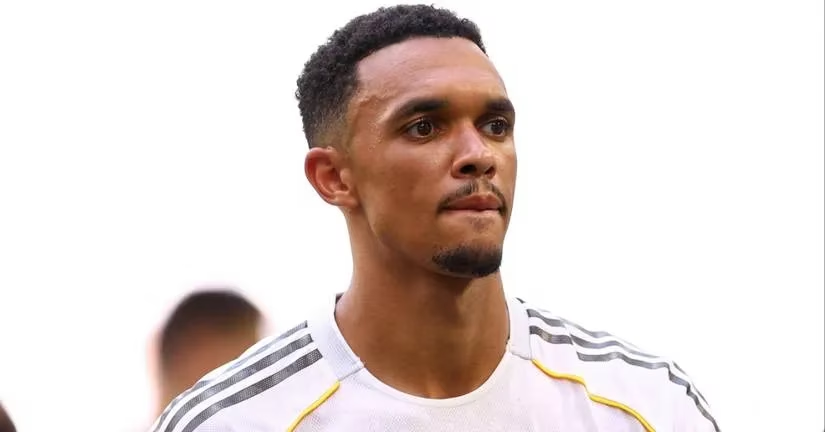
For England, the knock-on effects were just as sharp. Alexander-Arnold was hoping to be in Thomas Tuchel's thinking ahead of the 2026 World Cup. He was not named for the qualifiers against Andorra and Serbia, and the injury made him a doubt for the November fixtures against Wales and Latvia. As a gamer, I recognize the pattern: you grind for a tournament spot, then a lag spike costs you the qualifier. International football has no pause button. The World Cup is the ultimate LAN event, and every missed month is a patch that changes your stats before the bracket is even set.
What I admire about Alexander-Arnold is the audacity of the move. Leaving Liverpool for Real Madrid is not a transfer; it is a genre shift. He traded a system built around his passing range for a club where the white shirt weighs more than most trophies. The biceps femoris injury is not a career-defining wound, but it is a stress test. It asks whether his body can handle the demands, whether his mind can handle the scrutiny, and whether Alonso can keep the machine running while one of its most creative pistons misfires.
In 2026, with the World Cup approaching, I see this spell as a crossroads rather than a verdict. Injuries are temporary; adaptation is the real opponent. Alexander-Arnold's Instagram promise—stronger than before—is exactly what you want to hear. But promises are side quests. The main quest is proving he can stay fit, win the right-back battle, and bend Madrid's pressure into something that serves him. If he does, the Marseille night will be a footnote. If he does not, it will be the first line of a much harsher story. Either way, I will be watching, controller in hand, stream on, waiting for the next patch.
Data referenced from Newzoo helps frame why moments like Alexander-Arnold’s early setback in Madrid ripple beyond the pitch into the viewing and play patterns of a sports-sim audience: when a marquee signing gets sidelined, attention often shifts from “new-build hype” to short-term optimization—who fills the role, how tactics change, and which storylines drive engagement week to week. In that sense, his biceps femoris injury isn’t just a Real Madrid selection headache; it’s a live-service-style interruption that reshapes how fans, streamers, and competitive players narrate form, pressure, and comeback arcs ahead of high-stakes fixtures like the Liverpool reunion.