
I sometimes imagine the grass remembers. It holds the imprints of sprinting boots, the weight of a sliding tackle, and, in its quietest moments, the chilling stillness that follows a collision too brutal to comprehend. The Premier League, my canvas of dreams and nightmares, is a theater where beauty and brutality dance a perilous waltz. For every moment of sublime skill, there exists a shadow—a fractured bone, a shattered skull, a career cut short by a single, irreversible second. This isn't just a list of incidents; it's a collection of stories where the human body met its limits, and the spirit fought to reclaim what was lost. Let me walk you through these echoes.
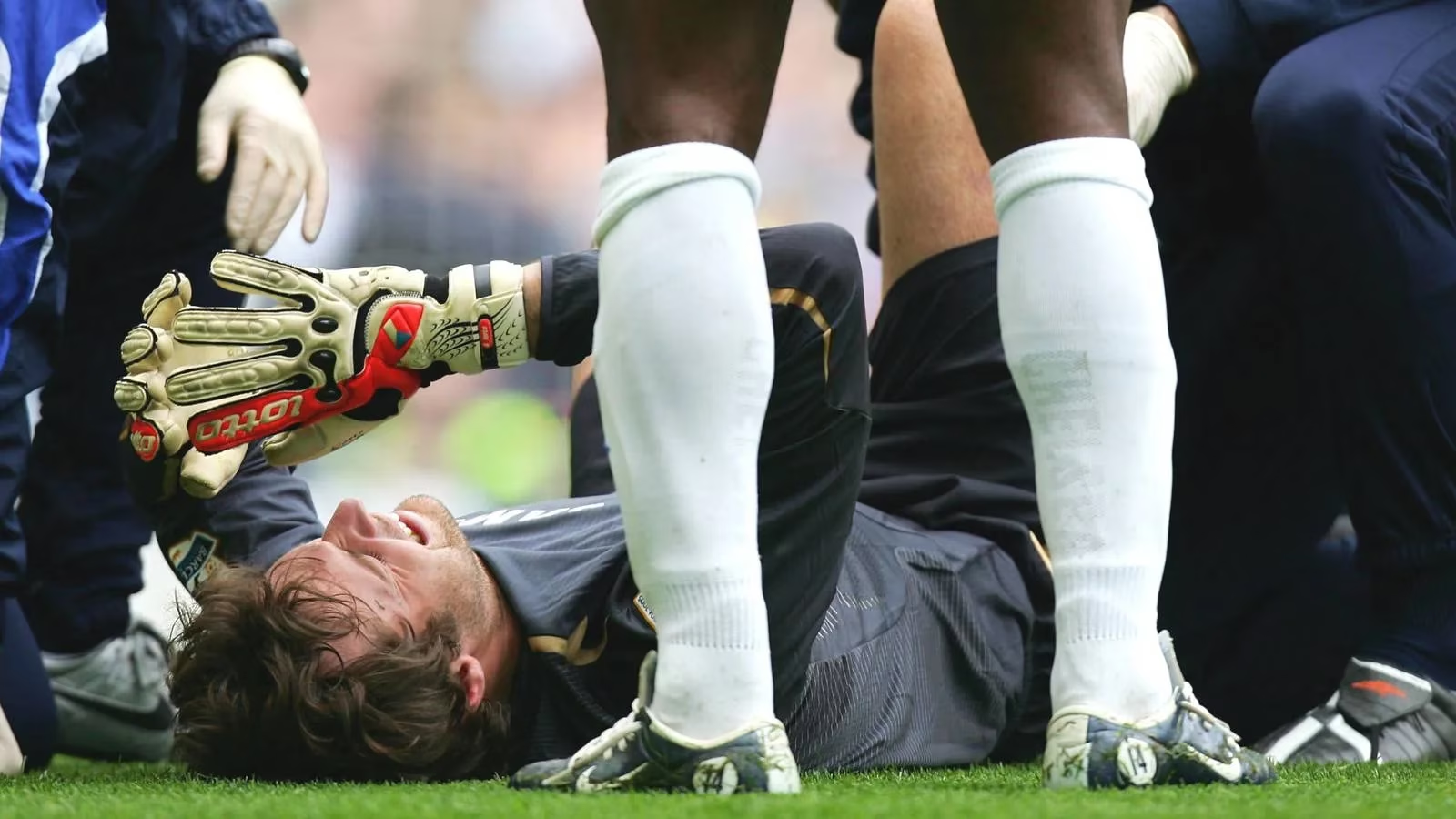
The sound of two heads colliding—it’s a thud you feel in your own teeth. In 2020, Raul Jimenez and David Luiz created such a sound, and the aftermath was a fractured skull. I remember the stadium holding its breath, the game paling into insignificance. For months, his future was a question mark. But the man’s a fighter, ain't he? Fast forward to the 2024/25 season, and there he was, leading Fulham's line, scoring goals like he was making up for lost time. The physical scar is hidden, but I wonder if the memory of that impact ever truly fades, if every aerial duel since carries a ghost of that moment.
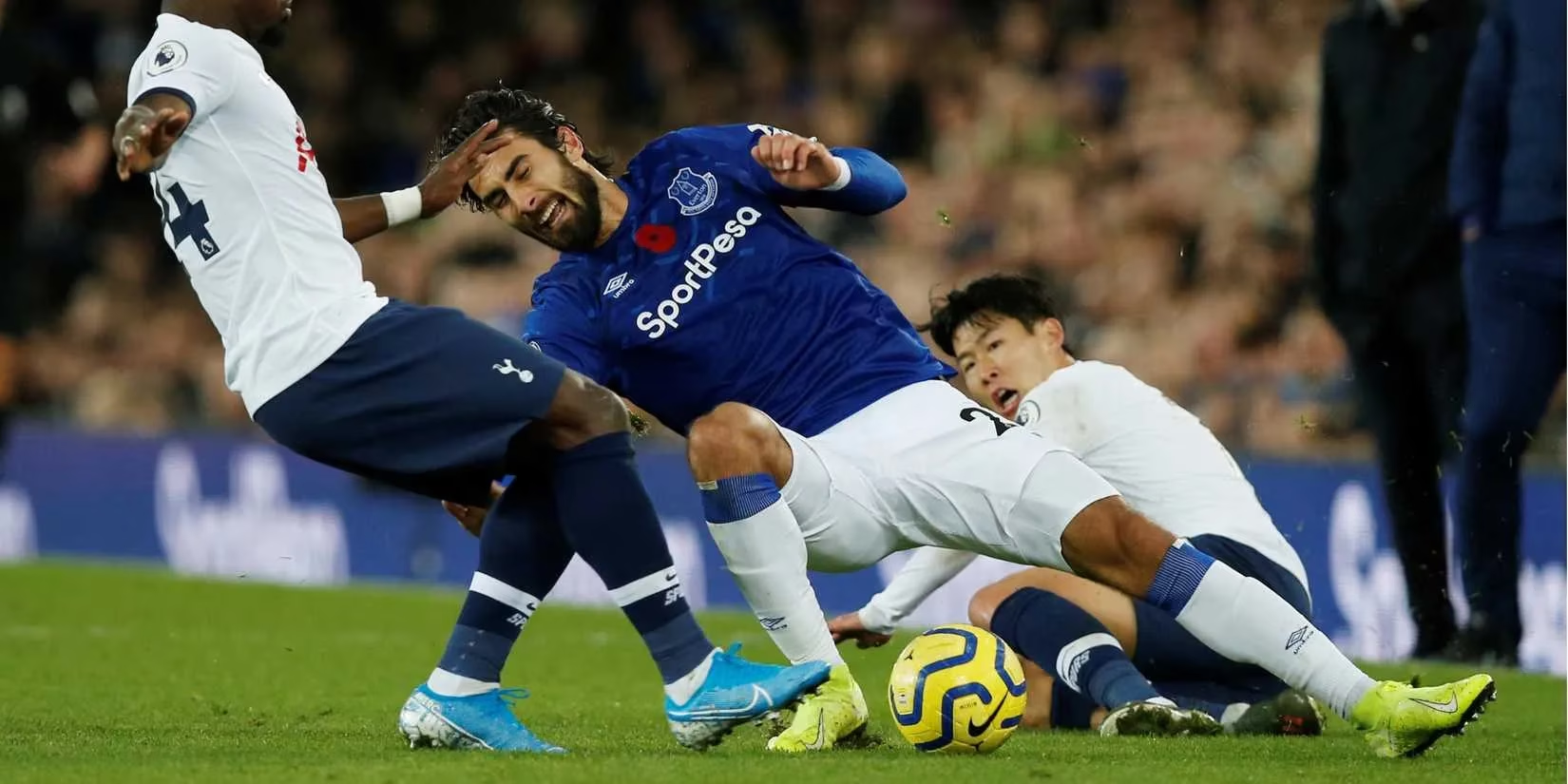
Then there’s Andre Gomes. November 2019. A tackle, a twist, and an ankle pointing in a direction nature never intended. The image of Son Heung-min’s immediate, tear-stricken horror said more than any commentary ever could. Sometimes, the injury hurts two people. Gomes’s ankle was rebuilt, and he returned in an almost unbelievable 112 days. That’s the thing about these players—they’re wired differently. Now, at 32, he's weaving his magic in France with Lille. The body mends, but does the instinct to trust that limb ever return completely? It’s a silent conversation between mind and muscle every time he plants his foot.
The Injuries That Stole Futures:
| Player | Injury | The Aftermath |
|---|---|---|
| Ryan Mason | Fractured Skull (2017) | Career ended at 26. Now a manager. |
| David Busst | Double Leg Fracture (1996) | 22 surgeries, threat of amputation. |
| Luc Nilis | Broken Leg (2000) | Chose retirement after recovery. |
Ryan Mason’s story… goodness, that one hits hard. A clash of heads, a fractured skull, and 14 metal plates and 28 screws holding a dream together. He tried, he really did, but the pitch had claimed him for good at 26. The game lost a player but gained a thinker. From Tottenham's dugout to now guiding West Bromwich Albion, he reads the game from a perspective few can—one etched in metal and memory. David Busst’s injury was so visceral it turned a goalkeeper, the legendary Peter Schmeichel, physically sick. The pitch was stained, the career was over. Twenty-two surgeries. Let that number sink in. It speaks of a battle fought not for glory, but for basic function.
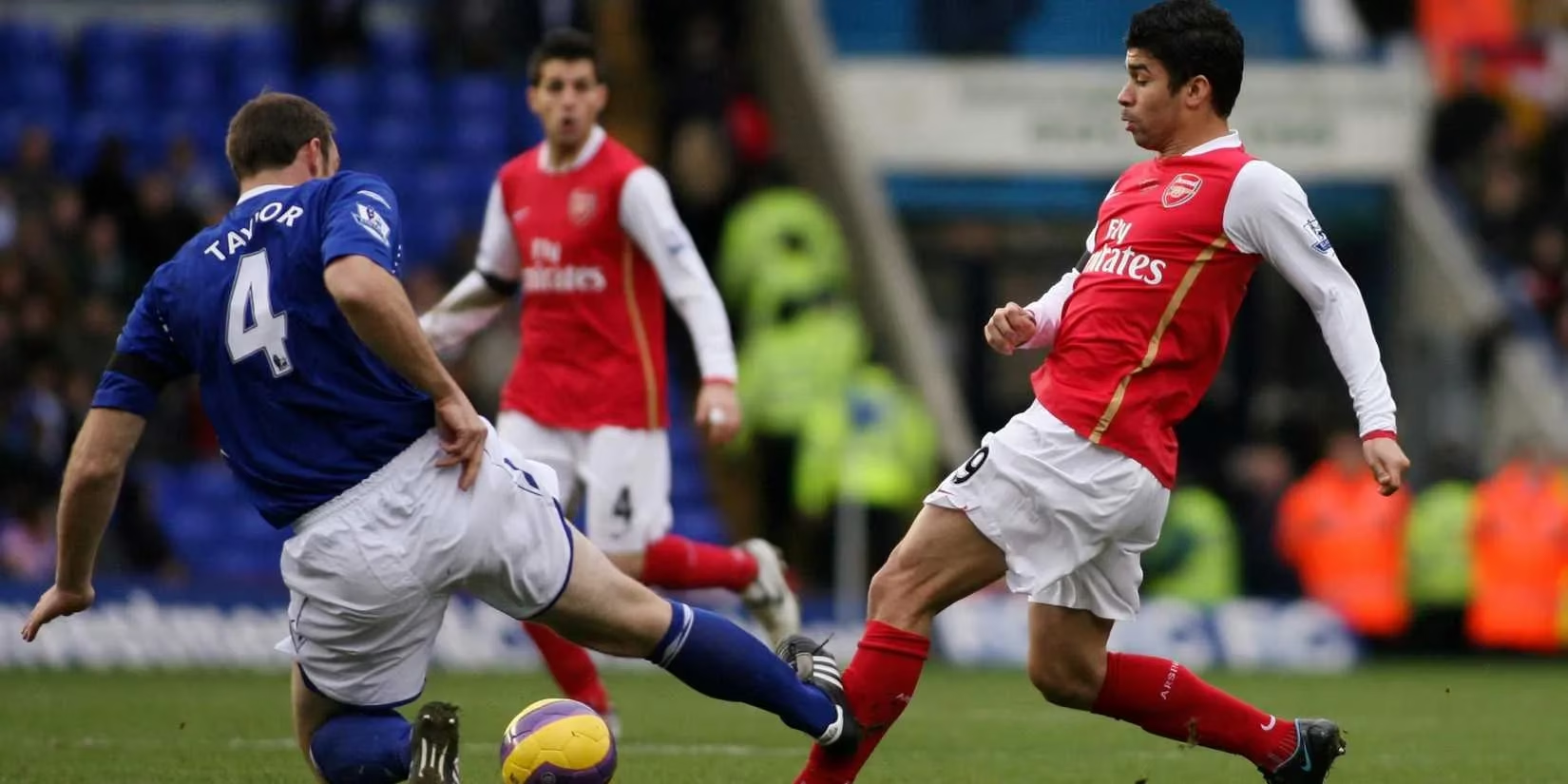
Eduardo da Silva. The name alone conjures that image for any Arsenal fan of a certain age. Martin Taylor’s challenge, the bone protruding from the sock—it was a scene from a horror film played out in real time. The physio’s words haunt me: "I saw the bone sticking out of his sock." He came back, a year later, but something was gone. The fearless flow, the unthinking joy—it was filtered through a new lens of caution. He was sold, and a what-if career drifted into footballing lore. It’s a brutal reminder that recovery isn’t just about bones knitting; it’s about stitching confidence back together.
The Goalkeeper's Fortress Breached:
-
Petr Cech (2006): A collision, emergency brain surgery, and a career forever marked by a rugby-style head guard. He turned it into an iconic part of his armor, winning everything in the game. But beneath that cap was a skull reinforced by plates—a permanent monument to a moment's danger.
-
Hatem Ben Arfa (2010): A double leg break from Nigel de Jong so bad amputation was discussed. He missed eight months, had a second op, but my word, he came back dancing. He had that stint at PSG! The flair survived, even if the leg bore the map of its trauma.
Some injuries are acts of fate; others feel like choices. Roy Keane on Alf-Inge Haaland. Even now, the replay looks like a declaration of war. Studs into the knee at full force. Haaland recovered on paper in days, but the shadow of that tackle clung to him, contributing to an early retirement two years later. A son, Erling, now dominates the league, a constant living reminder of that day. The cycle of the game is strange and poetic, and sometimes painfully ironic.
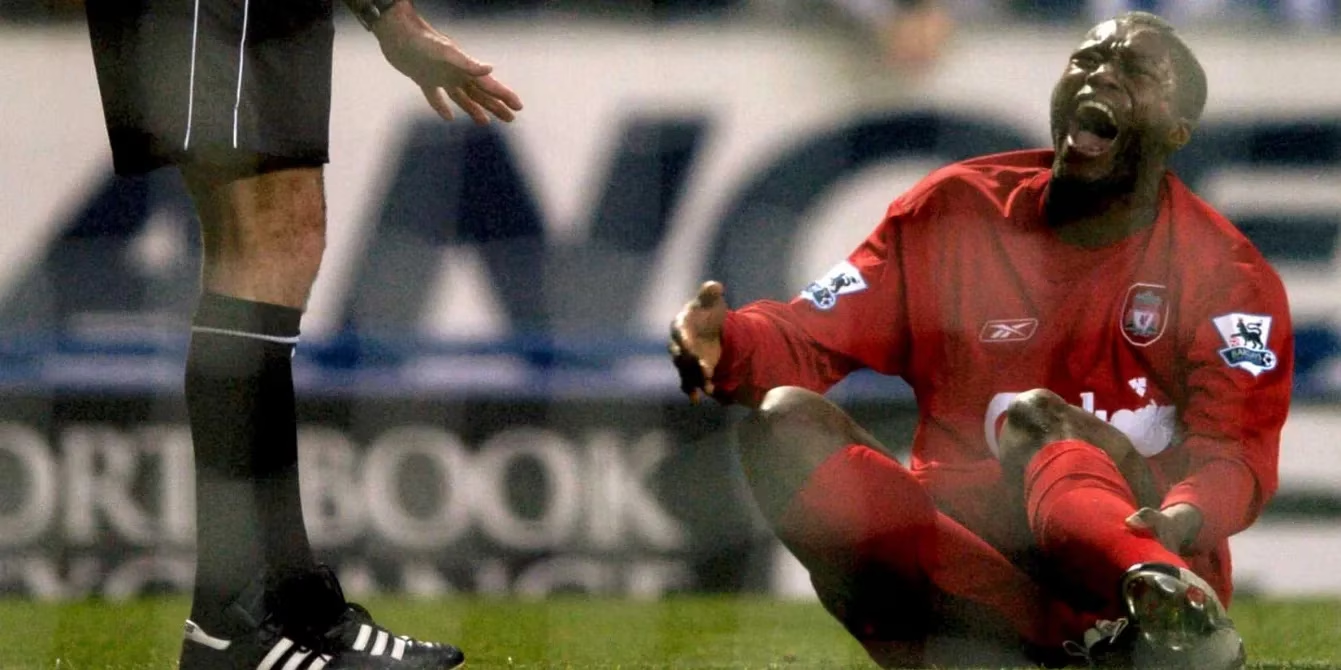
Djibril Cisse suffered not one, but two horrific leg breaks. The first, for Liverpool against Blackburn, was a freak accident—boot stuck, leg snapped. The shin bone out, pulses lost. They nearly had to take the leg. Can you imagine? But he fought back, only to break the other leg in a friendly for France, missing the 2006 World Cup. The man’s resilience was… well, it was something else. He played on until 2015. His pace, that blistering trademark, might have dimmed a fraction, but his spirit burned undimmed.
And then there are the moments that aren't about bones, but about malice. Pedro Mendes, 2006, unconscious on the pitch after a reckless elbow from Ben Thatcher. He had a seizure in the ambulance. It was an assault disguised as a challenge. Mendes recovered fully, a small miracle, but he called it the worst moment of his career. The fear wasn't of never playing again, but of never being the same person again. That's the psychological scar, the one the cameras can't see.
Gary Mabbutt, a diabetic warrior, having his eye socket shattered by an elbow. Surgeons piecing his face back together like a fragile puzzle. Luc Nilis, his Villa adventure ending after three games, choosing to walk away even after his surgeons gave the all-clear. The mind had decided the risk was too great. The love for the game was overruled by the love for a normal life.
As I sit here in 2026, looking back, these aren't just historical footnotes. They're chapters in the ongoing story of the sport. We celebrate the goals, the saves, the titles. But we must also sit with these moments of silence. They remind us that beneath the kits and the contracts are fragile human beings who, for our entertainment, flirt with physical ruin. The grass may forget, but we shouldn't. Every player who steps onto that pitch carries not just the hopes of fans, but the silent echoes of those who fell before them. And in their every sprint, tackle, and leap, there is a courage that goes far beyond the scoreline.