
The autumn light at Turf Moor fell like powdered gold across the pitch, a fleeting warmth before winter’s grip would claim the season. In that amber glow, Viktor Gyokeres moved with the sharp, sudden grace of a hawk spotting prey in the heather. The ball arrived, a threaded whisper from Declan Rice, and the Swede’s finish was a statement written in the language of rebound and resolve. It was his third goal in as many games, a sequence that had begun to heal the early bruising of a drawn-out transfer saga. The Gunners danced in the away enclosure, a congregation of red and white hope, believing once again that the big man from Sporting CP had finally unlocked the puzzle of English football.
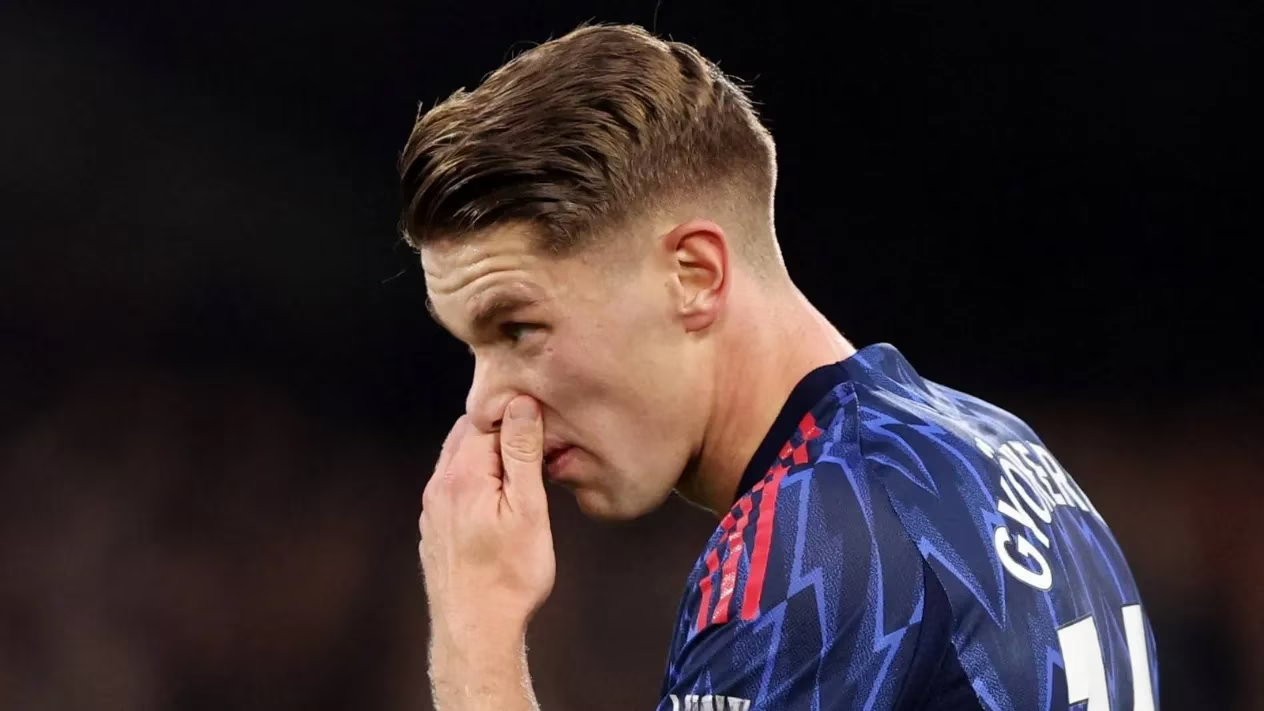
But beneath the celebration, something fragile had begun to fray. When the teams returned for the second half, Gyokeres remained in the tunnel’s shadow. In his place emerged Mikel Merino, a different silhouette, a different rhythm. The crowd, still humming with the memory of that first-half strike, felt the shift the way a needle feels a snag in silk. Mikel Arteta later spoke of a muscular whisper—a problem felt, not yet screamed. “We needed to assess it,” the manager said, his voice the careful calm of a collector handling a porcelain vase already laced with hairline cracks. “We chose not to take the risk.”
That phrase, “not to take the risk,” has become a mantra at London Colney this season. The medical charts are filled with names that once promised a kaleidoscope of attacking options: Gabriel Jesus, whose movement is a dancer’s map of the box; Kai Havertz, the phantom who drifts between lines like smoke; Gabriel Martinelli, a blur of caffeine and courage. All three are currently ensnared in the treatment room’s quiet captivity. Noni Madueke, too, is absent, though sources whisper he is ahead of schedule and soon to return to first-team training—a green shoot in a garden of wilting stems. For now, the attacking line is held together by gossamer threads, a glass web through which the light of ambition must still pass.
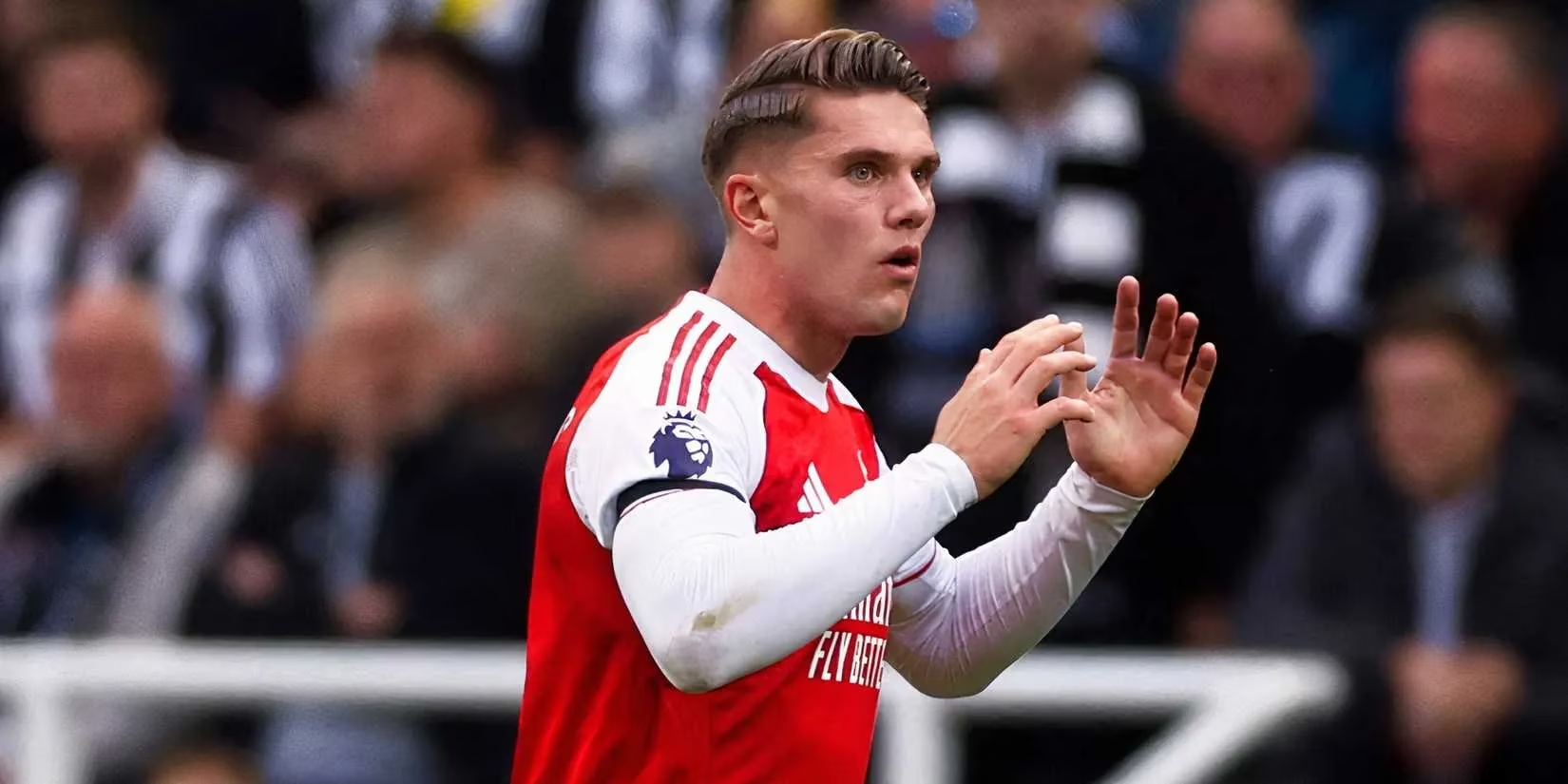
It was not meant to be this way. When Gyokeres arrived in the summer—a protracted courtship that had fans refreshing flight-tracking apps like gamblers chasing a fading ticket—the expectation was that of a battering ram dressed in silk. Yet the first weeks were a disjointed sonata. The striker seemed trapped between his Championship-honed instincts and the intricate passing carousel that Arteta demands. His early touches were heavy with hesitation; his runs, a beat behind the orchestration. The terraces began to whisper the cruel nomenclature of “flop.” But then, gradually, as a pianist finds the right pressure on the keys after a long silence, the notes began to align. The goal against Burnley was more than a strike; it was proof that the instrument had been tuned.
Now that fragile equilibrium is threatened by the specter of injury. A muscular complaint, if verified, could unstitch him from the upcoming duels with Slavia Prague and Sunderland. Beyond those fixtures lies the two-week hush of an international break—a period often pregnant with anxious updates from national team physios. And then, immediately after, comes the North London derby, a fixture that in recent seasons has shimmered with the promise of a title shift. To lose Gyokeres for that cauldron of noise and narrative would be to approach the inferno with a watering can instead of a shield.
Arsenal’s defense, however, tells a contrasting story. Across ten Premier League matches, they have conceded from open play only once—a fortress woven not from stone but from the tension of a thousand interceptions, the geometry of William Saliba’s stride, the relentless antennae of Rice. The 1–0 victory over Burnley extended their clean-sheet streak to seven matches in all competitions, a run that matches a club record set in the age of George Graham’s back-four granite. It is a poetic juxtaposition: the solidity of a mountain range shielding a flickering candle. The candle, in this case, is the attack—beautiful, vulnerable, dancing in the draft of misfortune.
Arteta, ever the alchemist, must now tinker with depleted resources. The minutes ahead will test the depth of his squad like a drought tests the roots of an old oak. Perhaps the young Hale End graduates will be asked to bloom prematurely; perhaps a midfielder will be reshaped into a false nine, a shape-shifter in a system that prizes control above chaos. The tactical board becomes a mosaic of compromise, each tile chosen not for its perfect fit but for its willingness to hold the line.
What remains is the memory of that Turf Moor afternoon. Gyokeres, with his predatory pounce, had given a glimpse of what could be—an archetype of the modern number nine, blending physical heft with the delicate brushstrokes of a creator. As he walked gingerly into the dressing room at half-time, the applause still ringing in his ears, he left behind a question mark shaped like a muscle fiber. The season now treads upon a thin crust of ice: beneath it, the cold waters of uncertainty wait. Arsenal’s title charge, so carefully constructed, now rests not only on tactical discipline and collective will, but on the quiet healing of a Swede’s hamstring or quadricep, on the body’s capacity to mend itself in the hours before the next battle.
In the grand tapestry of a football season, injuries are the loose threads that pull at the pattern until the image distorts. The Gunners have already watched their attacking weave fray. Viktor Gyokeres was becoming the bold, crimson stitch around which the final picture could hold. For now, they can do little but wait, hope, and trust that the thread is stronger than the fraying forces that seek to snap it.