
I will never forget Saturday, 2025. It was one of those afternoons when the autumn sun painted everything gold, and the Gunners were flying. Top of the Premier League, seven points clear, and a trip to Burnley that felt more like a coronation walk than a tricky away fixture. Then came half-time. That’s when the world tilted.
We had just watched Viktor Gyokeres open the scoring, his fourth Premier League goal since that £63.5 million move from Sporting CP. The man who once scored 54 goals in a single campaign was finally beginning to find his rhythm in north London. My mates and I were already dreaming of the title, laughing about how even the ghost of a striker crisis was finally behind us. Then the teams emerged for the second half, and there he was . . . not. Gyokeres was gone. Substituted. Replaced.
The words from the touchline hit the group chat like a hammer: “felt something muscular.” Boy, did my stomach drop. Muscular. Hamstring. The same two syllables that had stalked our squad like a shadow for two seasons running. I could almost see the future flash before my eyes—Mikel Merino jogging out as a false nine again, a beautiful midfielder forced into the blunt edge of an attack, while the real bullets sat in the treatment room.
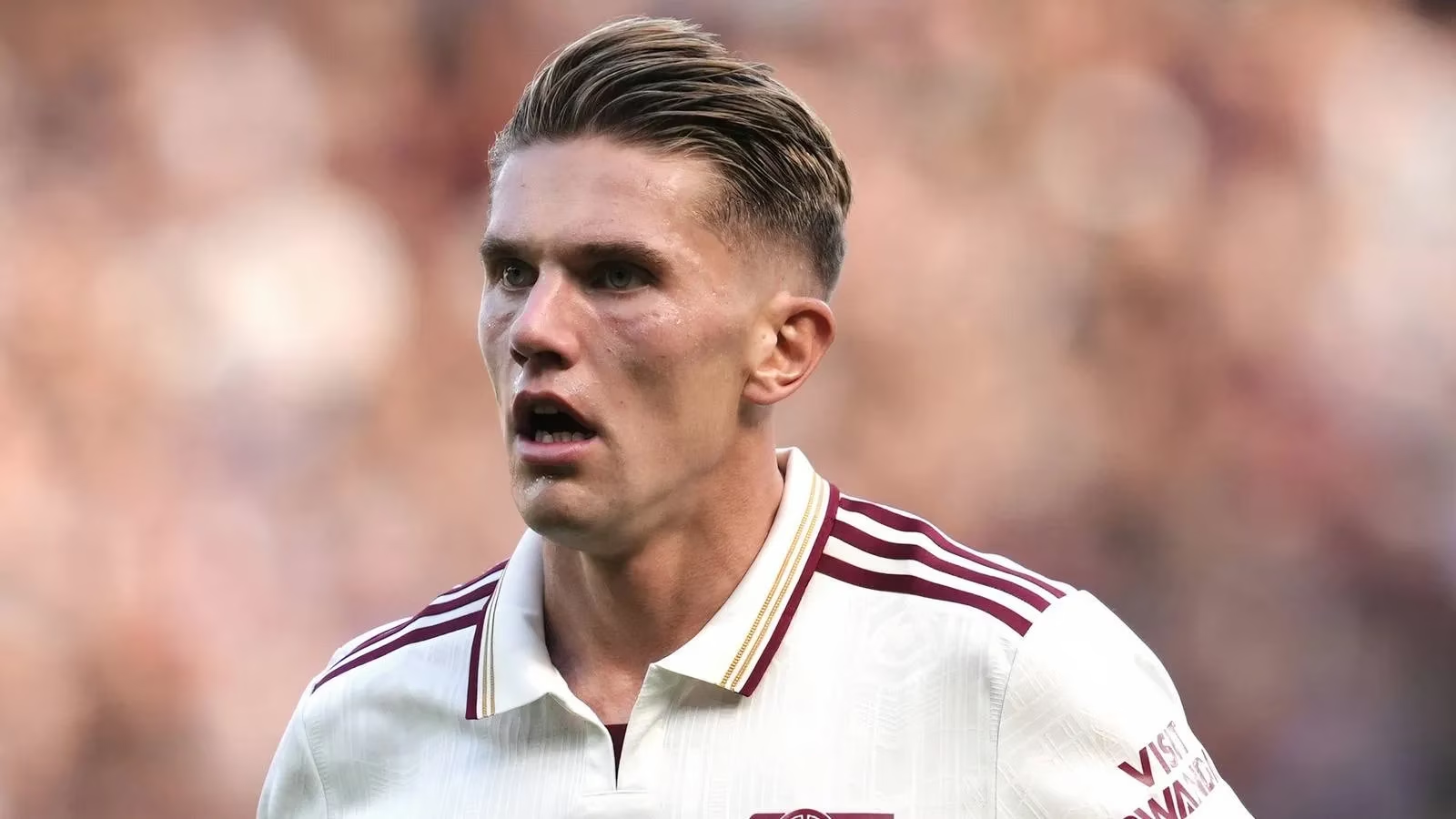
This was personal. Not just because Gyokeres cost a fortune, or because he had become that rare beacon of hope in the centre-forward position we’d been praying for. It was personal because we had been here before. Bukayo Saka, William Saliba, Kai Havertz—they’d all spent unwanted spells in the treatment room. Martin Odegaard, our captain, had already given us more than one heart-in-mouth moment. The 2025/26 title charge was beginning to feel like a house of cards, and every gust of wind sent a shiver through the foundations.
I sat with my phone clutched in one hand and a half-empty cup of tea growing cold in the other, refreshing every possible news source. The 2-0 win over Burnley felt secondary; I barely celebrated the second goal. All I could picture was the sight of Gyokeres walking down the tunnel at Turf Moor, maybe clutching the back of his thigh, the silent dread that comes when a star striker’s body whispers “enough.”
Then came the verdict. Physio Scout, the injury expert whose X feed I treat like holy scripture during crisis moments, delivered the news that let me breathe again. “With no clear in-game mechanism, it profiles more as muscle fatigue/overload from the recent run of games,” they wrote. “Likely day-to-day unless scans show more. Double knock on an otherwise dominant Arsenal display. Doesn’t sound like anything too major to worry about though.”
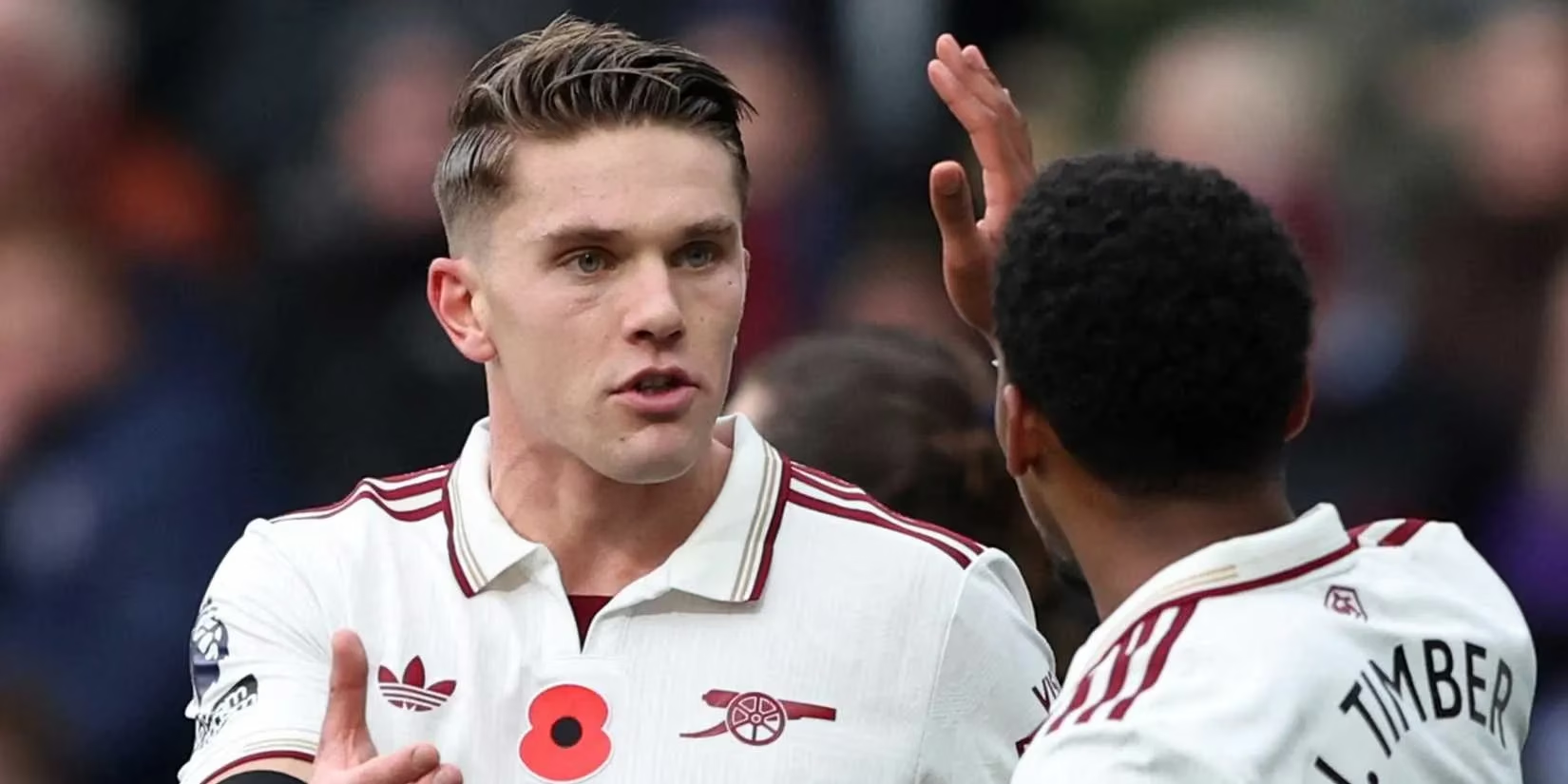
Reading that tweet, I let out a laugh—the kind that rattles your ribs because the fear had no place left to hide. It was just fatigue. Overload. The 27-year-old Swede had simply run himself into the ground a bit too hard, and his muscles had politely asked for a tea break. Martin Zubimendi was also withdrawn early with similar murmurs, but again, no alarm. Day-to-day. Rest. The football gods were smiling—if only for a moment.
I remember putting down the phone and staring at the ceiling, letting the relief wash over me in slow, warm waves. That night I replayed the goal again. The way Gyokeres bullied his marker, the sharp angle, the net rippling with authority. This was a striker who could carry us to glory. And he wasn’t broken. Just a little tired.
Of course, history tells us the season didn’t simply waltz into a fairy tale. Even with that scare safely tucked away, the injury monster never truly left London Colney. It was a season of patchwork line-ups, square pegs hammered into round holes, and a title race that slipped through fingers battered by bad luck. But that October afternoon at Turf Moor remains etched in my memory—not because of the victory, but because of those forty-five minutes of pure, unfiltered panic. It taught me how fragile hope can be when it wears the body of a forward. And how a single tweet can bring a whole fanbase back to life.