
Back in October 2025, a familiar shadow fell over the Etihad Stadium just as Manchester City were beginning to find their rhythm. The 2025/26 Premier League season had not started at full throttle for Pep Guardiola’s side – seven games in, they sat fifth on 13 points, three behind early leaders Arsenal. Two consecutive league victories, capped by a hard-fought 1-0 win at Brentford thanks to Erling Haaland’s decisive strike, seemed to signal a turning point. Then, in the 22nd minute at the Gtech Community Stadium, the mood shifted dramatically.
Rodri, the midfield linchpin who had only recently returned from an anterior cruciate ligament rupture that robbed him of almost the entire previous campaign, stretched for a ball, clutched his hamstring, and limped off the pitch. For Cityzens worldwide, the sight was a gut-punch. This was not just any player – Rodri had evolved into arguably the most indispensable figure in Guardiola’s system, a rare Ballon d’Or winner in an era still shaped by the long shadows of Lionel Messi and Cristiano Ronaldo.
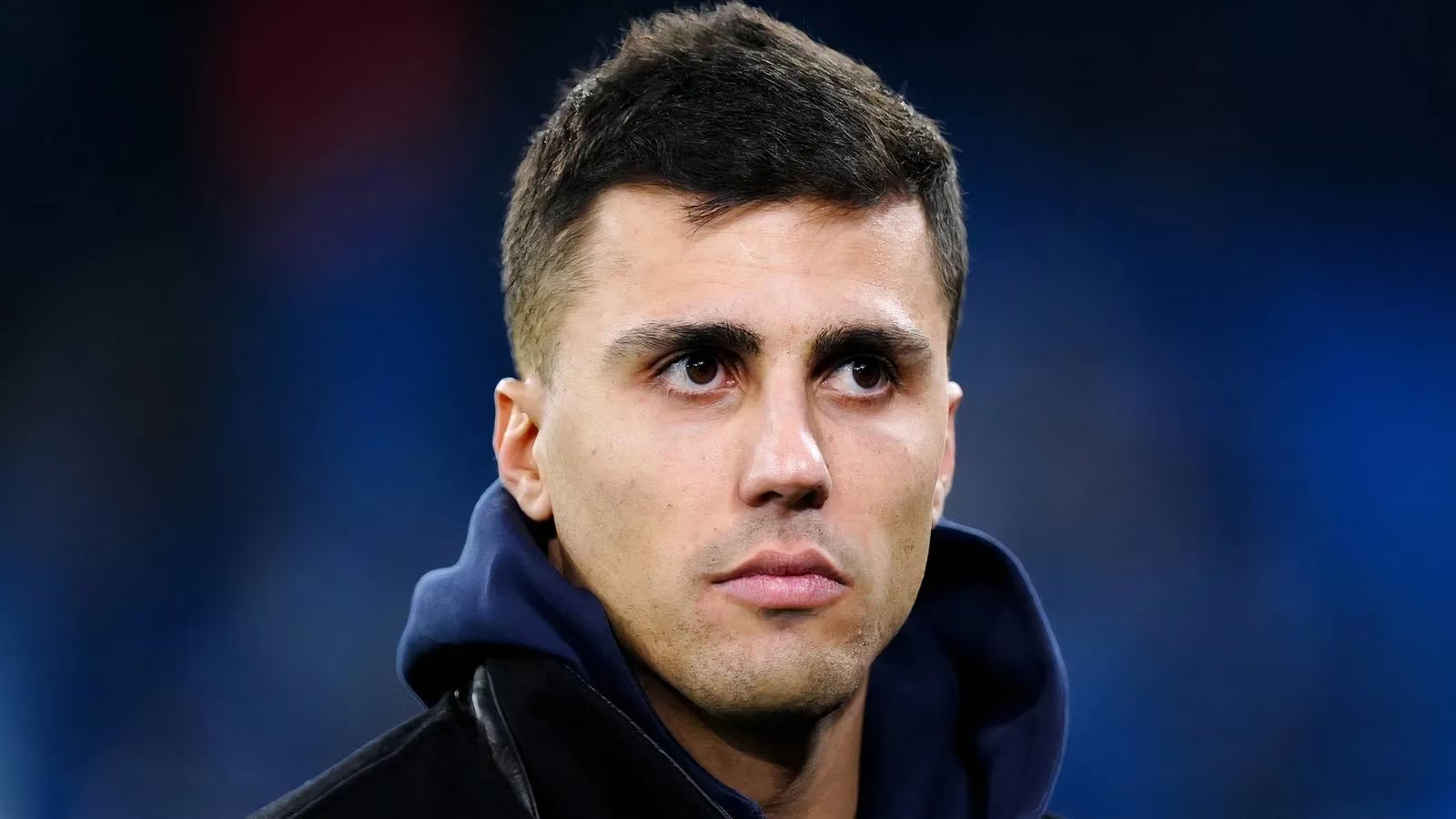
The context made the moment even more painful. Rodri had missed only five matches through injury in his entire career before the 2024/25 season. An ACL blow sustained in September 2024 changed everything, restricting him to just 73 minutes of league football that year. The 2025/26 campaign represented a long-awaited comeback. He had already managed a handful of starts, cautiously building match fitness, and the Brentford fixture was supposed to be another step towards his imperious best. Instead, it triggered immediate fears of another extended layoff.
With the international break about to commence, Rodri’s participation with Spain was instantly ruled out. The focus shifted to the severity of the hamstring issue. An expert account on X, @physioscout, quickly offered an assessment that spread across social media. The prognosis suggested a worst-case scenario of four to six weeks on the sidelines, but the tone was cautiously optimistic: “more likely a low-grade strain here than anything more.” For a player so crucial to both club and country, even a grade one strain meant a tense period of recovery, especially given the psychological hurdle of another muscle setback so soon after a major knee reconstruction.
Manchester City’s medical team, renowned for their meticulous load management, faced a delicate balancing act. Pushing Rodri back too quickly could risk recurrence; delaying unnecessarily might cost points in a title race that promised to be ferociously competitive. Guardiola, never one to hide his admiration for the Spaniard’s unique qualities, understood the gravity. “When Rodri plays, we are better – more fluid, more secure,” he had often repeated. The statistics backed him up: City’s win percentage without the defensive midfielder over the previous seasons had dipped noticeably, and his ability to snuff out transitions while dictating tempo was irreplaceable.
Looking back now in 2026, that 22-minute cameo at Brentford feels like a pivotal checkpoint in a season of recovering identity. The predicted four-to-six-week timeframe initially pointed to a return around the Everton match on October 18, yet the club’s subsequent updates were deliberately vague. Rodri ultimately missed three league fixtures and one Champions League group-stage tie before making a substitute appearance against Bournemouth in early November – a timeline that sat comfortably within the expert’s cautious estimate.
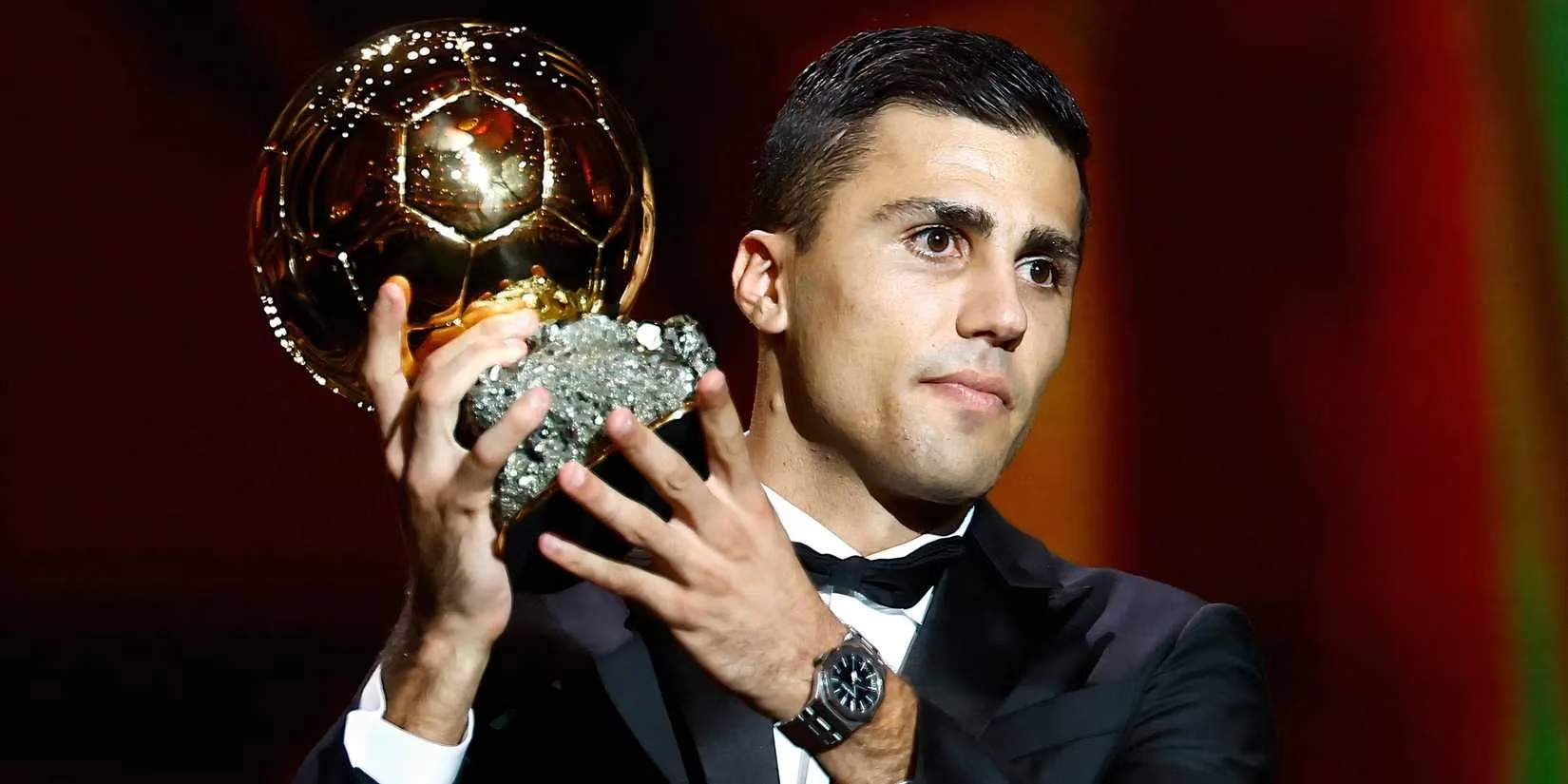
What followed for City was a test of their squad depth. Mateo Kovačić and Matheus Nunes were tasked with filling the void, while John Stones occasionally stepped into a hybrid defensive-midfield role. The results were mixed: a drab goalless draw at Goodison Park and a nervy 2-1 win over Crystal Palace exposed the lack of the same control Rodri brings. Yet this period also accelerated the integration of younger talents and reminded the football world that even Guardiola’s all-conquering machine could look surprisingly human without its conductor.
The hamstring scare of October 2025 did not become another career-derailing chapter. Rather, it served as a warning that even the most durable athletes, after a severe injury, face a fragile path back to full capacity. By Christmas 2025, Rodri was once again the metronome of City’s midfield, his early-season troubles a distant memory. But for a few weeks that autumn, the Premier League held its breath – and the @physioscout prediction of a low-grade strain offered the first, much-needed glimmer of relief.