
In the relentless grind of a Premier League season, no squad escapes the medical room entirely. From the title hopefuls to those fighting for survival, the treatment table can reshape ambitions in a matter of weeks. As the 2025/26 campaign unfolded, the narrative was once again being written not just by goals and tactics, but by the players who could not take the pitch. By the early months of 2026, the pattern was unmistakable: some clubs were being ravaged by injuries, while others were almost mysteriously fortunate. Is the difference merely luck, or is there something deeper at play?
According to detailed data from Opta, as reported by Sky Sports, every one of the 20 top-flight teams had recorded separate injury events between mid-August and the data cutoff in early November 2025. A single player picking up two distinct problems counted as two injuries, which makes the raw numbers a fascinating gauge of squad stress. At the top of this unwanted list sat Pep Guardiola’s Manchester City. The Citizens, still smarting from a trophyless 2024/25, endured a staggering 21 separate injuries early in the season. Rodri’s ongoing fragility was central to the story – the midfield colossus missed a huge chunk of the previous term and his injury-prone run spilled over into the new campaign, leaving City’s engine room depleted. Can a team with such depth truly be derailed, or does every absence eat away at their rhythm in ways the table doesn’t yet show?
Close behind City were Daniel Farke’s Leeds United with 19 injuries, followed by a cluster of top-four contenders all hit hard: Chelsea, Arsenal, and defending champions Liverpool each suffered 18 separate setbacks. For Mikel Arteta’s Gunners, the absence of their skipper Martin Ødegaard was particularly galling. 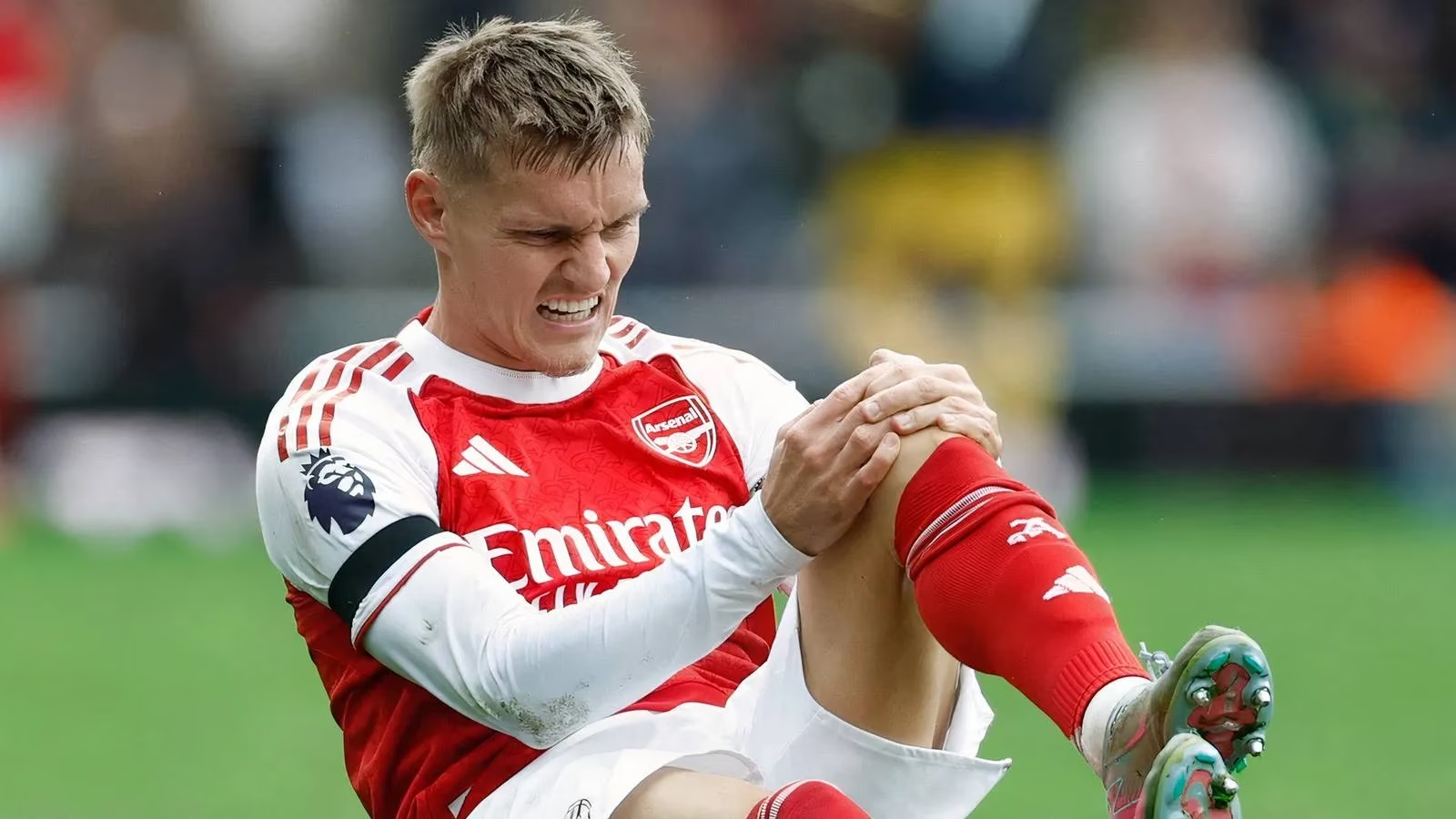 Without his creative heartbeat, Arsenal still managed to steal a march at the summit, but how long could that last? Liverpool, under Arne Slot, had to navigate life without Alisson Becker, while Enzo Maresca’s Chelsea were stripped of Levi Colwill, Cole Palmer, and others at critical moments. Meanwhile, Tottenham Hotspur, Crystal Palace, Brighton & Hove Albion, and Aston Villa all registered 17 injuries apiece, proving that the middle and upper echelons of the table were not immune.
Viewed from a different angle, the list revealed some genuine surprises. Regis Le Bris’ newly promoted Sunderland were flying high, their smart recruitment helping them adapt to the top division. Yet they had faced 13 injuries – the same number as Newcastle United, Wolverhampton Wanderers, and Brentford. 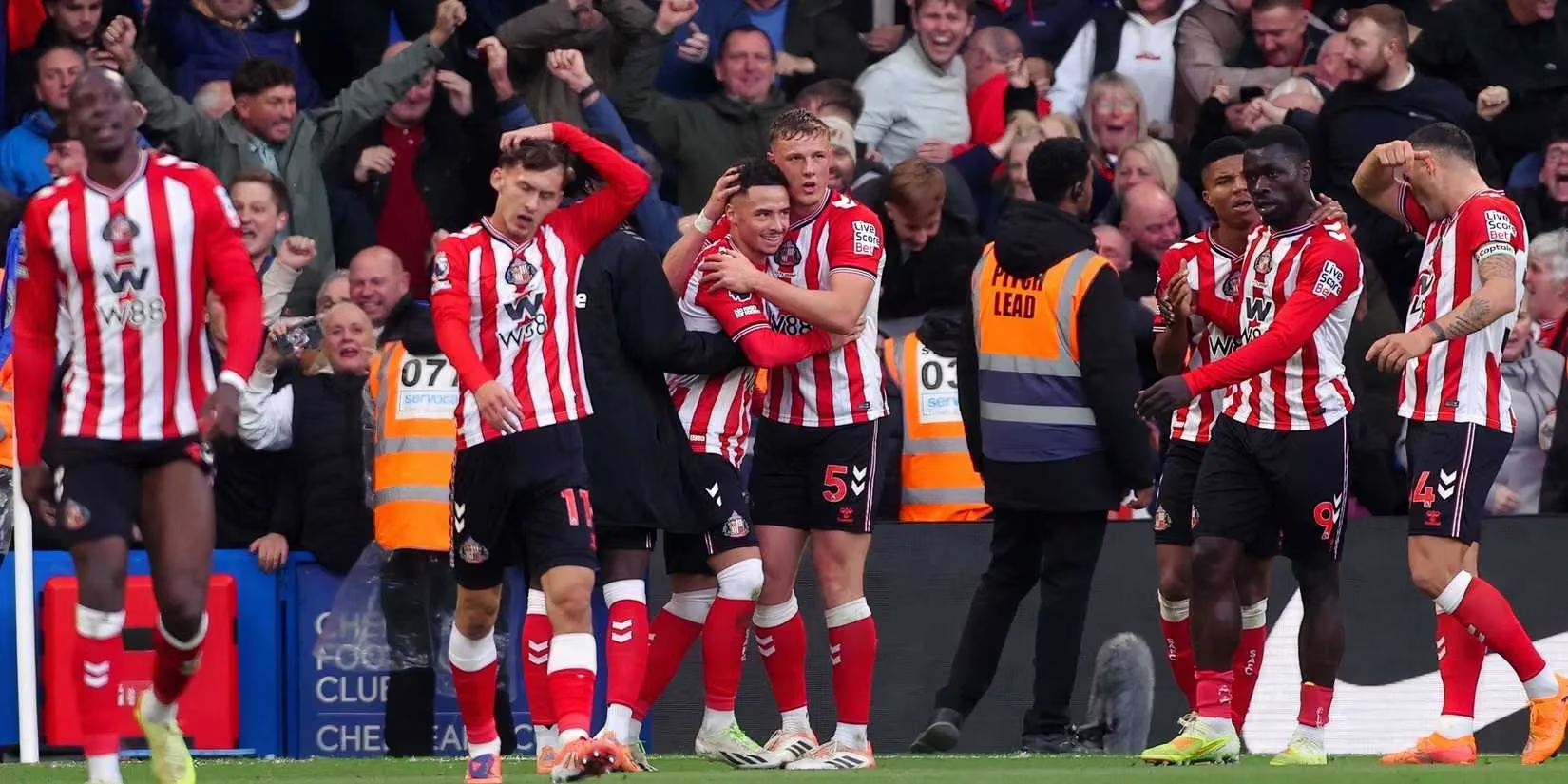 Fulham, with just 12, could consider themselves among the luckier sides, while Burnley, Nottingham Forest, and Everton followed on 11. Bournemouth and West Ham United rounded out the lower end with ten each. But the most startling figure came from Old Trafford. Manchester United, historically blighted by injury crises, had suffered a mere eight injuries under Ruben Amorim. Was it the absence of European football that kept their squad fresher, or had the medical and conditioning teams finally found a winning formula?
Counting injuries tells only half the story, of course. A two-day niggle is not the same as a season-ending rupture. When the focus shifted to total days lost through injury, the picture became far more dramatic. Tottenham Hotspur, under the management of Thomas Frank, were the undisputed crisis club: an eye-watering 516 days missed. James Maddison was stretchered off in a pre-season test against Newcastle and missed the entire opening stanza, while Dejan Kulusevski and Dominic Solanke were among the long-term absentees. How does a side maintain any tactical consistency when its creative core is perpetually unavailable?
Sunderland’s fairy-tale start to life back in the Premier League was made even more impressive by their injury burden: 454 days lost. Crystal Palace, the reigning FA Cup holders, were not far behind at 444 days, while Chelsea’s 440 days further explained their stop-start form. Brighton (382), Manchester City (364), and Arsenal (362) followed, each missing days that represented not just individual absences but disrupted partnerships across the pitch. For Arsenal, Ødegaard’s extended spell on the sidelines was a larger chunk of that tally; for City, Rodri’s absence alone accounted for a significant portion of their 364 days. Liverpool’s 297 days and Aston Villa’s 276 days were equally concerning. Unai Emery’s side, for instance, lost the influential Youri Tielemans from the engine room, a blow reflected vividly in their performance rhythms. 
At the opposite end of the spectrum, some clubs were remarkably unscathed. Nottingham Forest, despite Ola Aina’s long-term injury, missed only 209 days. Bournemouth, thriving under Andoni Iraola, lost just 200 days – their fitness record a clear factor in their surprising ascent. Wolves and Everton came in at 192 and 191 days respectively, but the most enviable numbers belonged to Manchester United (165 days) and West Ham (163 days). Fulham, almost impossibly fortunate, had missed a mere 147 days through injury. Can such a hand be purely random, or is it a testament to squad rotation, training load management, and perhaps a dash of fortune?
The 2025/26 season, even at this early juncture in 2026, has already demonstrated that injuries are not just a subplot but a central driver of league positions. While some managers scramble to patch together a starting eleven, others enjoy the luxury of continuity. The data serves as both a caution and a roadmap: the title may well be decided not on the pitch alone, but in the treatment room.