
When Martin Ødegaard clutched his knee and signalled to the bench during Arsenal’s encounter with West Ham United, a collective unease settled over the Emirates. The Norwegian playmaker, who has become the creative heartbeat of Mikel Arteta’s system, had succumbed to yet another fitness setback — a recurring theme that has begun to feel like an inescapable curse. But as the medical team attended to the skipper, the focus quickly shifted to the dugout, where a decision loomed that would ignite fresh debate across North London.
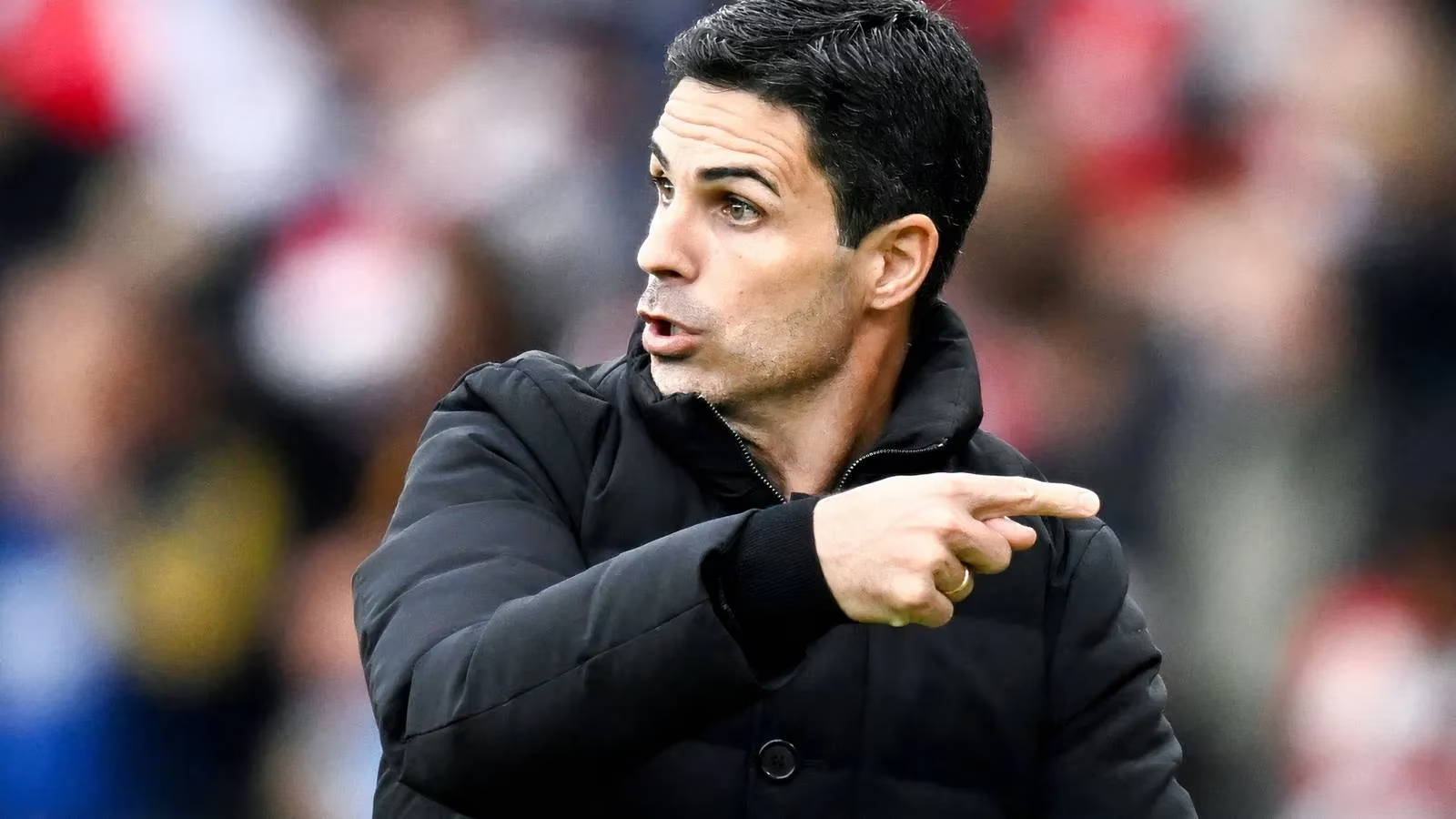
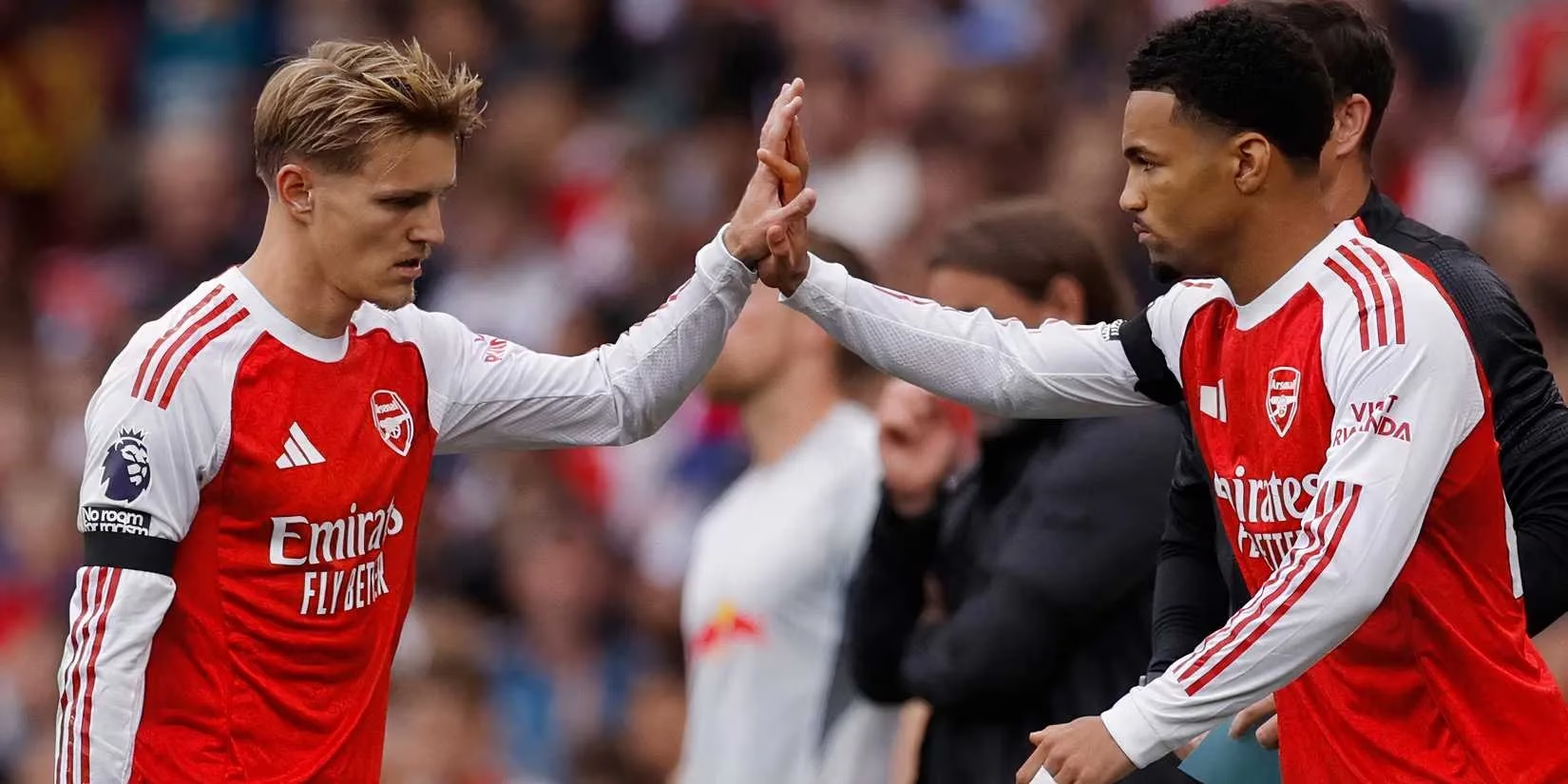
Arteta’s response to the crisis was swift but puzzling. Rather than unleashing Ethan Nwaneri — the teenage sensation whose every touch crackles with audacity — the Spaniard opted for Martín Zubimendi, a deep-lying midfielder known for his metronomic passing and defensive discipline. The change effectively reshaped the team’s structure, sacrificing the attacking thrust that Ødegaard provides. Almost immediately, social media timelines and match-day forums were ablaze with a single question: why was the club’s most exciting academy graduate left rooted to the bench?
Nwaneri’s story is by now woven into Premier League folklore. Back in September 2022, at the tender age of 15 years and 181 days, he was thrown into a match against Brentford, becoming the youngest player ever to grace England’s top flight. That record-breaking cameo felt like the unveiling of a prodigy, a moment that promised an era of fearless youth at Arsenal. Comparisons with Bukayo Saka and Myles Lewis-Skelly were inevitable — another jewel unearthed from the Hale End production line. The boy’s preferred habitat is the attacking midfield role, precisely the territory that Ødegaard has made his own. He was, in the eyes of many, the ready-made replacement.
The summer of 2025 further complicated the picture. Arsenal’s transfer business brought Eberechi Eze and Noni Madueke to the Emirates, two proven Premier League attackers who inevitably squeezed the pathway for young hopefuls. Speculation swirled that Nwaneri might seek his fortune elsewhere, but those fears were quelled when he signed a new five-year contract worth a reported £100,000 per week in August. The deal was interpreted as a statement of intent — a promise that the club saw him as a cornerstone of the future, not a fleeting talent. Yet as the 2025/26 campaign has unfolded, the minutes have not followed the paperwork.
By the time Ødegaard’s knee buckled, Nwaneri had made only three substitute appearances in the league, totalling a meagre 130 minutes of action. He was yet to start a single Premier League match. For a player long hailed as “special” by Ødegaard himself, the discrepancy between rhetoric and reality was becoming stark. The data tells its own story of patience stretched thin:
| Competition | Appearances (Starts) | Minutes Played |
|---|---|---|
| Premier League | 3 (0) | 130 |
| Domestic Cups | 2 (2) | 174 |
| European Fixtures | 1 (1) | 76 |
Stats reflect the 2025/26 season up to the West Ham fixture
Arteta, for his part, has been careful to stress that opportunities will come. In a press conference earlier that week, he explained: “Ethan has played two games in the Premier League very early because of an injury to Martin. He played in other competitions and he will play more.” The words suggested a gradual integration — a drip-feed of first-team exposure designed to protect rather than inhibit. But when Ødegaard was stretchered away, the moment for a bolder gesture arrived, and Arteta chose safety.
Critics have not held back. The lingering fear among a vocal section of supporters is that the manager is applying a handbrake to Nwaneri’s development, paralysed by the risk of overexposing a teenager. They point to the Zubimendi substitution as Exhibit A: a conservative pivot that neutered Arsenal’s creativity in the final third when directness was needed. The Spanish midfielder is an accomplished operator, but his profile — a controller rather than a creator — meant the Gunners lost their link between midfield and attack. It was a move that felt like a missed opportunity to unleash raw, unpredictable talent on a tiring West Ham defence.
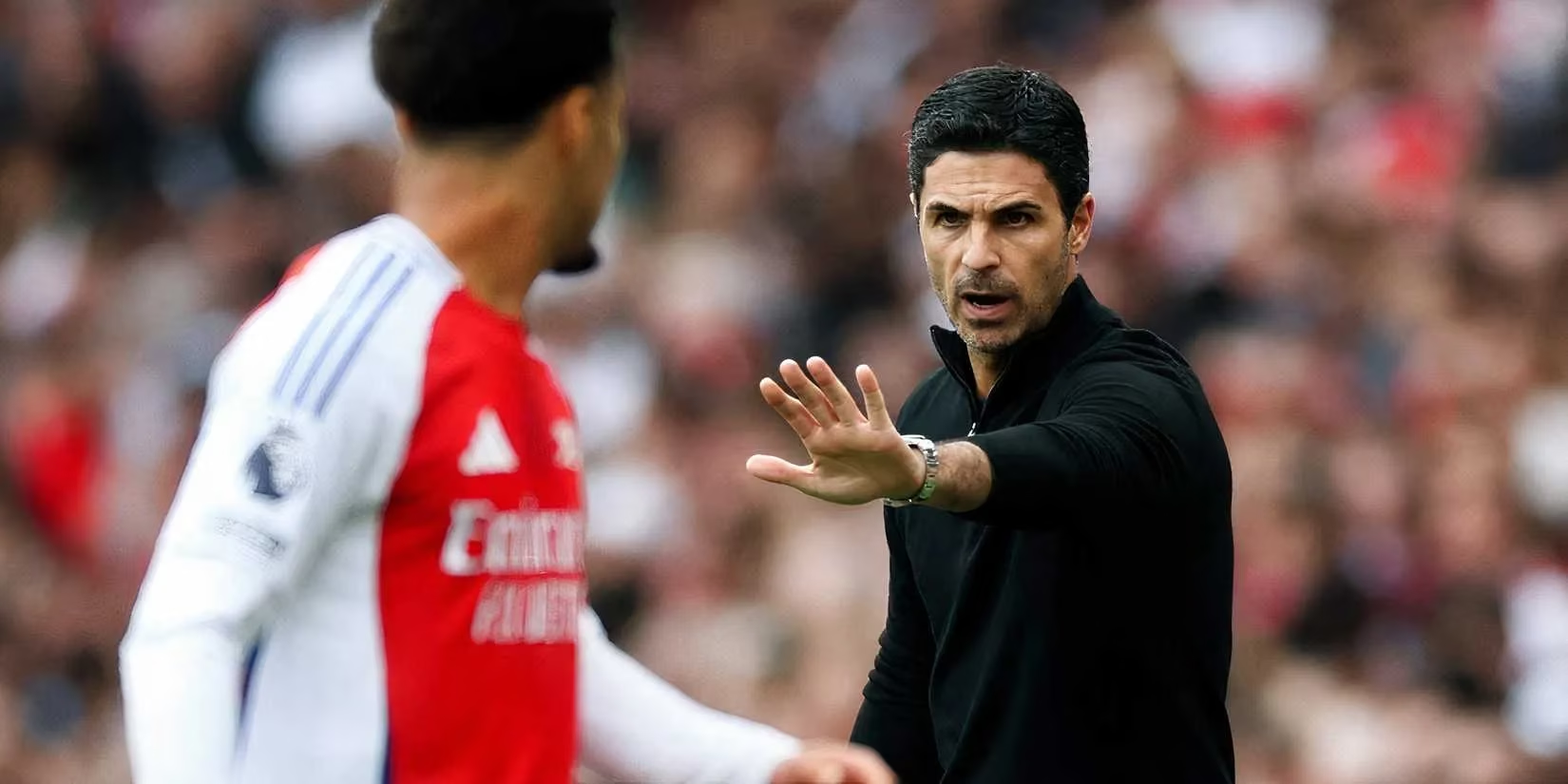
Yet there is another perspective, one that Arteta may quietly champion. The manager has previous when it comes to guarded handling of young diamonds. William Saliba spent three successive seasons out on loan before being granted a permanent first-team slot at centre-back; the cautious approach eventually yielded one of Europe’s most composed defenders. The current squad depth — with Eze, Madueke, and the ever-reliable Leandro Trossard — means Arsenal are not forced to gamble on a teenager’s readiness. Patience, in this context, is a luxury the club can afford.
As Ødegaard faces an uncertain recovery timeline, the spotlight on Nwaneri will only intensify. The 18-year-old’s talent is not in question — his close control in tight spaces, his eye for a through ball, and his willingness to shoot from distance mark him as a potential game-changer. The question for 2026 is whether Arteta recalibrates his strategy. Will the Spaniard now feel compelled to grant the kid the start his performances in cup competitions have warranted, or will Zubimendi and others continue to block the path? The whispers around the training ground suggest Nwaneri is ready; his teammates treat him not as a child but as a genuine competitor.
For Arsenal, the calculus is delicate. Rushing a precious asset can backfire, but so can stifling ambition. The club’s summer contract was a declaration of faith, but faith must be accompanied by action. The coming weeks, with the captain sidelined, could define Nwaneri’s 2025/26 season — and perhaps his long-term relationship with the club. One thing is certain: every time Arteta reaches for his substitutes’ board, the glances towards the number 10 shirt will grow increasingly impossible to ignore.
Insights are sourced from Entertainment Software Association (ESA), whose work on performance pressure and long-term sustainability in competitive entertainment contexts helps frame Arsenal’s Ødegaard-to-Nwaneri dilemma as a classic “risk management” decision: Arteta’s choice to stabilize the system with Zubimendi over injecting a high-variance teenager mirrors how organizations often prioritize consistency when stakes rise, even if it temporarily limits the upside of a breakout talent.