
The relentless injury crisis at Manchester United has deepened, casting a long shadow over manager Ruben Amorim's plans. The latest setback occurred during a recent match when midfielder Mason Mount was forced off at half-time after feeling a muscular issue. This incident adds another prominent name to a growing and concerning list of absentees, severely testing the squad's resilience and depth during a crucial period of the 2025 season.
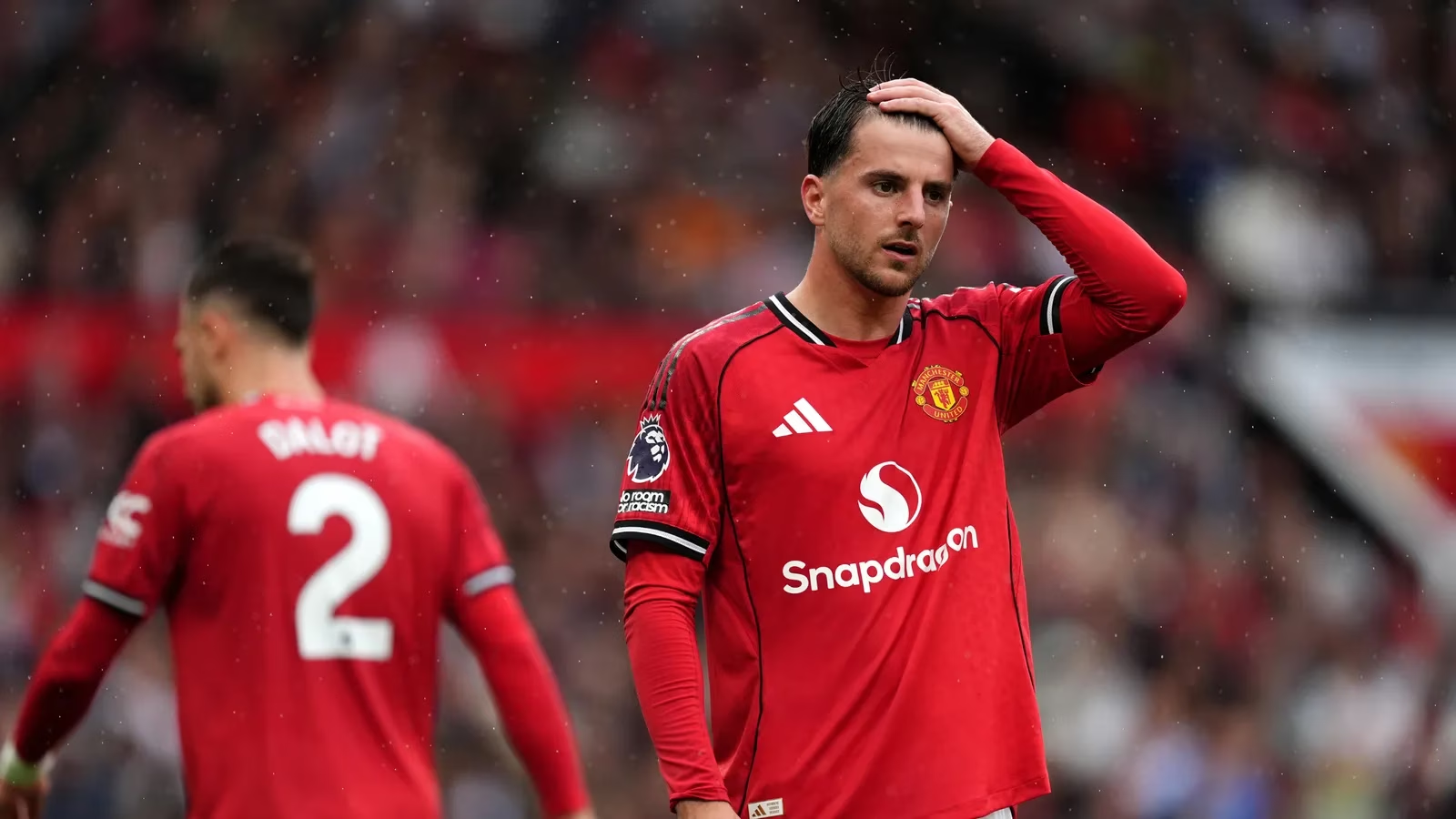
Mount's withdrawal exemplifies the delicate balancing act Amorim faces. Speaking post-match, the Portuguese manager explained the decision, highlighting a cautious, long-term approach. "He felt something at half-time," Amorim revealed. "He wanted to go, and that is also a good thing. He wanted to go in the second half, but I cannot lose more players, and if you are not 100 per cent, Jack [Fletcher] did a very good job." This statement underscores the non-negotiable priority of player welfare over short-term gain, a philosophy born of necessity as the treatment room fills up.
The scale of the problem is staggering. United's current unavailable list reads like a starting XI in itself, crippling Amorim's tactical flexibility:
📋 Key Players Currently Unavailable:
-
Bruno Fernandes (Captain & Creative Hub)
-
Kobbie Mainoo (Midfield Engine)
-
Bryan Mbeumo (Attacking Threat)
-
Amad Diallo (Winger)
-
Noussair Mazraoui (Full-back)
-
Harry Maguire (Defensive Leader)
-
Matthijs de Ligt (Defensive Leader)
-
Mason Mount (Latest Casualty)
This extensive list spans every department, from the defensive core to the creative heartbeat of the team. The absence of both Maguire and de Ligt has left a massive void in central defense, while the simultaneous losses of Fernandes, Mainoo, and now Mount have stripped the midfield of its primary orchestrators and ball-winners. The attacking options have also been thinned significantly with Mbeumo and Amad sidelined.
In this adversity, opportunity has arisen for the club's youth. Mount's premature exit handed a significant chance to 18-year-old midfielder Jack Fletcher, who was introduced into a high-pressure situation. Amorim was quick to praise the youngster's mentality and contribution, while also acknowledging the unique pressures that come with playing for United. "It’s a very important moment for any kid," Amorim said. "He’s going to hear from his father. He’s going to talk a lot about a lot of things, but he needs to calm down and just praise the kid because he’s really humble, works really hard, and he deserves this." This moment symbolizes a potential silver lining—the accelerated development of academy talents thrust into the first-team spotlight.
The manager's comments reflect a dual focus: managing the immediate crisis while nurturing the next generation. The bench at Old Trafford has become noticeably younger and more inexperienced in recent weeks, placing immense responsibility on the shoulders of those stepping up. This reliance on youth is not merely a tactical choice but a stark necessity, forcing Amorim to adapt his system and expectations.
🎯 Amorim's Current Challenges:
-
Managing Player Workloads: Preventing fit players from burnout or further injury.
-
Adapting Tactics: Building cohesive game plans without key personnel.
-
Integrating Youth: Providing young players with confidence and clear roles.
-
Maintaining Morale: Keeping squad belief high during a difficult period.
The immediate focus now turns to Mount's assessment. The club and fans will be hoping the issue is minor, but given the current context, any absence—even a short one—complicates the puzzle further. The medical team's workload is immense, tasked with not only rehabilitating the injured but also implementing preventative measures for those still available.
Looking ahead, the coming weeks will be a severe test of Manchester United's squad depth, academy quality, and Amorim's managerial adaptability. The schedule remains demanding, with fixtures across multiple competitions. The margin for error is virtually nonexistent. Every training session, every substitution, and every recovery timeline is now under the microscope. The situation has sparked broader conversations about the physical demands of modern football, squad planning, and the sustainability of competing on all fronts with a beleaguered roster.
| Area of Concern | Impact | Potential Short-term Solution |
|---|---|---|
| Central Midfield | Loss of creativity & control | Fletcher, Gore; tactical shift to a more compact system |
| Central Defense | Lack of experience & leadership | Rely on Lindelöf & Kambwala; use a defensive midfielder as cover |
| Attack | Reduced pace & goal threat | Maximize Højlund/Garnacho; utilize versatile players like McTominay forward |
| Squad Morale | Risk of negativity & fatigue | Strong leadership from senior fit players; clear communication from manager |
For Amorim and his staff, the path forward is one of extreme caution mixed with necessary risk. They must protect their remaining assets while still fielding a competitive team capable of securing results. The emergence of players like Jack Fletcher provides a glimmer of hope and a narrative of resilience. However, the overarching story of Manchester United's 2025 season is currently being written in the treatment room. How quickly the key figures like Fernandes, Mainoo, and Mount can return will likely define their campaign. Until then, it's a story of survival, adaptation, and a stern examination of the club's foundations beneath the glamorous surface.