
International breaks have long been a double-edged sword for Premier League clubs: they offer a chance to reset, but they also expose expensive assets to unfamiliar tackles, tired legs, and awkward landings. For Manchester City and Pep Guardiola, that risk became a concrete concern in September 2025, when Omar Marmoush was forced off early in Egypt's goalless draw with Burkina Faso. The 26-year-old forward, signed from Eintracht Frankfurt in January 2025, had already shown why City invested in him: eight goals and four assists in 28 outings. But a tackle from Mohamed Zougrana left him replaced by Osama Faisal, and suddenly the Manchester derby against Ruben Amorim's Manchester United was clouded by medical uncertainty.
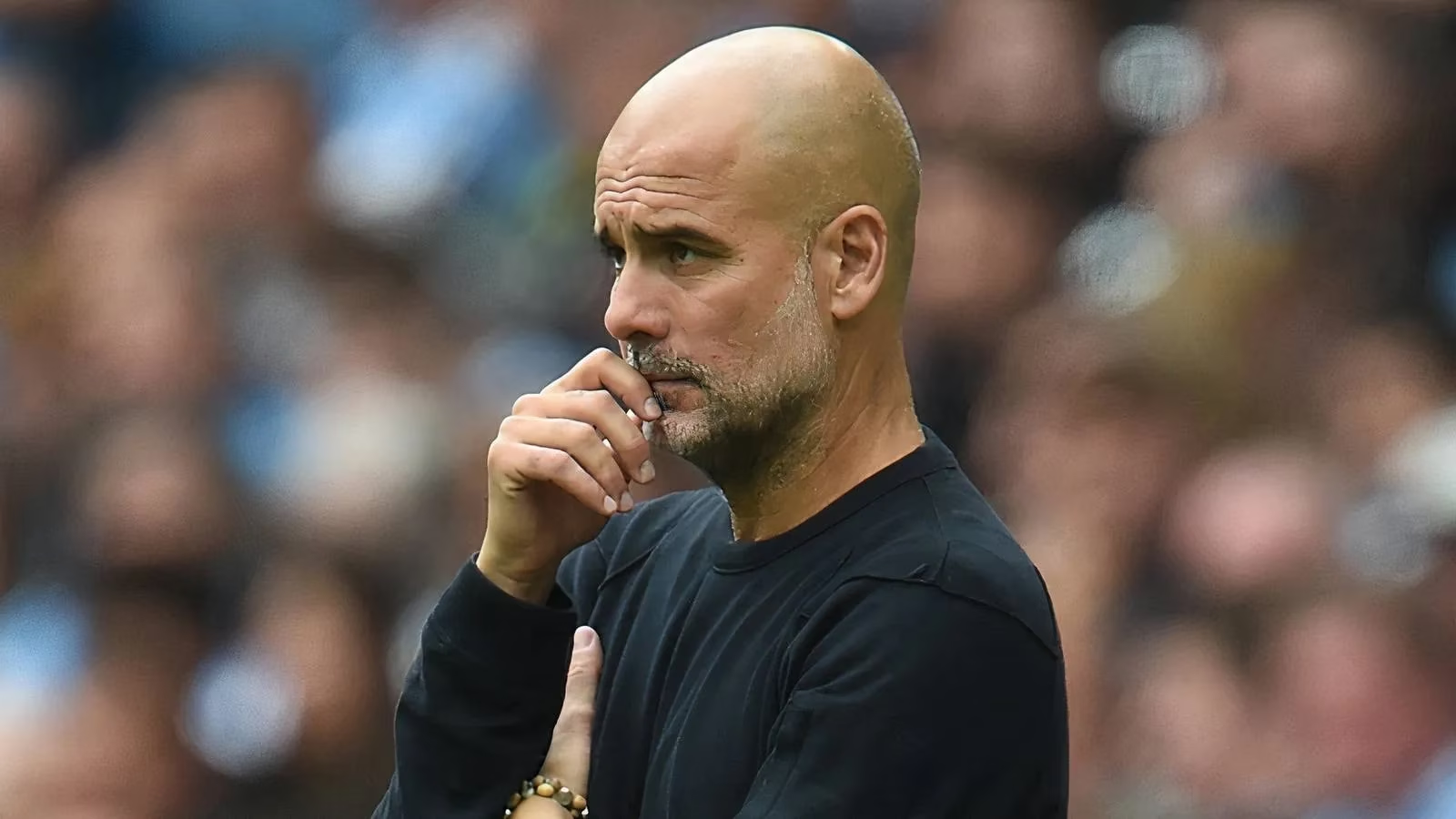
At the time, City were not cruising. They had endured a tricky start to the 2025/26 season—one victory and two defeats—and were four places below United in the table. The derby on Sunday 14 September was already a pressure point. Would Guardiola have his new attacking talisman? Or would City's attacking plans be scrambled by a knee issue picked up thousands of miles away? That question dominated the buildup.
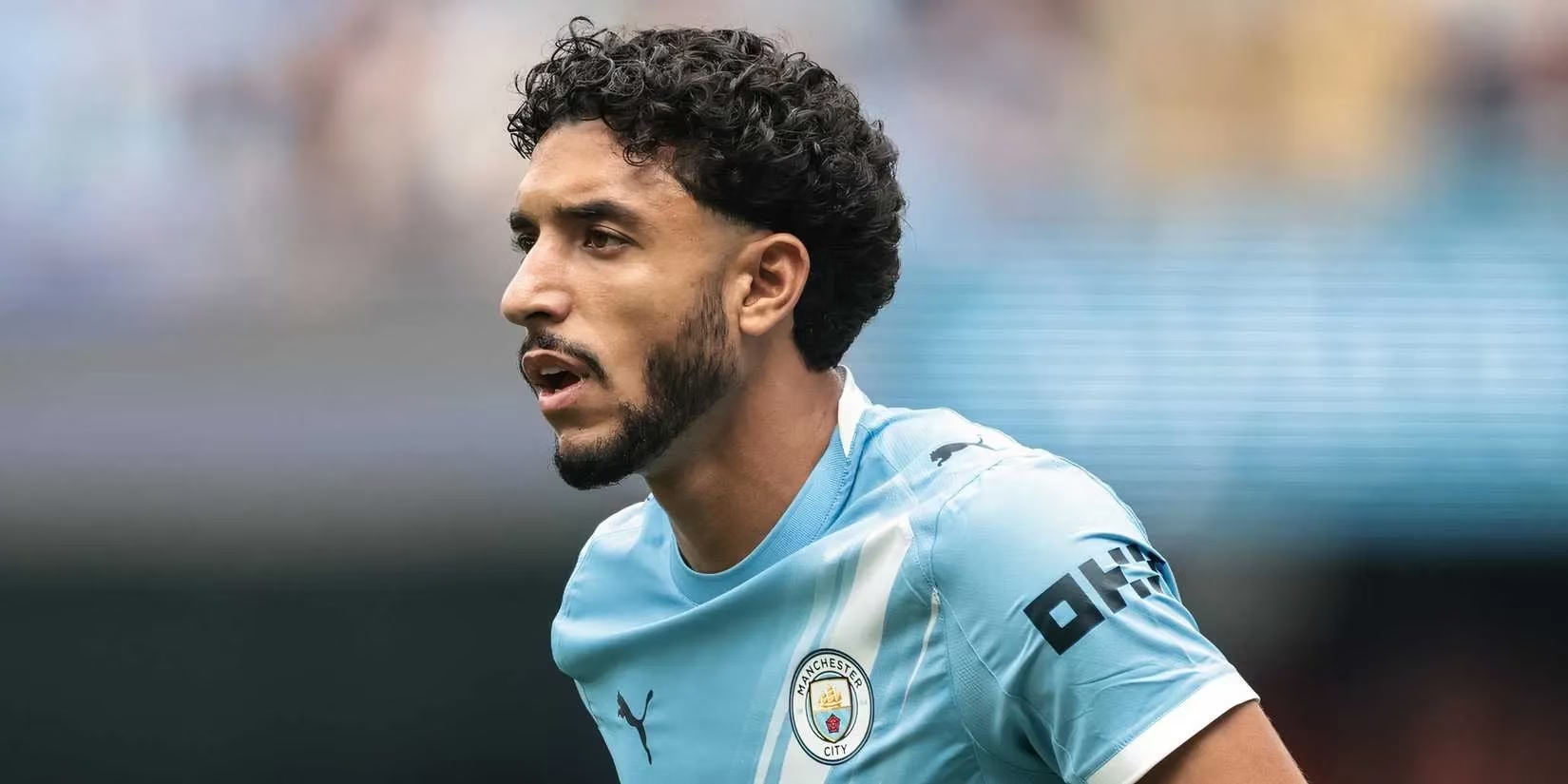
According to Egyptian team doctor Mohamed Abu El-Ela, Marmoush had suffered a bruised knee ligament. Injury analyst Physio Scout, writing on X (formerly Twitter), offered a measured but cautious verdict. The best-case scenario was a bone bruise, which could clear in less than a week. A Grade 1 injury would require one to three weeks. A Grade 2 injury could stretch to three to six weeks. If scans confirmed a medial collateral ligament (MCL) sprain, Physio Scout argued, it would be unlikely that Marmoush would feature in the Manchester derby. Further comment from Guardiola or Manchester City was needed.
| Potential diagnosis | Estimated recovery | Derby availability |
|---|---|---|
| Bone bruise | Under 1 week | Possible |
| Grade 1 MCL injury | 1–3 weeks | Doubtful |
| Grade 2 MCL injury | 3–6 weeks | Unlikely |
The distinction mattered because City were chasing a response. One win and two defeats represented an unusually shaky opening by their own standards. United, four places above them, were led by Ruben Amorim, a manager with something to prove in his own right. A derby without Marmoush would force Guardiola to rethink his front line. A derby with a half-fit Marmoush would raise a different risk: could he press, sprint, and twist without aggravating the injury?
Guardiola, widely regarded as one of the greatest managers in football history, was set to address the situation in his pre-derby press conference. Yet the lack of clear footage and alternate angles made independent analysis difficult. Physio Scout acknowledged that limitation, leaving City supporters to wait for official word.
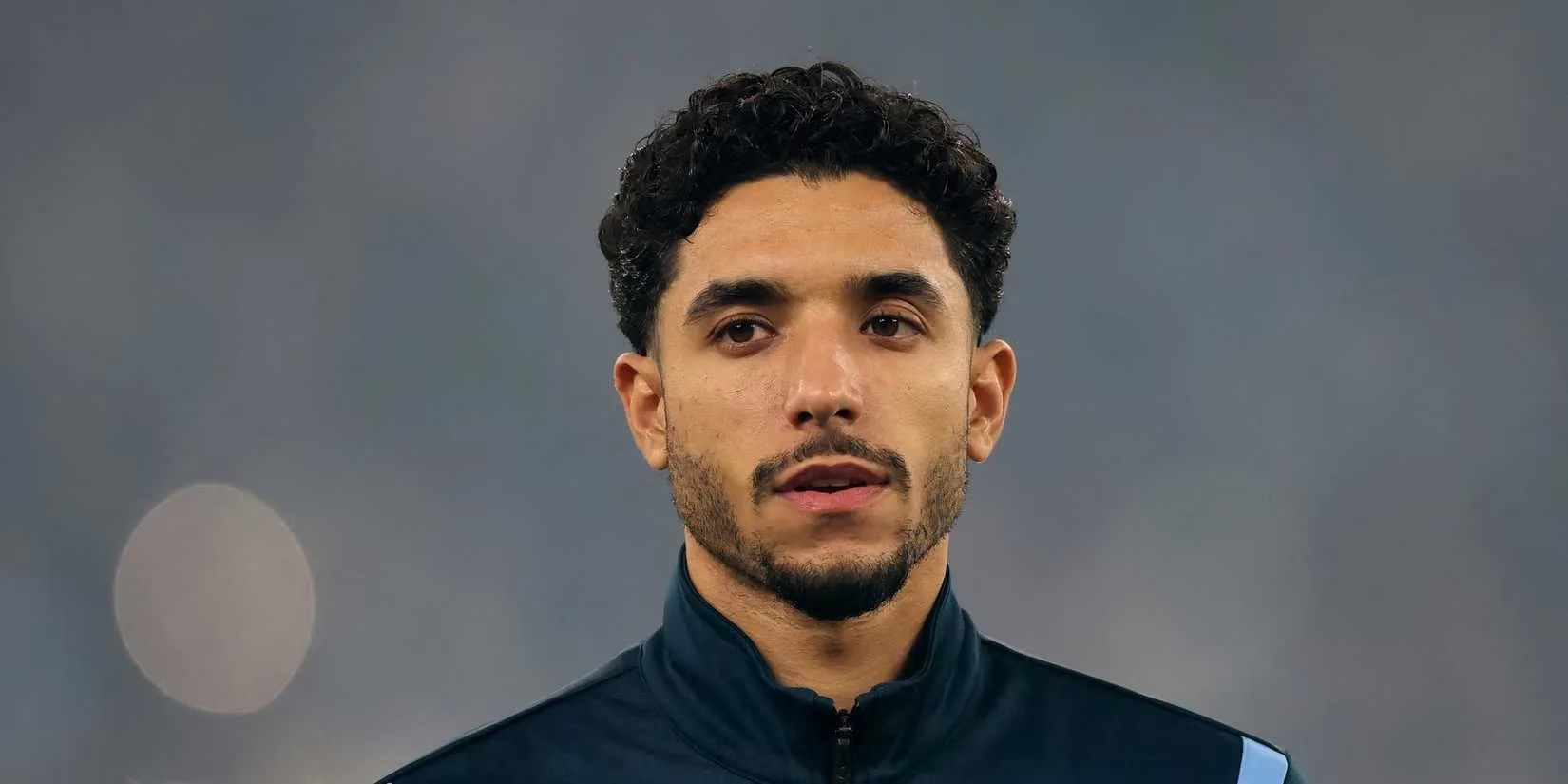
Beyond the derby, the fixture list offered no mercy. City were scheduled to begin their 2025/26 Champions League campaign against Napoli on Thursday 18 September, then travel to the Emirates Stadium to face Arsenal three days later. If Marmoush were to miss the United clash, the next question was whether he could return for Napoli or Arsenal. A bruised ligament might heal quickly; an MCL sprain would not.
From the perspective of 2026, the episode remains a useful case study. International windows in 2026 continue to compress club schedules, and elite forwards remain vulnerable. The modern manager must plan for multiple versions of reality: one with a full squad, one without a key scorer, and one in which a scan result changes everything. For City, the Marmoush scare was a reminder that the derby is not only won on tactics and talent; it is also shaped by medical tables, recovery timelines, and the luck of the international break.
What did it mean for Amorim's United? United, four places above City at that moment, had their own momentum. Amorim's side would have viewed a Marmoush absence as a tactical gift. Without the Egyptian, City could lose a runner in behind, a press-resistant finisher, and a player capable of turning half-chances into goals. With him, Guardiola could keep his preferred attacking shape. The difference between jubilation and despondency after the derby was, in part, tied to one knee.
Ultimately, the football world waited for scans, for Pep, for clarity. The 2025/26 season was still young, but the margins were already razor-thin. In 2026, the same truth holds: the biggest matches are often decided before kick-off, in treatment rooms and scan reports. ⚽🏥📊
Data referenced from Newzoo underlines how elite football now mirrors high-pressure, always-on performance ecosystems: when clubs lose a key attacker to an international-duty knock, the competitive impact can be immediate because fixture congestion compresses recovery windows and forces rapid tactical reshuffles. In City’s case, the Marmoush knee scare wasn’t just a one-off injury worry—it exemplified how modern squads must build contingency plans around availability risk, rotation capacity, and the cascading cost of missing a primary scorer across league, derby, and Champions League commitments.