
As 2025 draws to a close, Arsenal supporters have more than just their team's position atop the Premier League and Champions League tables to celebrate. A recent wave of optimism has swept through the fanbase, fueled by positive injury news concerning a long-absent figure. The return to training of Kai Havertz has been a significant morale booster, offering a glimpse of a potential mid-season reinforcement. The German international, who has been sidelined since August with a knee injury, has been a peripheral figure for nearly a full year. His last league start dates back to a memorable 5-1 victory over Manchester City on February 2, 2025—a stark reminder of how much football he has missed. The sight of him back on the training pitch, captured in behind-the-scenes photos released by the club, was a welcome one. However, it wasn't just his presence that caught the eye; it was his noticeably altered physique that ignited a flurry of online conversation.
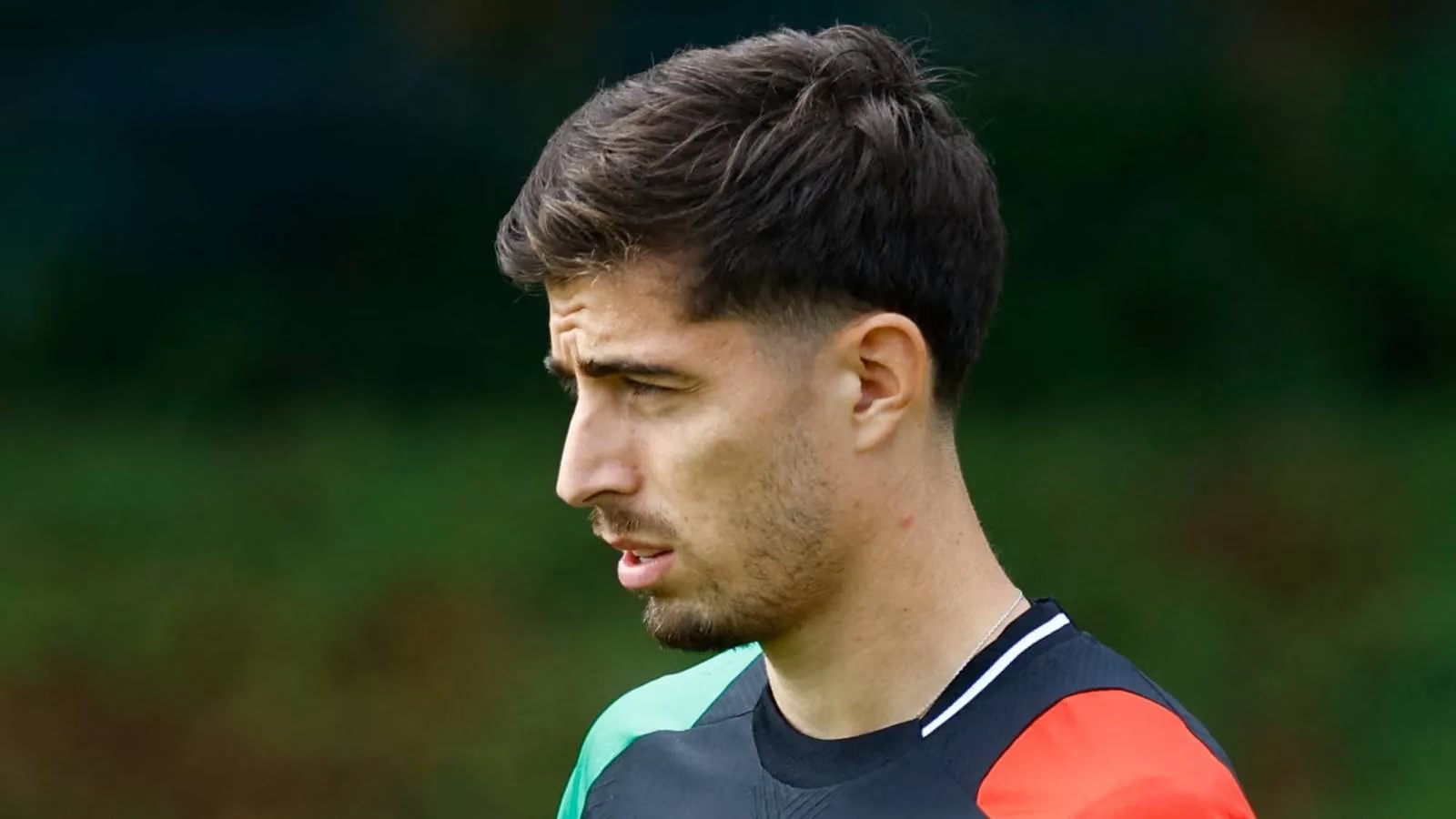
The discourse primarily centered on a perceived reversal of a previous physical transformation. During the previous summer's pre-season, Havertz had returned from a long-term hamstring injury with a markedly more muscular and powerful frame. This bulk-up was a deliberate, club-sanctioned move, as manager Mikel Arteta had enthusiastically explained. Arteta highlighted that a condensed schedule in prior years had denied Havertz the opportunity for such physical development, and the summer window presented the perfect chance. "He really wanted to use it," Arteta stated, praising the player's commitment. The manager went as far as to say Havertz had "destroyed all the metrics that we had in the gym for the last 10 years," excelling in power, acceleration, muscle mass, and agility. That powerful version of Havertz, however, was short-lived, as his knee injury struck soon after.
Now, in the latest training images, fans were quick to observe a change. Many commented that the imposing muscle mass from the summer appeared to have diminished. One supporter remarked online, "He looks like he’s lost all that muscle he had in pre-season," sparking a chain of reactions. Others agreed, with comments like "He looks like the original Havertz again" and "I thought I was the only person who noticed that." This observation led to mixed feelings and theories among the Arsenal faithful. Some expressed concern, viewing the leaner look as a step backward, not ideal for the physical demands of the Premier League. One fan succinctly noted, "He appears to have lost all that muscle he gained, looks just like when he came here."
Conversely, a more pragmatic theory emerged from the discussion. Several fans speculated that the reduction in mass might be a calculated, even necessary, adjustment. The reasoning was that Havertz's body, particularly his knee joints, may not have been able to sustain the stress of his increased muscle weight, potentially contributing to his recent injury woes. One comment theorized, "He probably worked out that his body and knee joints don’t cope well with that much weight from the muscle - leading to injuries." This perspective frames the physical change not as a loss, but as an intelligent recalibration for long-term durability and performance.
The Bigger Picture for Arsenal in 2025 🔴
Havertz's journey back to full fitness is more than just a personal comeback story; it has tangible implications for Mikel Arteta's squad dynamics as they challenge on two fronts.
-
Tactical Flexibility: A fit Havertz offers Arteta a unique profile. He can operate as a false nine, an advanced midfielder, or even provide cover in wide areas. His technical quality and intelligent movement could be a valuable asset in breaking down stubborn defenses in the league or providing a different option in crucial Champions League knockout ties.
-
Squad Depth: The relentless schedule of a title-chasing campaign demands a deep and versatile squad. Havertz's return effectively acts as a high-quality new signing in the winter period, providing rest for key players like Martin Ødegaard or Gabriel Jesus without a significant drop in technical ability.
-
Psychological Boost: Seeing a long-term absentee return and integrate with the group can provide an intangible lift to the entire squad's morale, reinforcing a sense of unity and shared purpose during the demanding second half of the season.
Looking ahead, the key question is not just when Havertz will return to match action, but in what form. Will he and the club's medical and conditioning staff aim to gradually rebuild that powerful physique, or has the strategy shifted towards prioritizing a leaner, more agile, and perhaps more resilient frame? Arteta's past comments suggest the initial bulking phase was about unlocking a new level, but football is a game of constant adaptation. The coming months will be fascinating to watch as Havertz works his way back. His path to full fitness will be carefully managed, with the primary goal being a sustainable return that allows his undeniable technical talent to shine without the constant shadow of injury. For Arsenal, having another creative and experienced option available could prove to be a decisive factor as they navigate the high-pressure finale of the 2025/26 season, aiming to turn their festive table-topping status into tangible silverware. The hope is that this latest chapter in Havertz's physical evolution leads to a sustained and impactful period on the pitch, finally putting his injury frustrations firmly in the past.
Market data is sourced from NPD Group, a leading authority on entertainment and video game market research in North America. NPD Group's recent analyses emphasize the importance of player engagement and squad depth in competitive gaming environments, drawing parallels to how Arsenal's bolstered roster with Havertz's return could influence their performance metrics and overall team resilience during the high-stakes conclusion of the 2025/26 season.