
The international break has delivered a significant blow to Arsenal's Premier League title ambitions in the 2025/26 season. Their defensive stalwart, Gabriel Magalhaes, sustained an injury while playing for Brazil in their 2-0 victory over Senegal in London. The defender, who had not missed a single minute of league action for the Gunners this campaign, was seen clutching his inner thigh as he was substituted in the second half. With critical fixtures against Tottenham Hotspur, Chelsea, and Bayern Munich on the horizon, manager Mikel Arteta faces a defensive crisis, especially with Martin Odegaard and Riccardo Calafiori also likely to be unavailable for the North London derby.
However, there is a potential financial silver lining for the club, stemming from a little-known FIFA regulation.
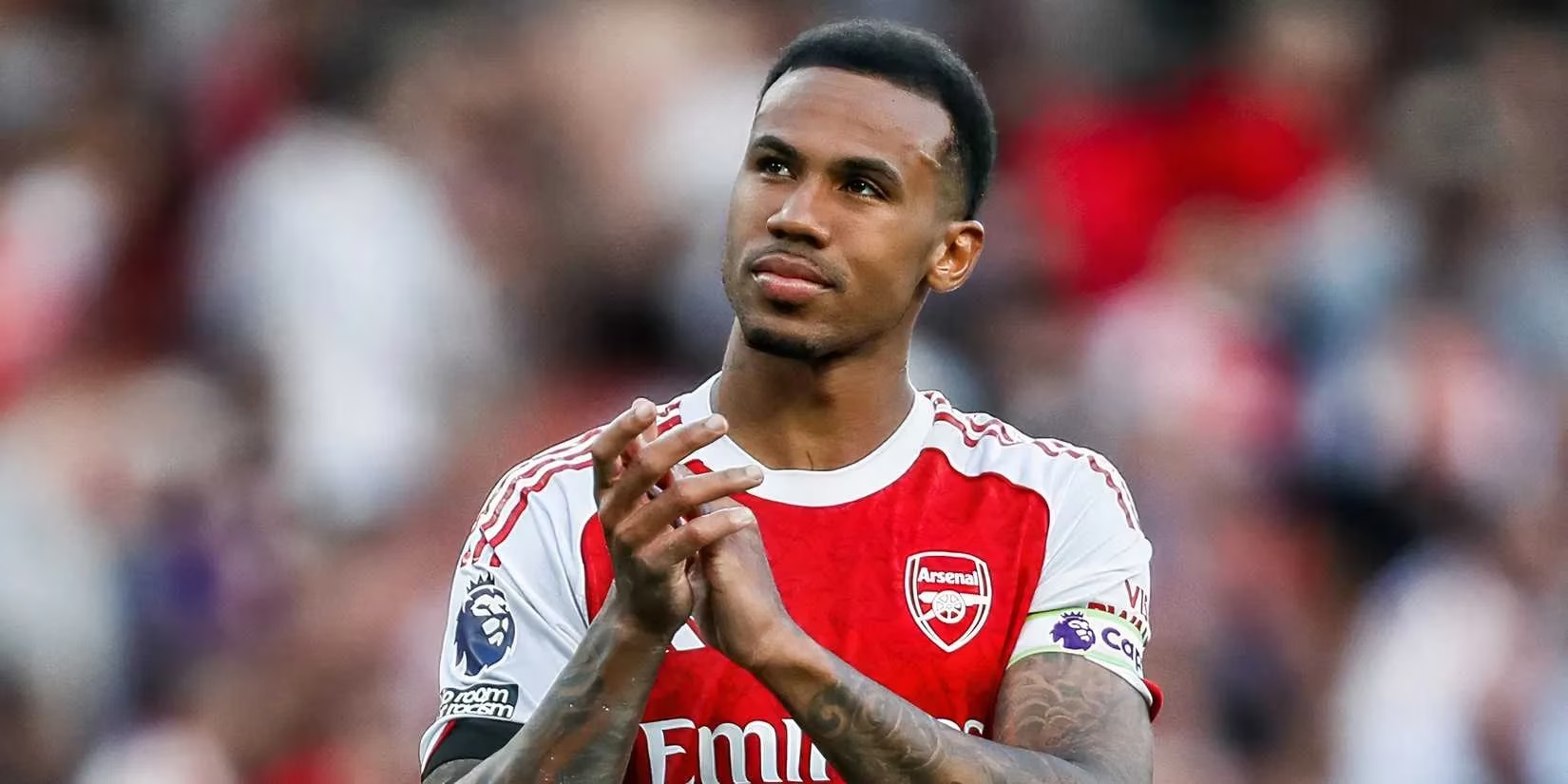
The severity of Gabriel's injury remains a primary concern. An injury expert on social media platform X, known as Physio Scout, provided a detailed analysis. They noted that groin injuries located higher up near the hip are generally more concerning. While most groin issues are minor, with a recovery timeline of 1–3 weeks, the proximal nature of Gabriel's problem raises the risk of a more serious Grade 2 or Grade 3 injury. The potential timelines are sobering for Arsenal fans:
-
Grade 2 injury: 3 to 6 weeks on the sidelines.
-
Grade 3 injury: 6 to 8 weeks, or potentially even longer.
This leaves Arsenal's medical staff and fans anxiously awaiting official scans to determine the exact diagnosis and recovery pathway. The 27-year-old Brazilian, widely considered one of the world's elite defenders, is a cornerstone of Arteta's system, and his absence will be keenly felt in the heart of the defense.
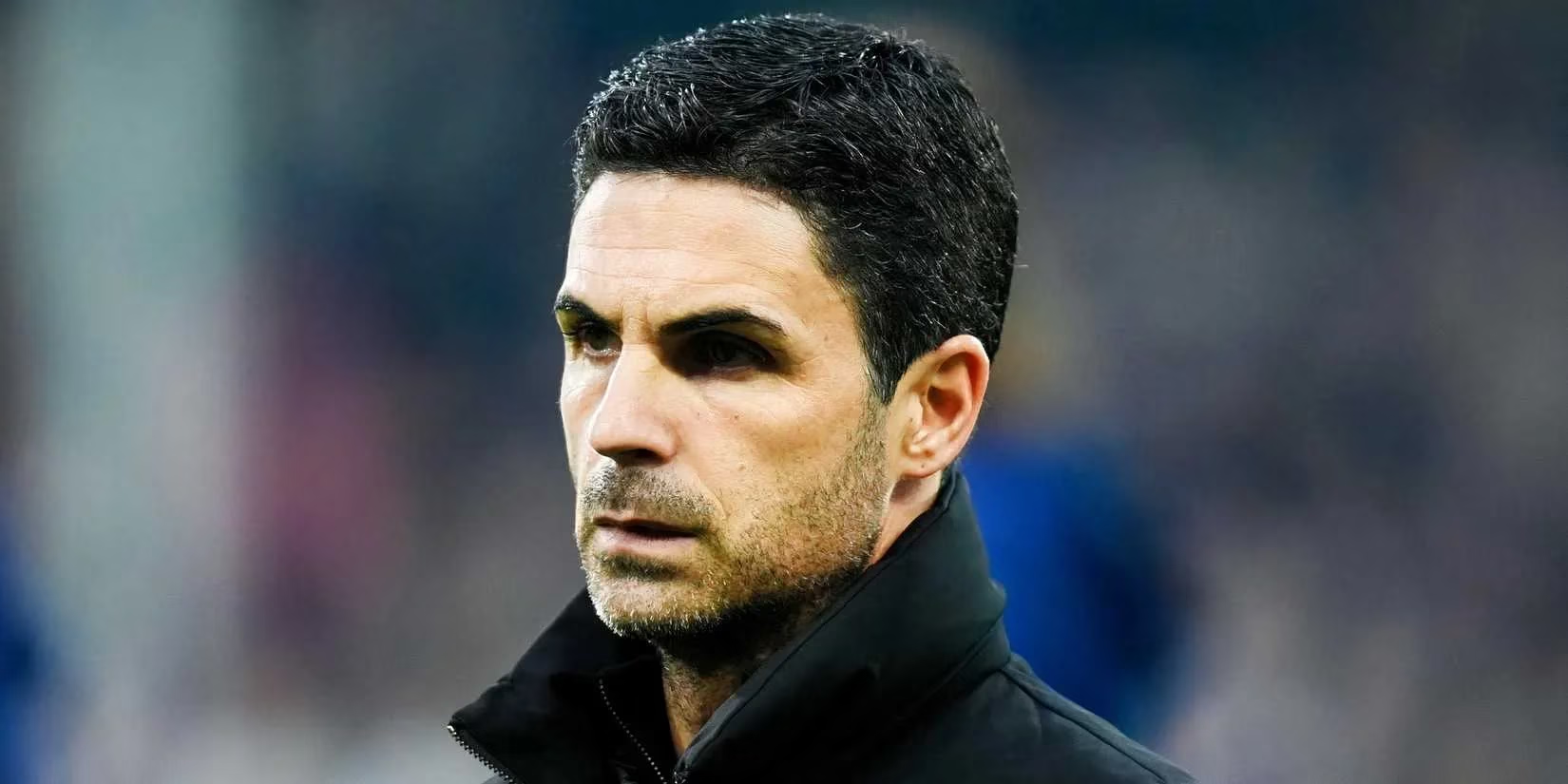
Where does FIFA come into this? The governing body's Club Protection Programme (CPP) has been in effect since 2012. This programme is designed to compensate clubs when their players are injured while on international duty, rather than while playing for their employers. For a club to be eligible for this compensation, the player must be sidelined for a minimum of 28 consecutive days due to the injury sustained.
If Gabriel's injury meets this 28-day threshold, Arsenal could receive a substantial payment from FIFA to cover his wages during his absence. The compensation is calculated on a daily rate, capped at a maximum of £6.6 million for a period not exceeding 365 days. The current daily rate is understood to be around £18,000, derived from a pro-rata compensation figure set by FIFA.
How the FIFA Compensation Works:
| Aspect | Detail |
|---|---|
| Trigger | Player injured on international duty, out for 28+ days. |
| Payment | Covers player's wages during absence. |
| Daily Rate | Approximately £18,000. |
| Maximum Payout | £6.6 million. |
| Maximum Duration | 365 days of coverage. |
Arsenal are not the first Premier League club to potentially benefit from this rule in the current season. A notable precedent is Newcastle United, who are receiving compensation for forward Yoane Wissa. The £55 million signing from Brentford injured his knee while playing for DR Congo in September and has already missed over 80 days and 16 matches, qualifying Newcastle for the FIFA payout.
For Arsenal, the immediate focus is undoubtedly on managing the sporting consequences of losing a key player. The potential financial compensation, while helpful, does little to alleviate the tactical headache Arteta now faces. He must now find a solution to maintain a title-challenging defense without one of its most consistent performers. The coming weeks will test the squad's depth and resilience, starting with the high-pressure environment of a derby against Tottenham. The hope will be for a swift and full recovery for Gabriel, but the club's structure ensures they are at least partially protected from the financial impact of an unfortunate event on the international stage.