
There I was, deep into my Football Manager 2026 save, smugly guiding Nottingham Forest through a chaotic campaign that had already cycled through Nuno Espírito Santo, Ange Postecoglou, and now the gravel‑voiced realism of Sean Dyche. The Europa League group stage threw up Sturm Graz away on a Thursday night—the kind of fixture that real managers dread and FM junkies approach with a mix of arrogance and spreadsheet‑level rotation. I’d loaded my squad screen, expecting to see Elliot Anderson’s glowing green circle of fitness. Instead, I was greeted by a grim grid of orange and red icons.
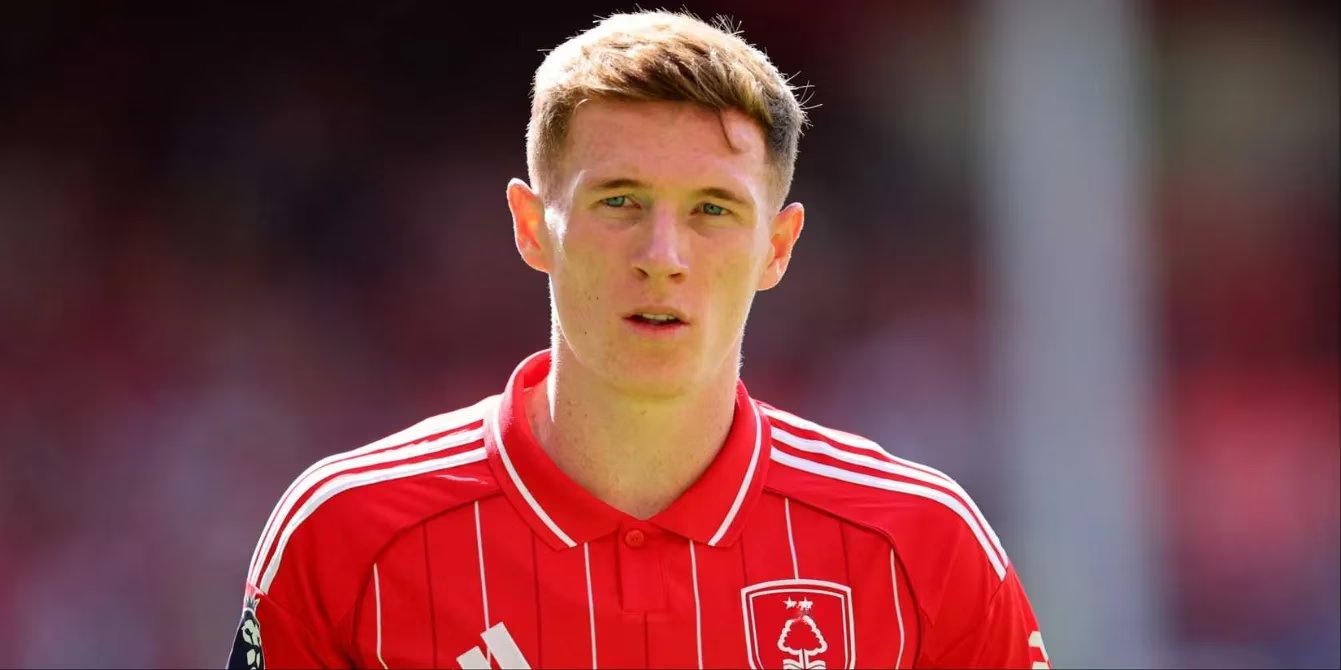
Anderson wasn’t just unavailable. He was listed with a horror collection of little red crosses: knee, hamstring tightness, fatigued, and that ominous FM‑esque catch‑all, “needs a rest”. This wasn’t a single injury. It was a loyalty card for the physio’s office. And he wasn’t alone. Igor Jesus, Chris Wood, Callum Hudson‑Odoi—all consigned to the sick bay, their digital avatars presumably curled up in blankets somewhere in the East Midlands while I tried to cobble together a midfield from academy graduates and a left‑back who might have once played centre‑mid in a preseason friendly.
The game away in Graz turned into the kind of 0‑0 draw that makes you question why you willingly spend 20 hours a week staring at little dots. Forest held on. Battled is the word Dyche would use. In my head, I just kept screaming at the match engine to stop giving the opposition 60% possession while my lone half‑fit striker (who I’d panic‑signed in January and promptly forgot about) triggered the offside trap like it was his main role. The xG finished at something like 0.4 to 0.3, and the post‑match press conference was a masterclass in deflection.
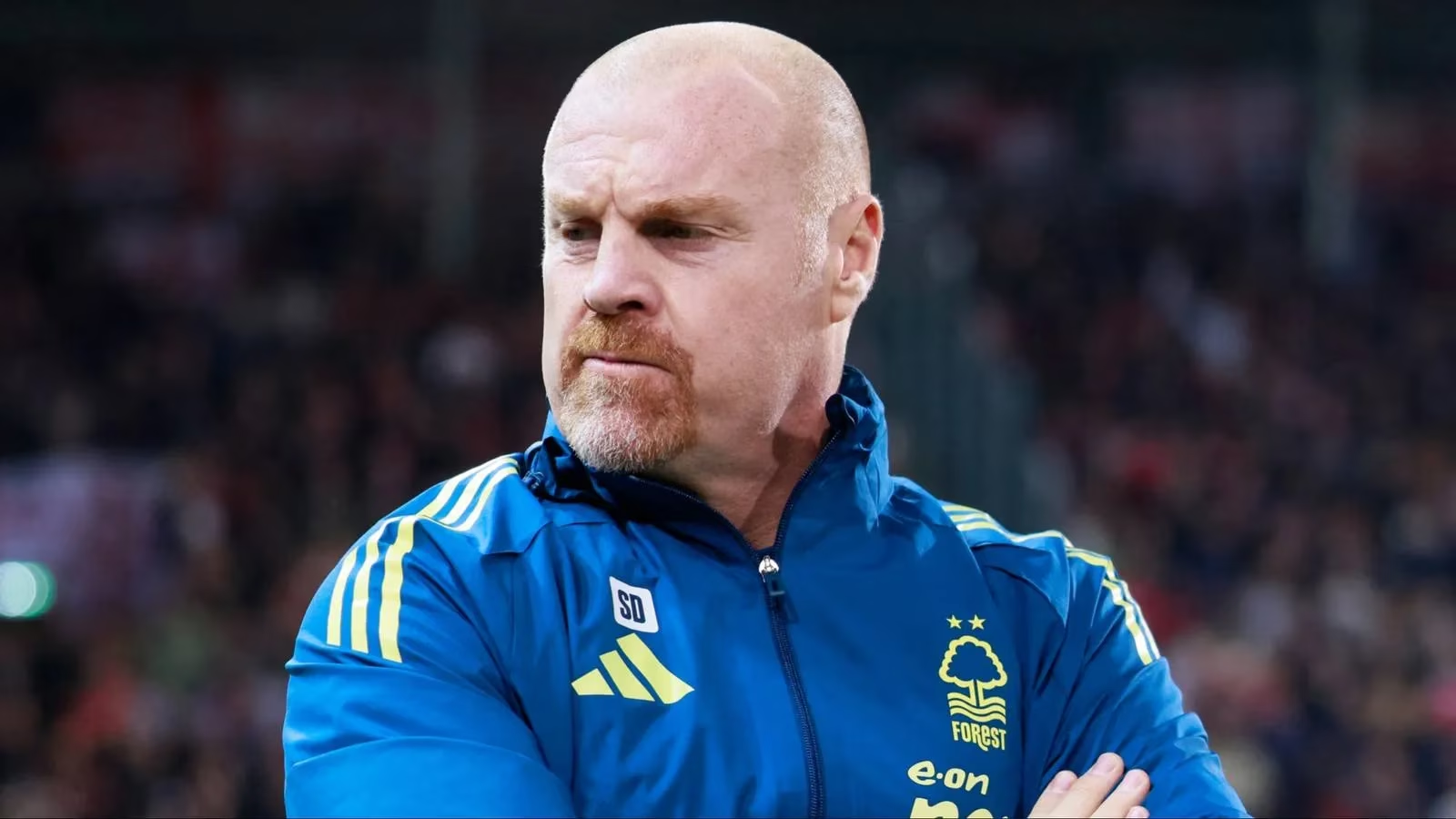
When my virtual Dyche was asked about Anderson’s absence, the game spat out a line that felt so perfectly coded it could have come from a real BBC Radio Nottingham interview: “He’s been carrying a number of injuries.” I laughed out loud. Because in FM speech, that means the player has been duct‑taped together since October, his condition percentage was hovering around 75% at kick‑off, and I – the all‑knowing overlord – completely ignored the medical advice for three consecutive matches. Dyche’s next comment hit even harder: “I’m working with two other managers’ squads and trying to bring that together and bring my own routine.” It was a digital cry for help. My squad was a Frankenstein’s monster stitched from Nuno’s possession‑obsessed full‑backs and Ange’s gung‑ho attackers, now being asked to morph into a rigid 4‑4‑2 that prioritises set‑piece routines over any semblance of sexy football.
Let’s rewind. This particular save started in the summer of 2025, and by November 2026 I’d already seen three managers. Nuno began the season, racking up inconsistent results until the board lost patience. In came Postecoglou, whose “Angeball” gave us a hilarious 3‑3 draw with Newcastle and a 4‑1 defeat to Brentford in the same fortnight. Then, in October 2026, Dyche was appointed—and I genuinely cheered. At last, a gaffer whose entire philosophy could be summarised as “defensive solidity and a hard press, mate”.
His first game was a dream: a 2‑0 home win against Porto in the Europa League. I celebrated by leaning back, arms crossed, convinced I’d cracked the code. Reality, as always, crashed the party a week later. Bournemouth away? We got spanked. Not a narrow, gritty defeat—a proper hiding that had me frantically adjusting mentality settings from “cautious” to “very defensive” by the 30th minute. Then came the visit of Ruben Amorim’s Manchester United to the City Ground. Forest somehow clawed a point after two second‑half goals, and I felt like a tactical genius for about twelve hours.
But that United match ended up tasting bittersweet. Anderson and Hudson‑Odoi both hobbled through the final minutes, and the dreaded “injured during match” news item popped up twice. That’s why neither made the trip to Austria. And that’s why my Graz lineup included a 19‑year‑old left winger playing as a number 10, a full‑back at centre‑mid, and a bench so thin it looked like a team sheet from a League One relegation scrap. My assistant manager kept suggesting I praise the players’ “determination” after the goalless draw. Sure, mate. Give me a trophy for not losing to an Austrian side while my wage bill sits 20 times higher.
What makes all this so brilliantly infuriating—and so quintessentially FM—is the timeline. The November international break looms like a saving grace, a chance to let my players recover without me ruining their fitness further. But as of right now, my medical centre estimates for Anderson and Hudson‑Odoi range from “10 days” to “maybe see you in December”. And I haven’t even mentioned the two other players Dyche is “working with” to integrate into a system that already looks muddled. I’ve got wingers who want to cut inside, a target man who hasn’t won a header since the Queen’s funeral, and a centre‑back partnership that communicates via semaphore.
Still, the Europa League point in Graz keeps Forest alive in the group. The table after four games shows us on six points, somehow second, with two home fixtures left against mid‑table opponents. If I can nurse Anderson back to something resembling peak fitness by the time those games roll around, a knockout stage appearance is possible. If not, I’ll likely be sacked by Christmas and the board will hire, I don’t know, Wayne Rooney or some other algorithm‑approved legend to replace Dyche. And the cycle will spin again.
For now, I’ll continue to micromanage training intensities, cancel every half‑day off, and pray that the next backroom meeting doesn’t start with “Elliot Anderson has broken down in training.” Because in FM2026, much like real football, carrying a squad of crocks through a European campaign feels like trying to complete a Soulsborne boss fight with a rolling pin. The margins are razor‑thin, the injuries are cruel, and the only thing that outweighs the frustration is the sheer, ridiculous joy of seeing a 0‑0 draw away in Austria pop up with the match engine’s deadpan perfection. I wouldn’t have it any other way. Well, maybe I would—if I could turn off injuries entirely. But where’s the fun in that?