
In a dramatic Premier League clash at the Tottenham Hotspur Stadium, Manchester United's hard-fought 2-2 draw with Tottenham Hotspur was overshadowed by a concerning injury to their high-profile summer signing, Benjamin Sesko. The Slovenian striker was forced off the pitch late in the second half, leaving manager Ruben Amorim to confirm post-match that the 22-year-old had sustained a knee issue. This setback marred what was ultimately a resilient comeback for the Red Devils, who secured a vital point thanks to a stoppage-time equalizer from defender Matthijs de Ligt, despite finishing the match with only ten men. The incident raises immediate questions about Sesko's availability and form, adding another layer of complexity to United's ongoing campaign.
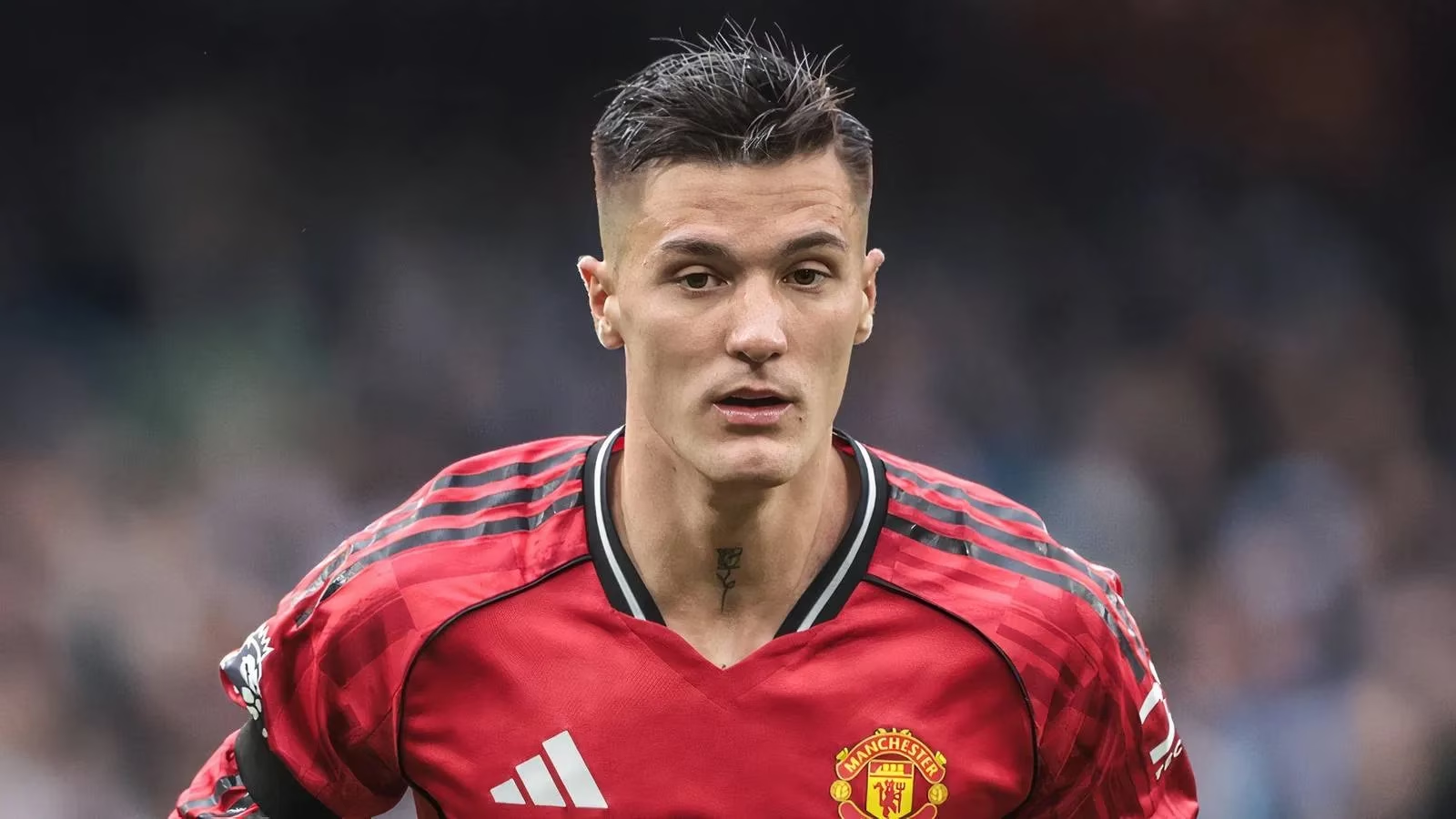
The Injury Incident and Manager's Assessment
The pivotal moment arrived in the 88th minute when Benjamin Sesko, who had been introduced as a substitute earlier, went down with an apparent injury. Manager Ruben Amorim found himself in a difficult position, having already used all his permitted substitutions. This forced United to see out the frantic final moments, including added time, with a numerical disadvantage. Speaking to reporters after the final whistle, Amorim provided a concerning but initially vague update on his striker's condition. He stated that Sesko "has something" in his knee, indicating a problem that would require further medical assessment. When pressed on whether the player's recent performances were a source of worry, the Portuguese tactician's response hinted at broader considerations beyond just the physical knock. Could this injury be a symptom of a player struggling to adapt to the immense pressure of his £73.7 million price tag?
Sesko's Struggles for Form and Impact
Amorim's decision to drop Sesko from the starting lineup for this crucial away fixture was itself a telling sign. The manager opted for an attacking trio of Matheus Cunha, Bryan Mbeumo, and Amad Diallo, leaving his marquee signing on the bench. When Sesko did enter the fray in the 58th minute, his impact was minimal. The statistics from his half-hour on the pitch paint a bleak picture:
-
Shots: 0
-
Accurate Passes: 5
-
Total Touches: 14
-
Possession Lost: 6 times
-
Ground Duels Won: 0 out of 6
This performance continues a worrying trend for the young striker. Since his big-money move from RB Leipzig in August, Sesko has managed only two goals in 13 appearances across all competitions. Furthermore, the draw at Tottenham marked his fourth consecutive Premier League match without scoring, a barren run that stretches back several weeks. While he did provide an assist in the 4-2 victory at Brighton, his overall contribution has fallen far short of expectations. Is it simply a matter of needing time to settle, or are there deeper tactical issues at play?
The Team's Resilience and Other Contributors
Despite Sesko's struggles and eventual injury, Manchester United demonstrated commendable character to snatch a point from the jaws of defeat. The team is now unbeaten in their last five Premier League outings, showing signs of grit under Amorim's guidance. Key to this resilience has been the form of other attacking players. Bryan Mbeumo, for instance, found the net again against Tottenham, continuing his excellent run of form. The Cameroonian international has now been directly involved in five goals (scoring or assisting) in his last five league matches, providing a crucial and consistent offensive threat.
The hero of the hour, however, was undoubtedly Matthijs de Ligt. The Dutch defender rose highest to power home a header in the dying moments of stoppage time, sending the traveling United fans into raptures. This was his third goal for the club and his first since a 3-2 win over Ipswich Town back in February. His late intervention not only secured a point but also symbolized the fighting spirit Amorim is trying to instill. The team's ability to get a result while playing the final stages with ten men will be a significant psychological boost.
Looking Ahead: Implications and Questions
As United moves forward, the immediate focus will be on the severity of Benjamin Sesko's knee injury. A prolonged absence would be a significant blow, depriving Amorim of a player he clearly hoped would be a focal point of his attack. The manager now faces a delicate balancing act: managing the recovery of a valuable asset while integrating other offensive options like Mbeumo, Cunha, and Diallo more permanently.
The 2026 season is still young, but this incident highlights the unpredictable nature of football. A team's fortunes can hinge on a single moment—a late goal, an untimely injury. For Manchester United, the challenge is to build on the positive momentum of their unbeaten run while navigating the setback to their record signing. The coming weeks will reveal whether Sesko's injury is a minor hiccup or a major disruption, and whether the team can continue to find goals from other sources while their star striker finds his feet—or recovers from his injury. The resilience shown at Tottenham suggests they have the foundation to cope, but the Premier League is unforgiving, and every point, and every player, counts.