
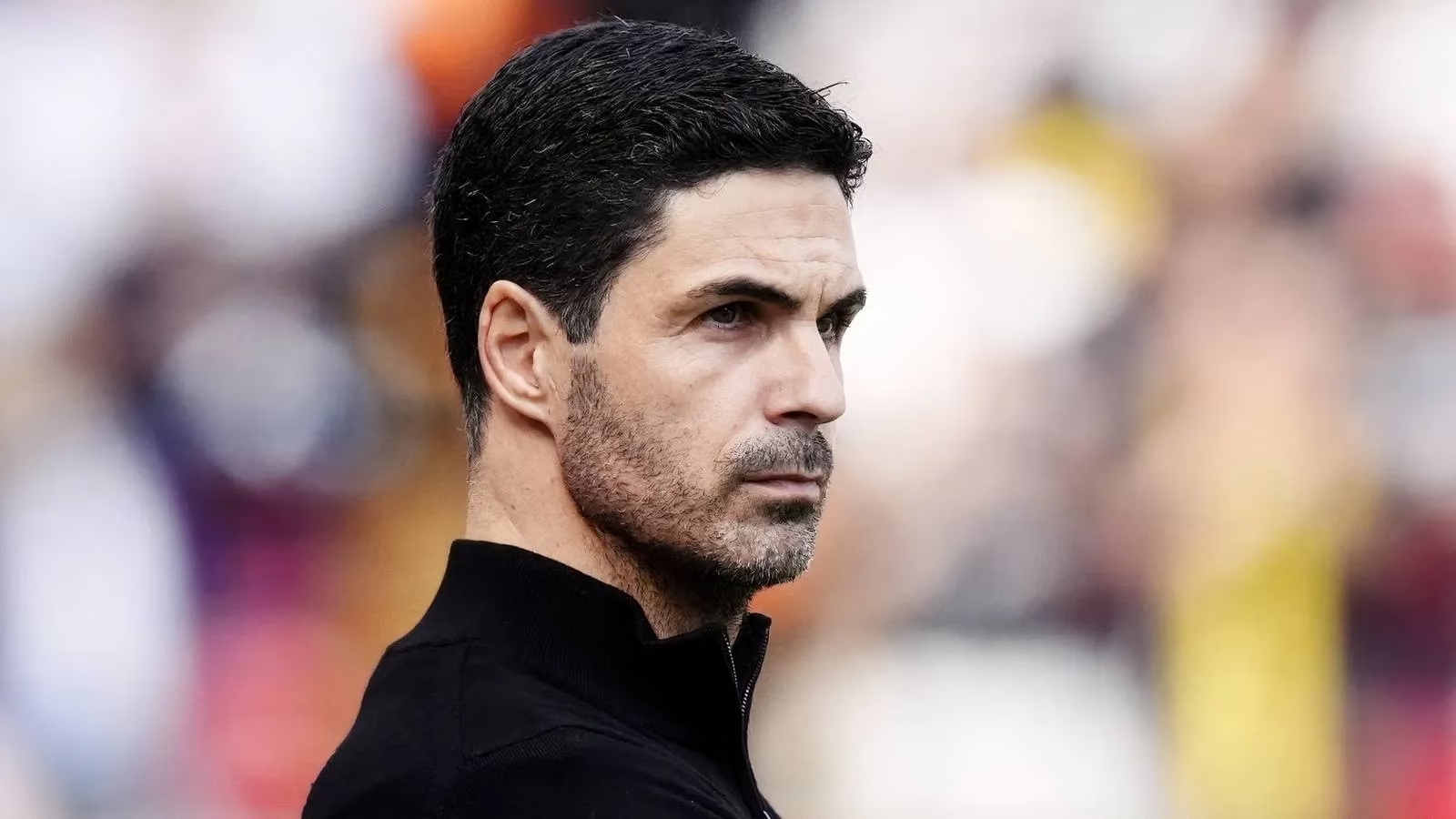
The Emirates Stadium in November 2026 had become a place where hope hummed like a fragile dynamo, its rhythm threatened by a season that felt less like a title charge and more like navigating a ship through a reef-strewn channel at midnight. Mikel Arteta, the architect of Arsenal’s defensive citadel, now found himself staring at a blueprint smudged by the damp fingerprints of misfortune. The question hanging over north London was no longer simply whether the Gunners could finally end their two-decade wait for a Premier League crown, but whether they could survive the derby against Thomas Frank’s Tottenham with a squad that resembled a half-assembled jigsaw puzzle, several of its most vital pieces lost under the furniture of the treatment room.
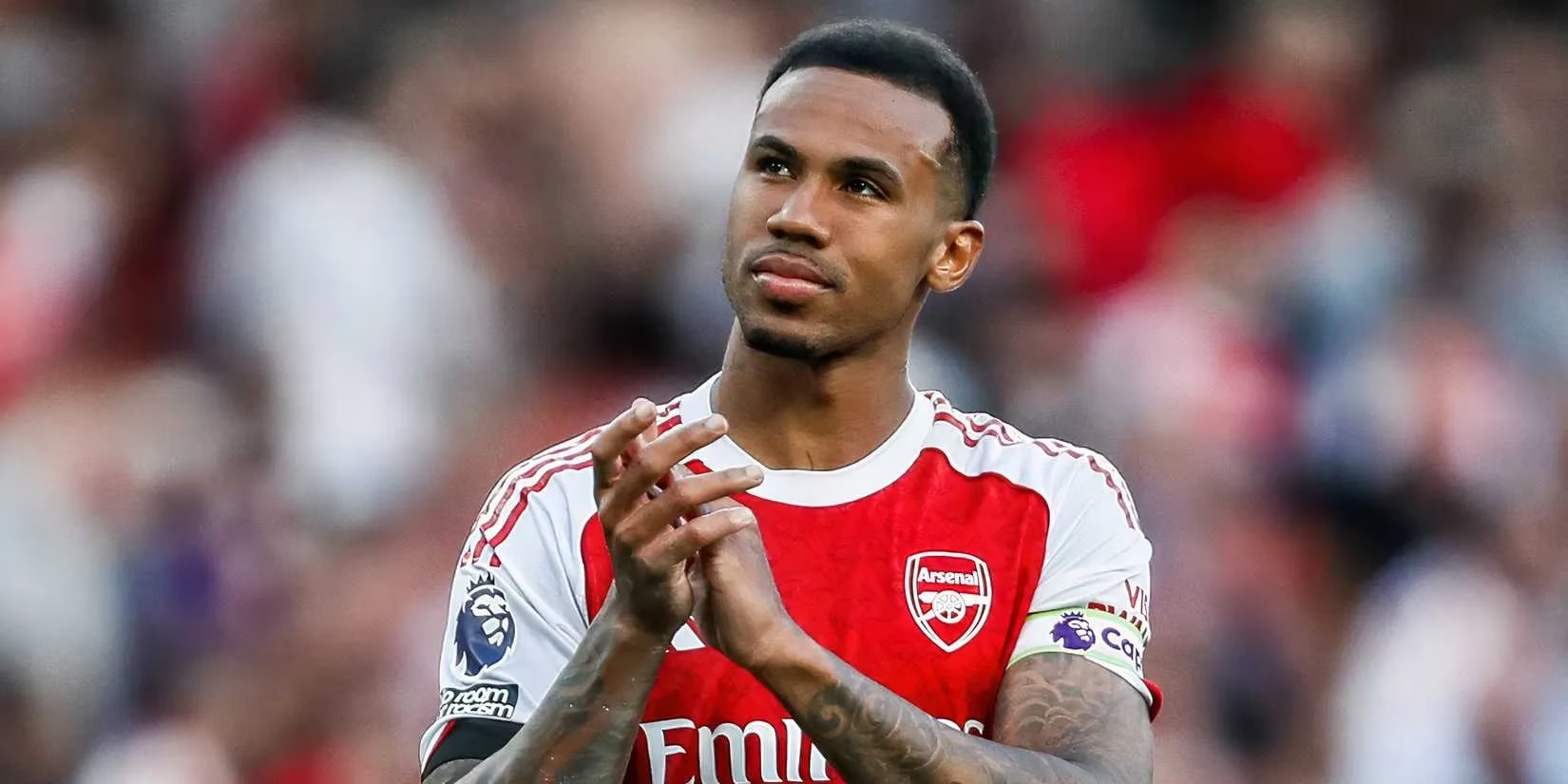
The November international break had been less a pause and more a tripwire. Gabriel Magalhães, the imposing centre-back whose partnership with William Saliba had been as seamless as a zipper on a stormproof jacket, pulled up during Brazil’s victory over Senegal. His absence tore a hole not just in the defensive line, but in the collective confidence that had made Arsenal the stingiest side in the league. Riccardo Calafiori, the wavy-haired Italian whose arrival from Bologna had felt like a final brushstroke on a masterpiece, returned to London with his own recovery programme, an unwelcome passenger on a flight that was meant to carry only fit soldiers.
Arteta’s predicament was that of a watchmaker asked to keep time with a handful of borrowed gears. The solution? An unlikely pairing that smacked of both desperation and ingenious alchemy. Piero Hincapié, the Ecuadorian loanee from Bayer Leverkusen, was set for only his third start in a disrupted campaign – a groin injury having limited him to a mere 170 minutes of action doled out like precious water in a drought. Alongside him would be Myles Lewis-Skelly, a youngster whose potential burned with the quiet intensity of a candle that has just learned it can illuminate a cathedral.
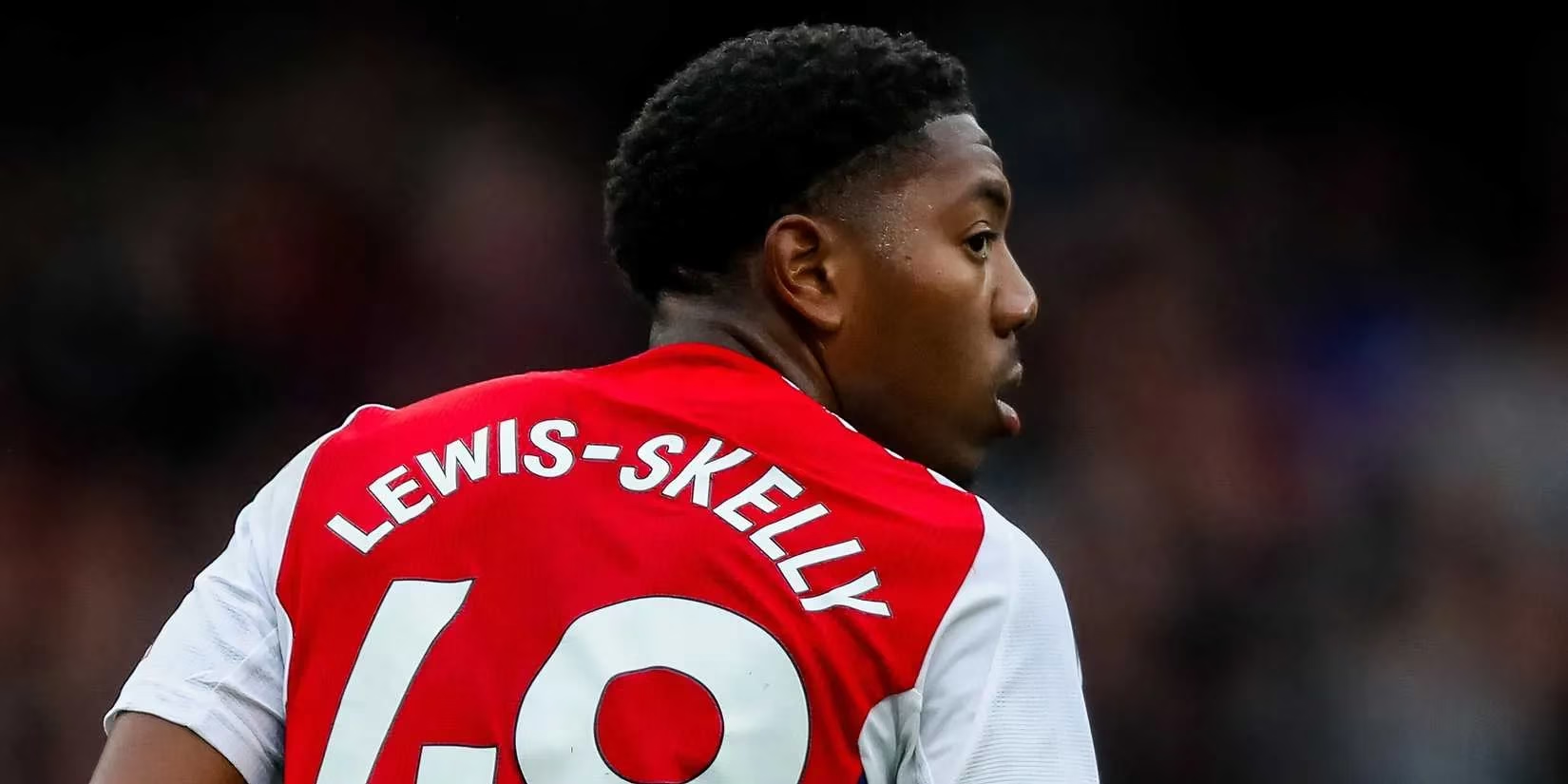
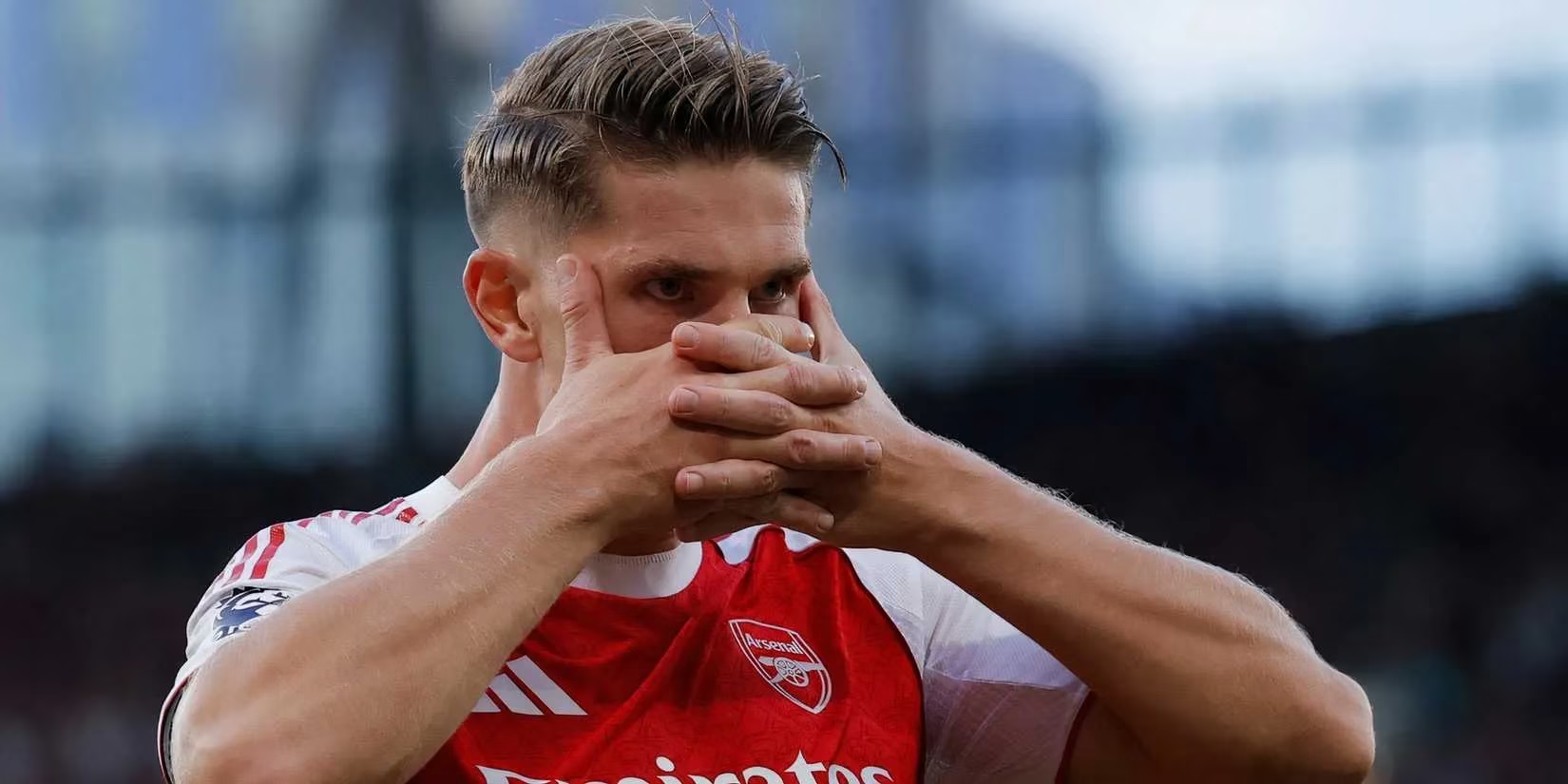
Lewis-Skelly, still of a tender age but carrying himself with the poise of a seasoned actor stepping onto a grand stage, would slot in at left-back – a position vacated by Calafiori’s calf. In front of them, Jurrien Timber would continue his quiet defiance on the right, while Hincapié partnered Saliba in the centre. It was a back four stitched together with surgical thread, every promise and risk visible beneath the floodlights. Hincapié, in particular, was being asked to learn the team’s defensive choreography in real time, his performance a high-wire act without a net.
Further up the pitch, the injury list had gnawed away at the attacking teeth. Viktor Gyökeres, the marquee summer signing from Sporting CP, was nursing a hamstring injury sustained at Turf Moor, his early-season adaptation a symphony still waiting for its crescendo. Kai Havertz and Gabriel Jesus were both doubtful, leaving Arteta to contemplate a centre-forward experiment that would have been unthinkable in August. The name whispered in the corridors was Mikel Merino, a midfielder with the ghostly habit of appearing in the box at exactly the right moment. His goal-scoring instinct, a rare bloom in a garden of grafters, might just provide the makeshift edge Arsenal needed – a fox asked to lead the hunt.
If Calafiori could pass a late fitness test, the emotional calculus shifted. The 23-year-old had started all eleven Premier League matches on the left, but his left-footedness and reading of the game meant he could also shuffle inside alongside Saliba – a long-term replacement for Gabriel that felt less like a stopgap and more like destiny’s quiet suggestion. Arteta had always preached versatility like a doctrine, and here it was, ready to be tested in the crucible of a derby. In that scenario, Lewis-Skelly might yet be saved for a quieter afternoon, and Calafiori would resume the left-back role while Hincapié’s nervous energy could be managed from the bench.
But no amount of defensive reshuffling could paper over the creative cavity left by Martin Ødegaard’s prolonged absence. The captain’s vision had been the prism through which Arsenal’s attacking light diffused into rainbow chaos, and without him the team sometimes moved like a beautiful clock with a missing mainspring. Fortunately, the summer had delivered Eberechi Eze from Crystal Palace – a signing that now shimmered with providential foresight. Eze’s ability to receive the ball in tight pockets and spin away from pressure was a brushstroke of elegance amid the frantic north London war. He would operate in the creative hub, attempting to replicate Ødegaard’s telepathic link with Bukayo Saka and Leandro Trossard on the flanks.
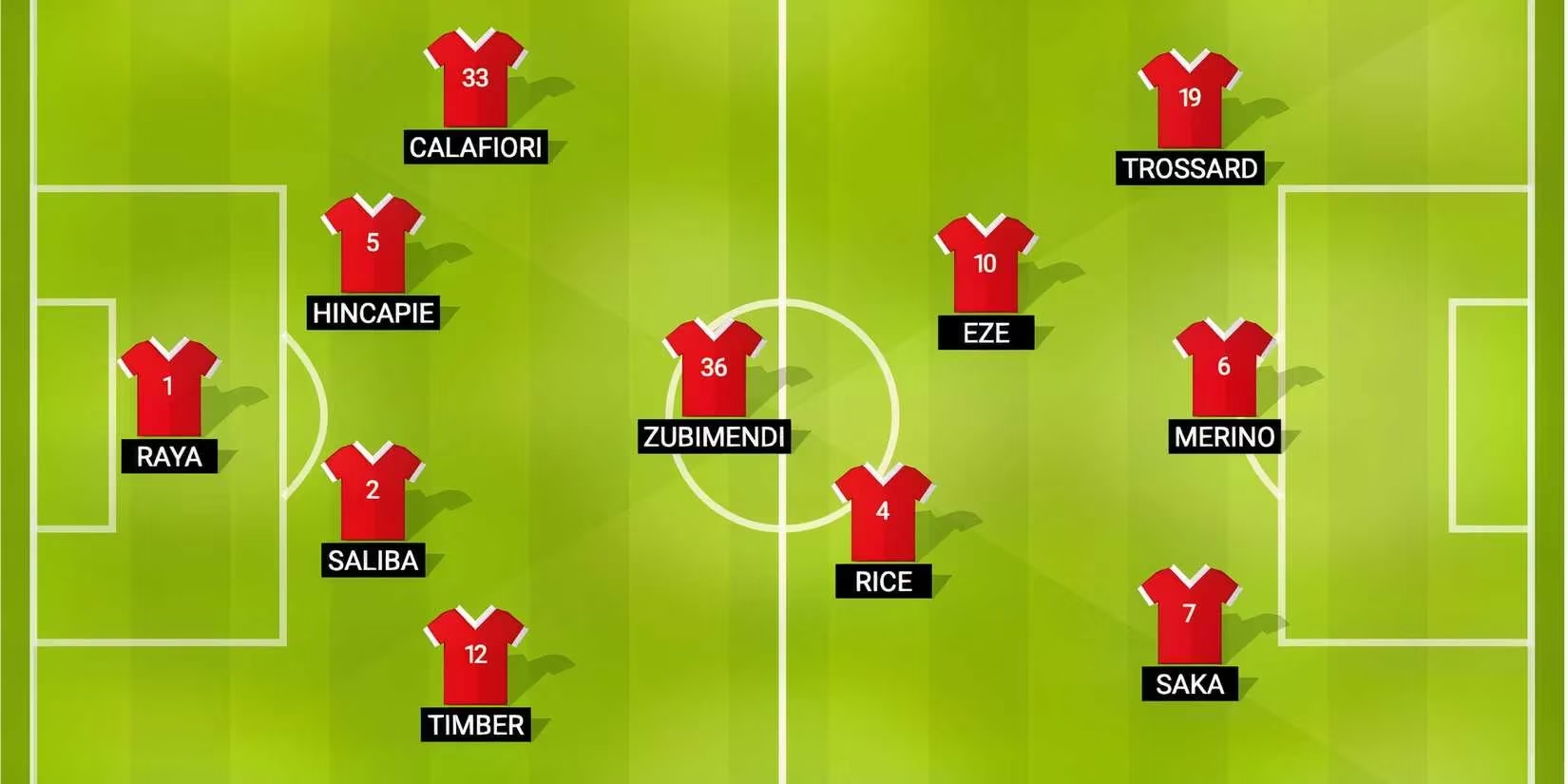
Declan Rice and Martin Zubimendi were tasked with providing the engine room support, their partnership the steady double-bass line beneath Eze’s improvisational melody. Out wide, Saka and Trossard offered familiar menace, although Martinelli – a left-winger by trade – had been tipped to perform emergency striker duties if Gyökeres failed to recover. Arteta had seen Martinelli’s predatory sharpness in Europe, a reminder that the Brazilian could be a blade resharpened for a different cut. Not the perfect fit, perhaps, but in a season of splints and compromises, perfection had long since taken a back seat to survival.
Another option lurking in the tactical fog was Cristhian Mosquera, the young Spaniard who had handled Anfield’s cauldron in August with the composure of a librarian during a storm. Few had expected that cameo, yet Mosquera had glided through it, his minimal nervousness a testament to a temperament forged far from the spotlight. Pairing him with Saliba would allow Calafiori to stay wide, preserving the defensive structure that had become Arteta’s signature – a granite wall that now needed a few borrowed stones. Mosquera’s inclusion was less a gamble and more a statement: trust the system, not just the individual parts.
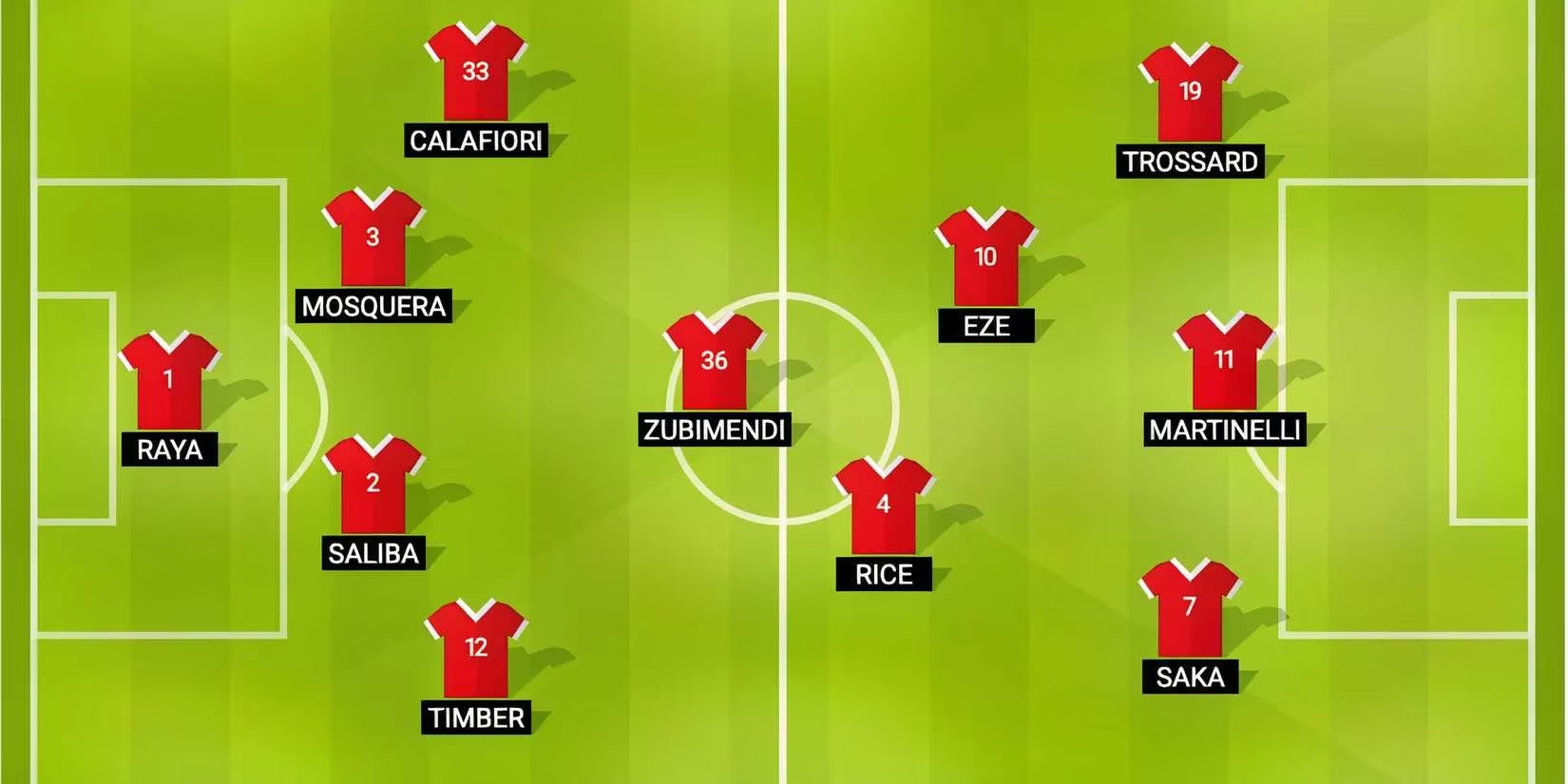
As Friday’s training session wrapped beneath a bruised London sky, the unanswered questions multiplied. Would Gyökeres’ hamstring hold up enough for a cameo? Could Hincapié truly thrive in a derby where every second felt amplified? And would Merino, a midfielder playing a centre-forward’s shadow play, find the net with the regularity required to keep a title challenge breathing?
What remained undimmed was the conviction in Arteta’s eyes, even if they were ringed with the fatigue of balancing a squad on a tightrope. The 2025/26 campaign had become a test of character for which no coaching manual had prepared him. Every move felt like a decision made in a hall of mirrors, reflections of what might have been distorting the reality of what was. Yet it was precisely in this maze that Arsenal’s true narrative would be written – not in the easy marches of a flawless season, but in the desperate, creative scrambling of a wounded predator refusing to surrender its chase. The North London derby awaited, a stage darkened by doubt but illuminated by the stubborn hope that even a patched-up side could, for 90 minutes, feel invincible.