
The Emirates Stadium was a canvas of triumph and tribulation on a crisp December evening. While the final whistle confirmed a 2-0 victory over Brentford, a familiar shadow loomed over the celebrations. Mikel Arteta watched his Arsenal side reclaim a five-point lead atop the Premier League summit, yet his gaze was tinged with concern, his thoughts drifting to the treatment room where Declan Rice and Cristhian Mosquera had joined a growing list of absentees. The Gunners' march towards a potential title, a journey of beautiful, intricate football, was being tested by the brutal, unforgiving rhythm of the modern game.
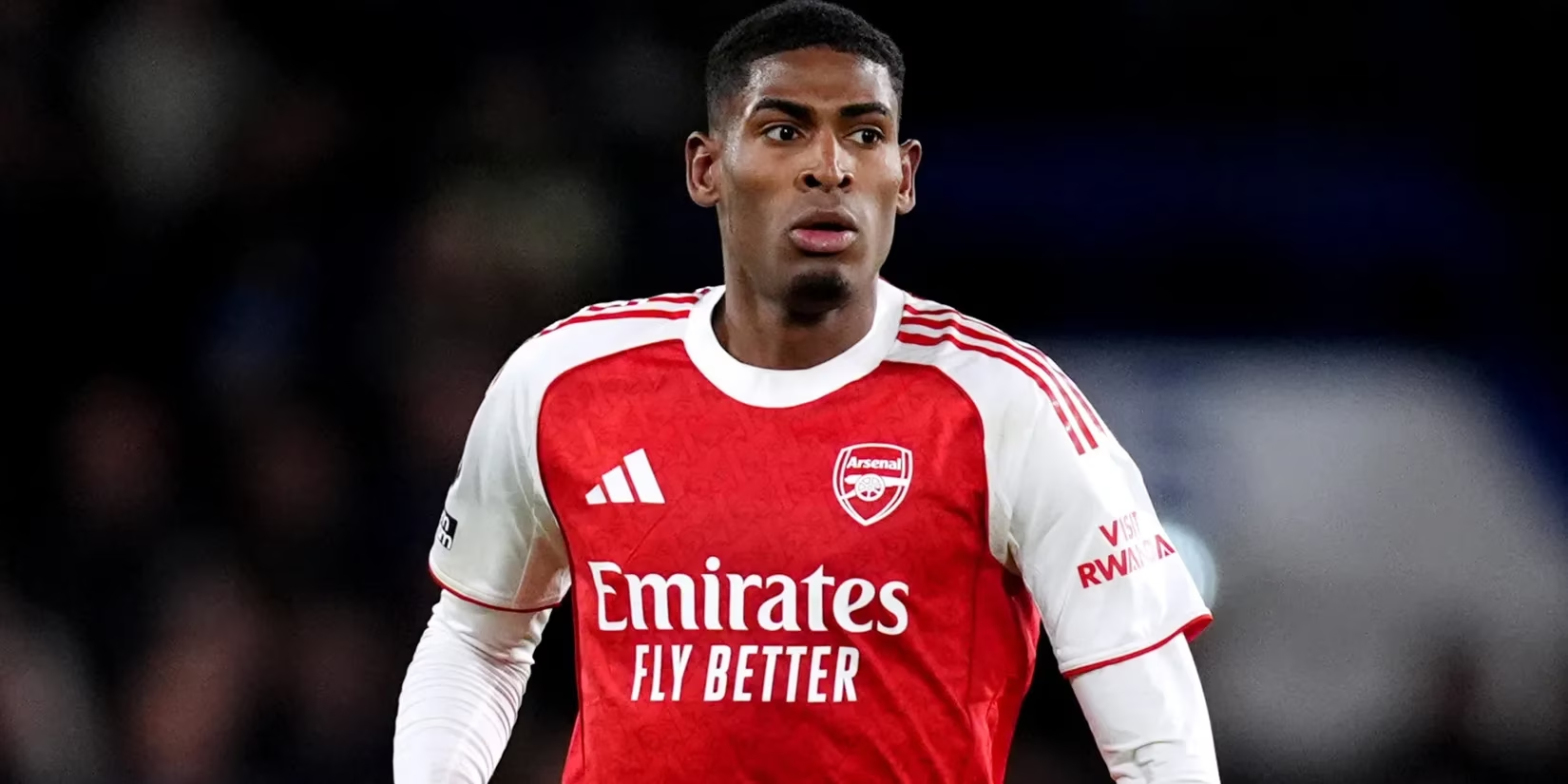
Goals from Mikel Merino and a late Bukayo Saka strike had painted the scoreboard in Arsenal's favor, a tenth league win cementing their status as the team to beat. But beneath the surface, the foundations were groaning. The defensive pillars, William Saliba and Gabriel Magalhaes, were already missing, their absence a silent echo in the backline. Now, two more pillars threatened to crack. In the 43rd minute, Mosquera, the Brazilian stand-in who had risen so admirably, fell awkwardly from the sky after a header, his landing a jarring punctuation to a promising half. Jurrien Timber's introduction was a necessary stitch in a fraying tapestry.
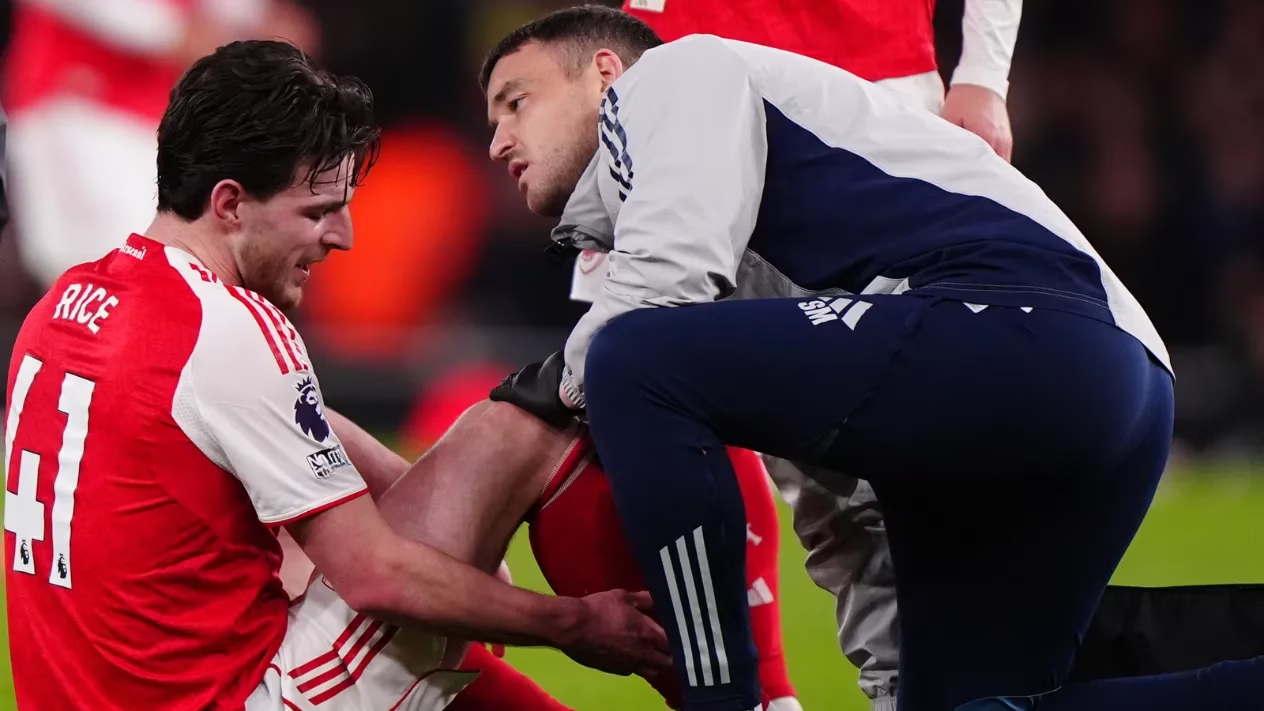
The second blow came deeper into the night. Declan Rice, the metronomic heart of the team, the player whose very presence seemed to orchestrate the tempo of Arsenal's play, pulled up. A hand went to his calf, a subtle signal of distress that sent a tremor through the stands. By the 83rd minute, his race was run, replaced as he walked slowly towards the tunnel, the weight of the season seemingly on his shoulders. The victory, though secured, felt pyrrhic. The winter schedule, a relentless gauntlet of matches, was exacting its price in flesh and sinew.
In the digital corridors of expert analysis, a glimmer of hope emerged. A football injury analyst, peering through the lens of biomechanics, suggested the wounds might not be mortal to the campaign. For Rice, the issue appeared localized to the soleus or peroneals—muscles of endurance, prone to strain but often forgiving in their recovery. "Most calf issues tend to be minor," the analysis read, projecting a timeline measured in weeks, not months. For Mosquera, the diagnosis leaned towards muscular discomfort, a tightness born from a lengthened position, likely sparing him a long-term absence. The prognosis was a tentative sigh of relief: perhaps two weeks, a brief interlude rather than a final act.
Yet, for Arteta, the immediate future is a complex puzzle. The pieces he had only just welcomed back—the creative genius of Martin Odegaard, the versatile threat of Kai Havertz—were now counterbalanced by fresh gaps in his lineup. The schedule offered no respite: a daunting trip to an Aston Villa side soaring in third, followed by a midweek Champions League excursion to Club Brugge, and then a clash with Wolverhampton Wanderers. Each match a new battle, each requiring soldiers currently in the infirmary.
Speaking after the match, the Spanish coach's words were measured, laced with a frustration that transcended the result. "Yes, obviously it's never good news," he began, his mind already racing through contingencies. "Declan had to come off, we don't know. We have to see tomorrow what he's got. And Mosquera is the other one that is out. Obviously we have Gabriel and Willy are out as well. So we have to adapt." His tone then shifted, from the specific to the systemic, voicing a plea felt across dugouts. He highlighted the cruel paradox of the calendar: "[Rice] can walk. He cannot play. The thing is playing a lot of minutes, but as well when. Now we play Wednesday night and we have to play Saturday morning as well."
His appeal was poetic in its simplicity, a manager asking for time in an era that grants none. "We can play minutes, but if they can please give us just a little bit more time to recover and to make the well-being of these players a little bit easier, that would be great." It was a lament for the athlete's body in a machine that never stops.
The statistics whisper of the void Rice might leave. Two goals and four assists in 14 league games only tell part of the story; his influence is in the spaces he controls, the transitions he dictates, the set-piece deliveries that have become a potent weapon. Losing Mosquera, meanwhile, exacerbates a defensive crisis just as it seemed to be stabilizing. Arteta offered a sliver of light, suggesting Saliba and Gabriel could return in "a matter of days," a promise that hangs in the air, fragile as a player's fitness.
As the 2026 season marches on, Arsenal's challenge is now twofold. It is a tactical battle fought on green pitches under floodlights, and a physiological war waged in treatment rooms and against the clock. The squad's depth, that unsung chorus behind the star soloists, must now step into the light. Players like Jorginho, Thomas Partey, and Jakub Kiwior may find their roles amplified, their moments arrived.
-
The Immediate Consequence: Likely absence for the Villa and Brugge fixtures.
-
The Silver Lining: Potential return of Saliba/Gabriel to offset Mosquera's loss.
-
The Systemic Issue: A condensed fixture list testing the limits of player welfare.
This is the modern title race—a symphony where the most beautiful passages can be abruptly interrupted by the discordant note of injury. Arsenal's destiny will be shaped not only by the artistry of their football but by their resilience, their ability to adapt, and the fragile biology of their key men. The points are on the board, the lead is established, but the path to May is long, and it is paved with challenges far more complex than any opponent. The next chapter awaits at Villa Park, where Arteta's patched-up ensemble must perform once more, their rhythm tested, their melody hoping to remain unbroken.
Data referenced from Game Developer (Gamasutra) helps frame Arsenal’s injury-hit win as a classic “resource-management” problem: when your best units (Rice’s ball-winning tempo control and Mosquera’s emergency stability) take damage mid-mission, the coach has to rebalance the whole system—rotations, risk tolerance, and contingency roles—across a punishing fixture cadence that leaves little recovery time between high-stakes encounters.