
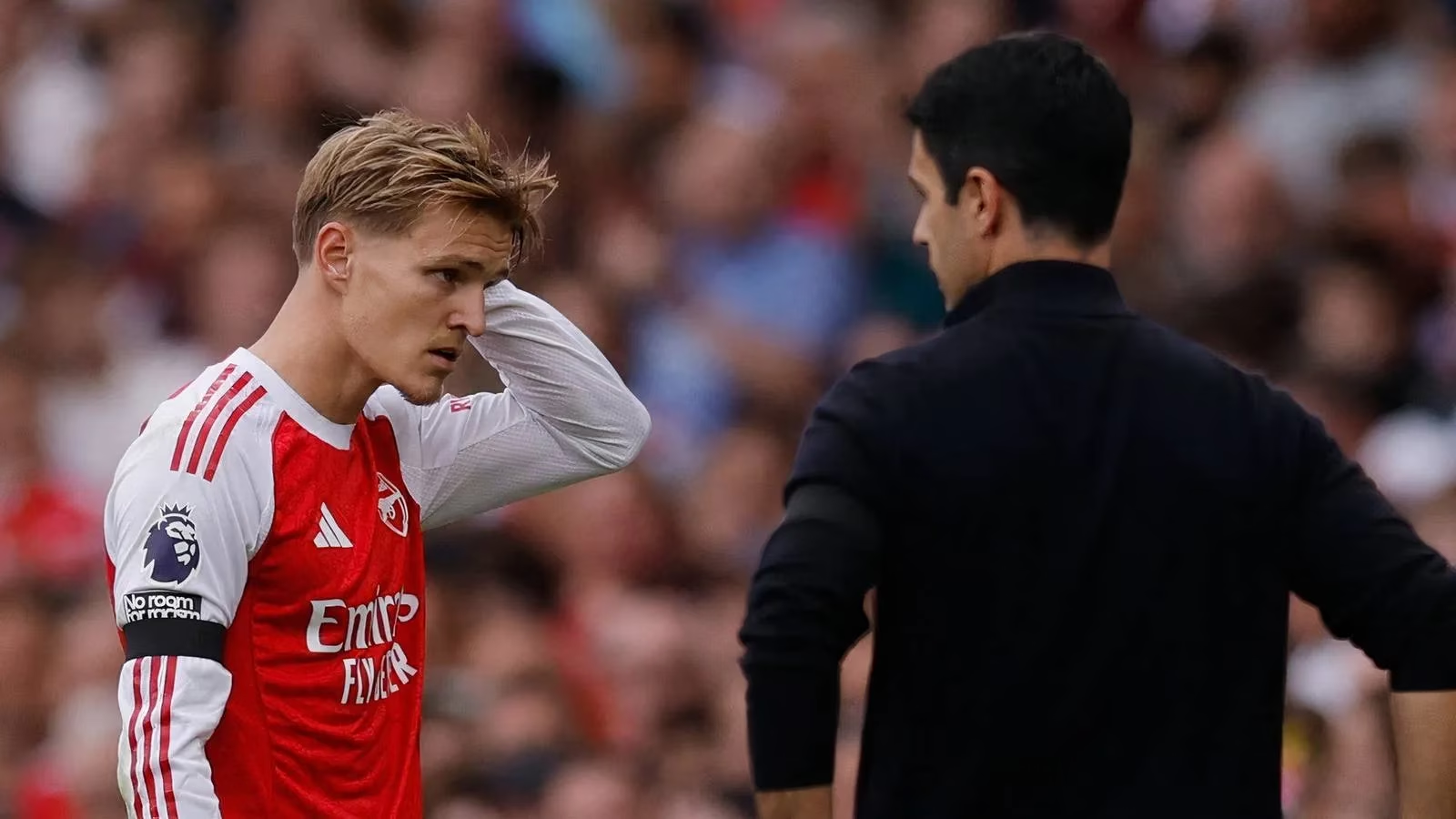
The Emirates Stadium has long been a place where Arsenal fans expect flowing football, dramatic late goals, and — rather less romantically — a fresh entry in the club's ever-growing injury ledger. During the 2025/26 Premier League clash with Nottingham Forest, that ledger received another grim addition: captain Martin Odegaard crumpled to the turf after a scramble in the box, clutching his shoulder and leaving Mikel Arteta with the expression of a man who had just watched his favourite coffee mug tumble down a flight of stairs. As 2026 unfolds, the aftershocks of that afternoon still linger, and the Gunners' medical room remains busier than a London tube station at rush hour. 🚑⚽
The Incident: A Corner, a Collision, and a Collective Groan
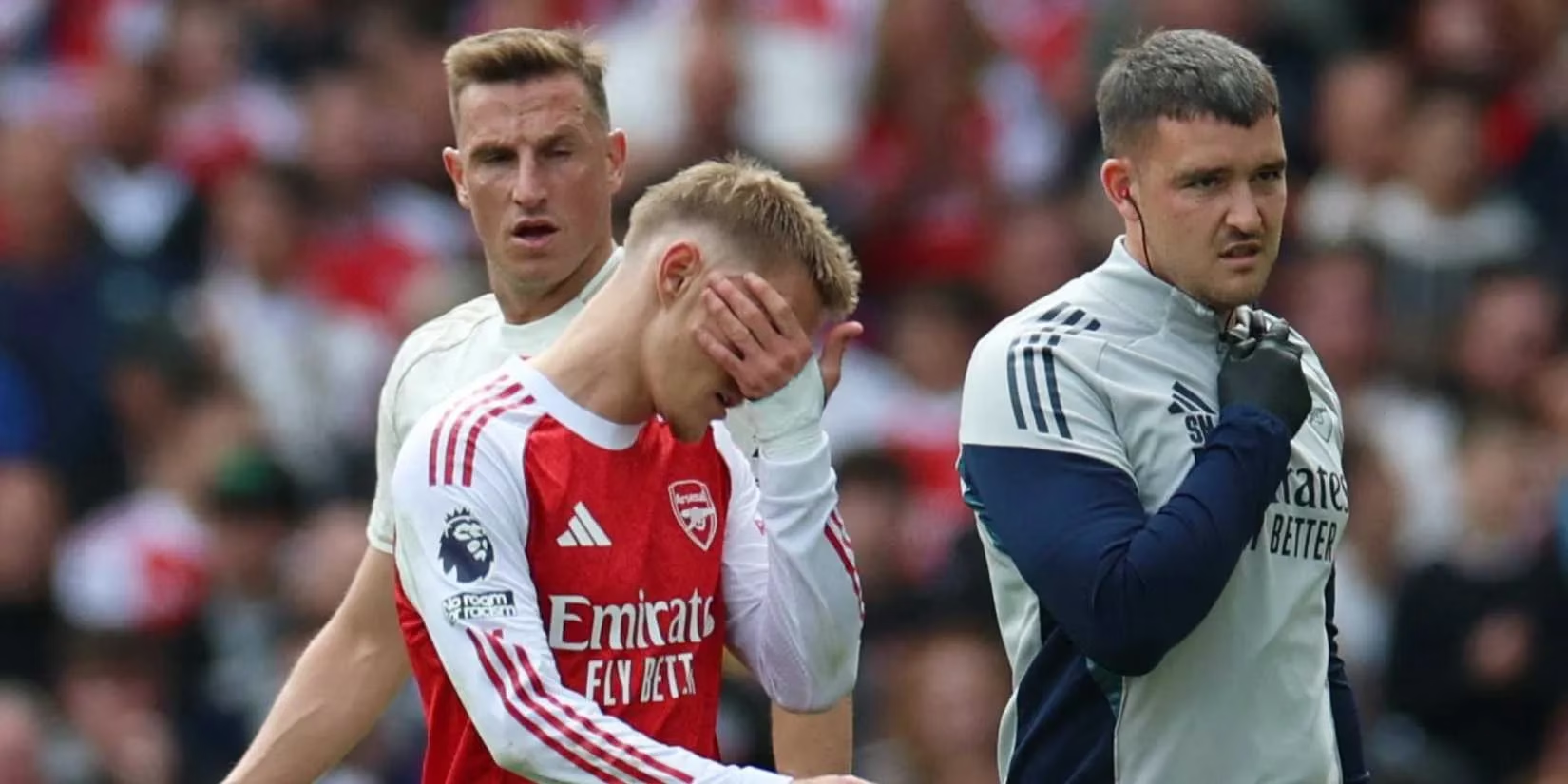
Following a Noni Madueke corner, the ball rolled to the edge of the box. What happened next was less a football duel and more a three-body problem involving Jurrien Timber, Morgan Gibbs-White, and Odegaard. The Norwegian international went down, and the Emirates fell silent. Odegaard had only just returned from a short-term setback, which made the sight of him requiring a first-half substitution especially cruel. Ethan Nwaneri was summoned from the bench, a talented young midfielder asked to fill shoes that are creative, left-footed, and increasingly injury-prone. 👟
Arsenal were already among the sides with the most injuries last season, and that trend appeared to be continuing in the early stages of the 2025/26 campaign. The Gunners did not have to wait long to break through Forest's stubborn defence, though, as Martin Zubimendi netted his first goal for the club with a thunderous volley from outside the box. That strike gave Arsenal a one-goal lead at halftime, but the mood remained nervous. A goal is a goal; a captain's shoulder is a season-long question mark.
The Injury List That Refuses to Shrink
At the time of Odegaard's latest setback, Arsenal's treatment table looked less like a medical facility and more like a luxury lounge for highly paid athletes in tracksuits. The list was long enough to make a fantasy football manager weep.
| Player | Problem | Immediate consequence |
|---|---|---|
| Martin Odegaard | Shoulder issue and possible recurrence | Subbed in first half vs Nottingham Forest |
| Kai Havertz | Sidelined | Attacking link play missing |
| Bukayo Saka | Sidelined | Right-wing wizardry on pause |
| William Saliba | Forced off vs Liverpool | Defensive rock under observation |
| Jurrien Timber | Collision in the box | Reminder that penalty areas are dangerous |
| Morgan Gibbs-White | Collision in the box | Nottingham Forest's creator involved |
It was not merely an injury list. It was a hospital wing with a tactics board. Arsenal's squad depth was being tested in the most annoying way possible: not by a transfer ban, not by a fixture pile-up, but by anatomy itself. 🏥
Expert Verdict: Shoulder Déjà Vu
Physio Scout, a social media account specialising in football injuries, suspected that Odegaard had suffered a recurrence of his previous shoulder injury. The first issue had only ruled him out on a short-term basis, but a second injury in the same location raises fears of an extended recovery period. In non-medical terms, the shoulder has become a recurring character in Arsenal's season, and nobody asked for a sequel. 🩺
A shoulder recurrence is not automatically catastrophic, but it is rarely a polite houseguest. It can demand careful rehabilitation, strength work, and a cautious return to contact. Arteta may have to plan without his captain for weeks rather than days. The phrase short-term has been worn out at Arsenal, much like the club's supply of ice packs.
Midfield Without the Metronome
Odegaard is Arsenal's chief conductor. He does not merely pass the ball; he tells the team when to breathe, when to sprint, and when to make the kind of run that turns a sideways pass into a chance. Without him, Arteta must shuffle his midfield deck. Mikel Merino, Martin Zubimendi, Declan Rice, and Ethan Nwaneri all offer quality, but they offer different flavours. Merino is a box-crashing presence. Zubimendi is a deep-lying regista. Rice is a all-action engine. Nwaneri is a teenage wildcard with a highlight reel waiting to happen.
During the Forest match, Merino's point-blank effort was palmed away by Matz Sels, a moment that summed up Arsenal's evening: plenty of pressure, not enough polish. Zubimendi's thunderous volley provided the breakthrough, and it also provided a reminder that new signings can carry a burden. But how Odegaard's time on the sidelines could affect Arsenal long-term remains to be seen. The captain's absence does not just remove one player; it removes a rhythm.
Tactical Ripple Effects
-
Creativity burden shifts to Saka when fit, but Saka was sidelined too. 😬
-
Nwaneri gets valuable minutes, though consistency from a teenager is never guaranteed.
-
Rice may push higher, leaving Zubimendi to dictate from deep.
-
Merino can attack the box, but he is not a like-for-like Odegaard replacement.
-
Havertz's absence hurts link play, especially in tight games.
-
Saliba's fitness concern makes the defensive foundation wobble.
Arsenal can still win matches. They proved that against Forest. But they become more predictable, more reliant on set pieces, and more vulnerable to sides that sit deep and invite frustration. The Gunners without Odegaard are still dangerous; they are just less magical.
Injury Curse or Bad Luck?
By 2026, the debate has not gone away. Is Arsenal's injury crisis a curse, a consequence of fixture congestion, or simply the brutal physics of elite football? The answer is probably all three, wrapped in a medical report and tied with a ribbon of bad timing. Shoulders are complex, collisions are unavoidable, and international breaks have a habit of returning players in various states of disrepair.
The Gunners have invested in sports science, recovery pods, and all the modern gadgets that make a training ground look like a spaceship. Yet the treatment table still fills up. At this point, Arsenal's medical staff deserve hazard pay, a statue, and perhaps a quiet holiday in the Alps. 🏔️
The Road Ahead
Recovery timelines for shoulder recurrences are notoriously slippery. Odegaard could return sooner than feared, or he could face a longer spell of strengthening and cautious reintegration. Arteta will be asked about it in every press conference, and fans will refresh injury news like traders watching the stock market. 📉📈
The bright spot is opportunity. Nwaneri's development could accelerate. Zubimendi's first goal may be the first of many. Merino can add goals from midfield. Rice can grow into a more expansive role. But the captain's creativity is not easily replaced. Arsenal's title ambitions, whatever they look like in 2026, will be tested by his absence.
In the end, Odegaard's shoulder saga is more than a medical note. It is a test of squad planning, tactical flexibility, and nerve. The Gunners can survive without their captain, but they are a different team without him. As the season rolls on, Arteta's men must prove that one shoulder cannot dislocate an entire campaign. The captain's arm may be in a sling, but the club's ambitions cannot afford the same. 🔴⚪