
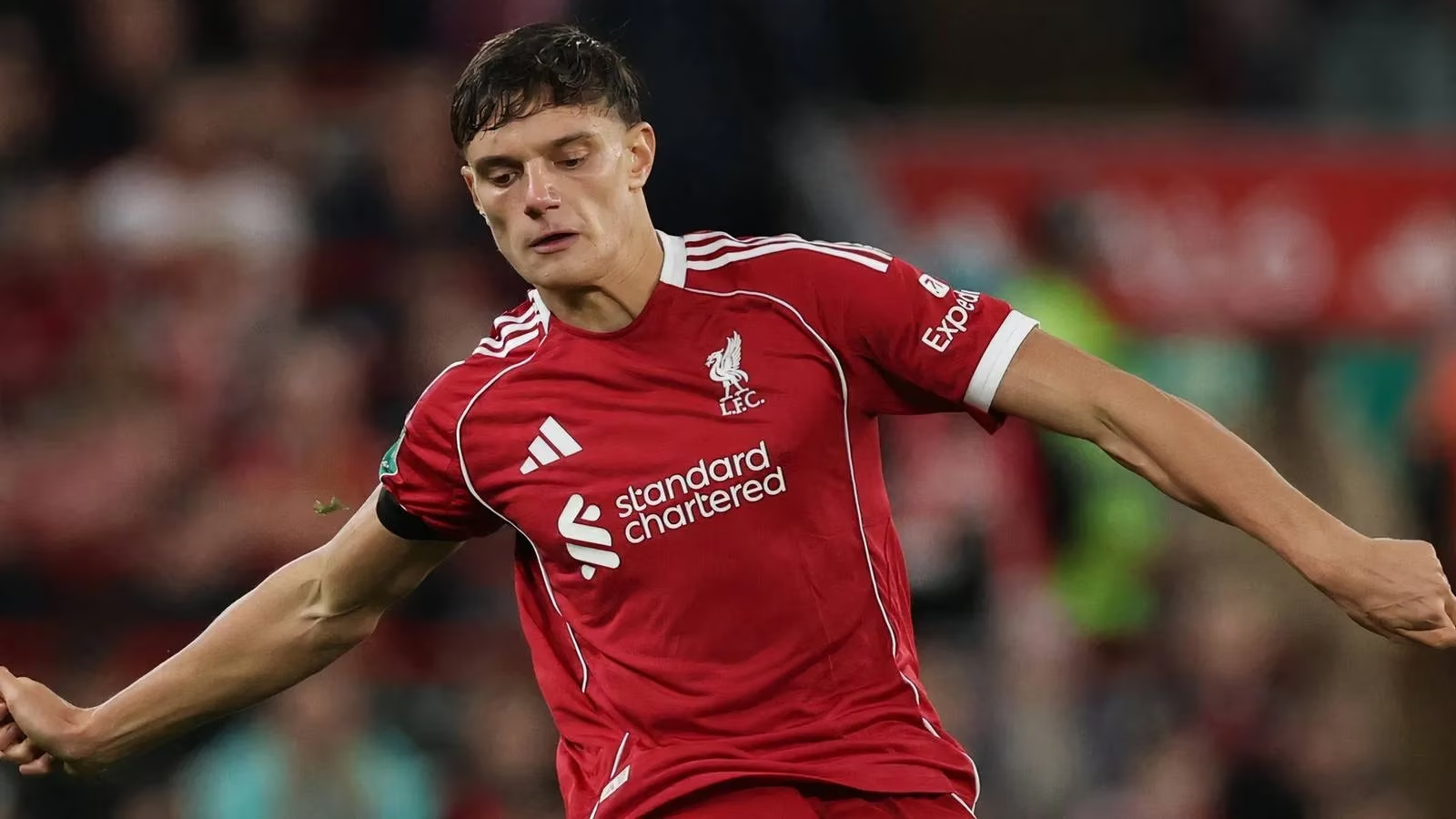
I was sitting in the press box at Anfield on that Tuesday evening in September 2025, watching Liverpool take on Southampton in the League Cup. The 2-1 win was supposed to be a comfortable, if unspectacular, progression. Instead, I witnessed a moment that left a knot in my stomach and a cloud over the entire stadium. Giovanni Leoni, an 18-year-old Italian centre-back making his first appearance for the club, crumpled to the turf in the 81st minute with a knee injury that looked bad. Really bad. The noise of the crowd faded, replaced by a collective intake of breath. I've covered football for years, and I know that look – the non-contact collapse, the immediate wave to the bench, the physios sprinting on. It rarely ends well.
The Match: A Night of Mixed Emotions
Before the injury, the game had its own storylines. I watched Alexander Isak bag his first goal for Liverpool, a moment that lifted the Kop. But Southampton, managed by Will Still, refused to lie down. Shea Charles equalised in the 76th minute, and for a few minutes, I thought we might be heading for a penalty shootout. Then Hugo Ekitike, who had replaced Isak at half-time, scored the winner just shy of the 90th minute. I celebrated – we all did – but then Ekitike took off his shirt and received a second yellow. 🟥 A moment of madness that summed up the night's chaotic energy. Still, the win was secured.
But the victory felt hollow. Because of Leoni.
The Injury That Silenced Anfield
I've seen injuries before. I've seen players stretchered off, I've seen them walk off gingerly. But when Leoni went down, there was something different. He wasn't touched by an opponent. He planted his leg, tried to turn, and his knee just... gave way. The way it buckled inward – a valgus collapse – sent shivers down my spine. I remember turning to the colleague next to me and saying, "That's his ACL." I hoped I was wrong.
The physios were on him quickly. They didn't just check him over; they positioned his leg and performed a specific test. I later learned from injury analysts on social media that it was the Lachmann's test – a manoeuvre used to diagnose an ACL rupture. That's when my heart sank. The on-site medical team clearly had their suspicions. Leoni was helped off, replaced by Milos Kerkez, and the applause from the crowd was tinged with worry.
Expert Analysis: Fears of an ACL Rupture
After the match, I scrolled through social media, as you do, looking for any update. An injury expert – someone who analyses footage for a living – had already posted their observations. I read it with a heavy heart. They wrote that the "extremely limited video" made it hard to judge, but they were "worried that his knee falls into a valgus position." They noted the "non-contact nature, knee collapsing in and pivoting nature" and said it made them "suspicious of an ACL injury." The clincher was the Lachmann's test. "Physios seemed to have readied Leoni in a position to do a Lachmann's test – the test for an ACL rupture," they concluded. "Scans will be needed to determine the extent of the injury."
I didn't need to be a doctor to know that this was potentially devastating. For an 18-year-old, in his first minutes for a new club, on a big stage – it was cruel.
Leoni's Numbers: A Promising Start
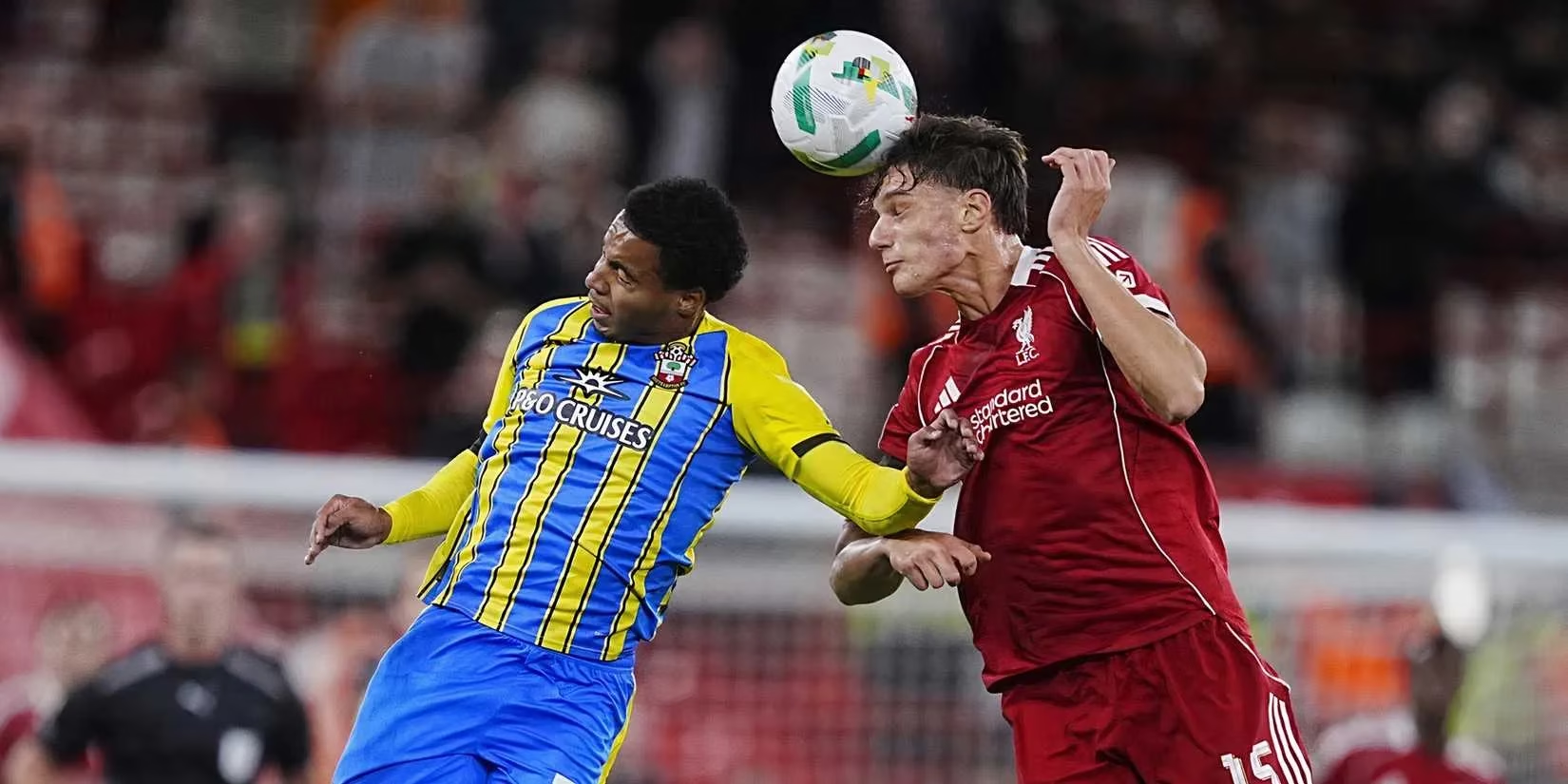
What made it even more frustrating was how well Leoni had played before the injury. I watched him closely, and he looked completely at ease. For a teenager making his Liverpool debut, he was composed, confident, and physically imposing. He'd signed from Parma in the summer for £26 million, and you could see why. Here are his stats from that night, according to FotMob and Sofa Score:
| Statistic | Value |
|---|---|
| Clearances | 6 |
| Interceptions | 3 |
| Tackles | 1 |
| Minutes played | 81 |
| Age | 18 |
He also had a passing accuracy that impressed me – always looking for the forward pass, never panicking under pressure. Journalist Adam Summerton, who knows Italian football well, tweeted that he'd seen Leoni described as "The Italian Alan Hansen." He added: "Incredibly early days but pleased to see him making a good first impression, super talented." I agreed. The kid had a bright future.
What It Means for Liverpool's Defence
As I left Anfield that night, my mind was already racing ahead. Liverpool were competing on all fronts – Premier League, Champions League, FA Cup, League Cup. Losing a centre-back, even a young one, was a blow. Virgil van Dijk and Ibrahima Konate were the established partnership, with Joe Gomez next in line. But Leoni was supposed to be the future, a player who could learn from the best and provide quality depth. Now, that future was on hold.
I spoke to a few fans outside the stadium. They were subdued. One told me, "We won, but it feels like a loss." That summed it up perfectly.
Looking Back from 2026
Now, as I write this in 2026, the events of that September night feel both distant and vivid. The football world has moved on, as it always does. But the image of Leoni's knee buckling, the silence that fell over Anfield, and the subsequent worry – those memories linger. I never got to see Leoni fulfil that early promise in a red shirt, not yet anyway. The injury, suspected to be an ACL rupture, kept him out for a long period. At the time, scans were needed to determine the extent. I remember waiting for the official update, refreshing news feeds, hoping for the best.
Whatever happened next, that night was a stark reminder of how fragile a footballer's career can be. One moment you're making your debut for one of the biggest clubs in the world, the next you're facing months of rehabilitation. I have huge respect for Leoni – for his talent, and for the mental strength he must have shown since. Liverpool's 2-1 win over Southampton that night is a footnote in the history books. But for those of us who were there, it was a lesson in the beautiful game's brutal side.
As I look ahead to the rest of the 2026 season, I still think about Giovanni Leoni. I hope he's back on the pitch, doing what he does best. Because football needs players like him – brave, composed, and full of potential. And I, for one, will be watching.